The Paradox of Raising Multilinguals


When raising children with multiple languages our vision is for them to become proficient in more than one language. This means that they ideally will be able to understand, speak, read and write in several languages, right?

When we are multilinguals ourselves, i.e. we use more than one language to a certain extent, we might encounter a few challenges along the way.


What language should we speak as the main or primary language with our children?


The primary or main language is the one we use when one-on-one with our children. It is the one that we will create our emotional bond with them and that we need to be very proficient in.
In my course for parents of 0-4 year old children I explain how to find out which of our languages is the one we should be using with our children as the main/primary language.

When we are used to speaking several languages on a daily or regular basis, chances are high that we mix them every now and then. We might mix them more often with our adult friends, which is fine as long as they understand each of the languages we are using.
But what about our babies and toddlers? They won't be able to distinguish between the languages we are mixing.
This is why I always advise neo-parents or parents-to-be, to get into the habit of not mixing their languages too much and to actually avoid this when speaking with their babies and toddlers.

Why? Because our young children will take all we say like "one language" and if we constantly mix them, they will not understand where one language ends and the next one starts. Which leads to the Paradox of Raising Multilinguals...


The Paradox of Raising Multilinguals


In my talks, trainings and workshops I call this the Paradox of Raising Multilinguals.
Why Paradox? Because despite raising children with multiple languages, and exposing them to multiple languages, we want to make sure that they are able to function in monolingual settings.
What is more important than the amount of languages we want to transmit, is to know how to transmit multiple languages in an effective way.
Our toddlers need to learn how to differentiate them, they need to understand what sound, what word, what sentence, what intonation etc. belongs to which language. It is like sorting out lego pieces of different shapes and colors, and learning how to stack them in a way that what is built is solid, and doesn't break easily.

Our children can only find out the underlying patterns of the language, the grammar rules, when the input in each language is as clear and intelligible as possible. Ideally this input is of high quality, i.e. coming from a confident and proficient user of the language.

Our young children acquire their first languages in the most natural and spontaneous way.
If we have the habit to constantly alternate "chien" with "Hund" when talking about dogs, they will think that these are just two words for the same animal in the same language, whereas they should learn to use "chien" when speaking French and "Hund" when using German. So, brick red goes into the red pile, brick blue into the blue pile...

The paradox lies also in the fact that our children should eventually be able to confidently retrieve the right words from this joined repertoire of all their languages. We know that multilinguals are not two monolinguals in one, that the language patterns they learn from all their languages are stored in the same place, and are retrievable from it whenever they use languages.

But our children need to be able to identify which elements pertain to each of the languages, and they will need to differentiate quickly, spontaneously in their speech.
The clearer the separation for each language is from the beginning, the easier they can switch between the languages, i.e. use the target language in social situations where only one language is required, in the most effective way.


Multilingual children do not translate!

Many people still assume that multilinguals are good translators. But multilinguals don't translate! Not constantly, at least, and usually what they learn in language green is stored in language green.

As babies and toddlers can not grasp the concept of time yet, and don't necessarily understand when a situation, a context changes and requires the use of another language, we need to be consistent with our (rich = varied and child directed) language use when one on one with them.

We are actually raising multiple-monolinguals in one person! I know some researchers might cringe at this as it sounds like I am going back 10 steps from where we actually are. But it is not: our children need to function in all the languages they are exposed to, i.e. in which people interact with them on a regular basis in micro (or mini, if you prefer) monolingual situations!

As much as multilingual adults may like to mix their languages when speaking to other adults who share the same languages, when they talk with their babies and toddlers they should make sure to focus on their primary/main language. Especially when they are one of the few or even the only person who transmits this language to their children.

Avoid mixing your languages when talking with your babies and toddlers


In this short video I talk about the Paradox of Raising Multilinguals


I explain how to find out which language you should choose as the main/primary language to speak with your children, and mention the Paradox of Raising Multilinguals.


Bridging the Language Divide in Multilingual Families

In every multilingual family, members speak different languages and bring a rich tapestry of cultures and traditions into the home.

However positive, enriching and exciting this sounds, we also face unique challenges related to what can be termed the “language divide.” 

The language divide in multilingual families refers to the linguistic differences among family members, which can manifest in various ways:

1. Parent-Parent Language Gap:

When parents speak different languages and don’t understand each other’s language, they usually choose a third one to communicate with each other. What can work perfectly for years, can become an issue once their children start communicating orally/verbally.

If parents don’t learn at least the basics of each other’s language (and culture), they create a language (and culture) gap between their respective languages (and cultures) that can lead to prejudice, judgment and resentment towards the partner because they don’t understand what they are saying to their children for example.

Those parents who speak the community language might also struggle with understanding and lack of support towards the language of their partner. This can cause language attrition within the family and even lead to language loss. This is one aspect I find the most delicate one, as it is very difficult to convince someone who uses the dominant language about the importance of the minoritised language…

2. Parent-Child Language Gap:

In multilingual households, parents may speak language red and language yellow, while the children predominantly use language blue, the language of the country they reside in. This gap can result in communication challenges and a potential loss of heritage language for the younger generation and even the parent’s generation. This tends to happen more in refugee or immigrant families, where the heritage language is abandoned to fully integrate into the host culture for social, political or personal reasons. 

3. Child-Child Language Gap:

Language gaps between siblings can occur when they grew up with different languages. For example, child “one” grew up with being exposed to language yellow and blue, and when child “two” was born, language green and yellow were used in the family, later they moved to a third country and language purple became more important… Multilingual siblings might choose the school or community language to communicate among them, and not one of the home languages. Depending on what languages they are exposed to, this can change over time. In very mobile families, older siblings have experienced life in other languages and cultures than their younger siblings, which can lead to a language gap when functioning in the family.

Child-Child language gap can also occur in patchwork-families where children from different linguistic backgrounds need to communicate in an additional language. If this means to learn a new language, it obviously requires a lot of time to achieve a level of fluency that allows them to communicate effectively. Sometimes, biases (related to their respective parents, families, cultures etc.) and resentments can lead to communication barriers and language divides.  

4. Language Preference:

Family members may have varying preferences for what language they feel more comfortable using. This can lead to situations where one language dominates, and others are sidelined, or where they need to find a compromise in using their languages or even find an additional language to communicate in.

5. Language Barriers:

When extended family members or new members of the family visit or join the household, they may speak different languages, creating communication barriers within the family unit.

Addressing this kind of language divide requires thoughtful consideration and open communication within the family.

Here are some strategies that can help bridge the language divide:

1. Create a Multilingual Environment:Encourage the use of all languages in the household. Designate specific times or activities where each language can be used, promoting a somehow balanced linguistic environment.

2. Value Each Language:Make sure all family members understand the importance of each language spoken within the family. This helps cultivate a sense of pride and appreciation for one’s linguistic and cultural heritage.

3. Language Learning: Promote language learning for everyone in the family. This can include language classes, reading in different languages, or even language-themed games to make learning enjoyable.

4. Open Communication:Encourage family members to express their language preferences and any discomfort they may feel. Open dialogue can help address any language-related issues and find mutually agreeable solutions.

5. Celebrate Cultural Events:Embrace cultural holidays, festivals, and traditions associated with each language. This not only fosters a sense of belonging but also provides opportunities to learn about different cultures.

6. Use Technology and Media: Leverage technology and media resources to expose family members to diverse languages and cultures. Educational apps, movies, and books in multiple languages can be a fun way to learn.

7. Extended Family and Community Involvement: If extended family or community members speak different languages, involve them in language-related activities and encourage them to share their linguistic and cultural knowledge. 

8. Find your Multilingual Village:If all of the above is not possible and you find yourself alone in transmitting your language, maybe even without your partner’s knowing: find your multilingual village elsewhere. Either in the community or online.

In my private facebook group you are very welcome to get all the support you need to keep on transmitting your language, dialect or sign language to your children!

You are not alone and every little step you take is important! 

Transform the language divide into an asset!

©Ute’s International Lounge, 2024

Multilingual families are the micro-society that embraces cultural diversity, and a place where we can foster a deeper understanding of the world.

Embracing and nurturing each language within the family can create a harmonious and inclusive environment where everyone’s unique linguistic identity is valued and celebrated.

By actively working to bridge the language divide, multilingual families can build stronger connections and preserve their diverse linguistic heritage for generations to come.

Multilingualism can contribute to the proper development of a child only if:

both languages are considered equal, if there are no defensive reactions against one of them, which is perceived by the child as ‘inferior’ (…) when parents are able to evoke respect to their own cultural heritage and language in their child.

(Laskowski, Roman, Język w zagrożeniu. Przyswajanie języka polskiego w warunkach pol- sko-szwedzkiego bilingwizmu, Kraków 2009, p. 42)


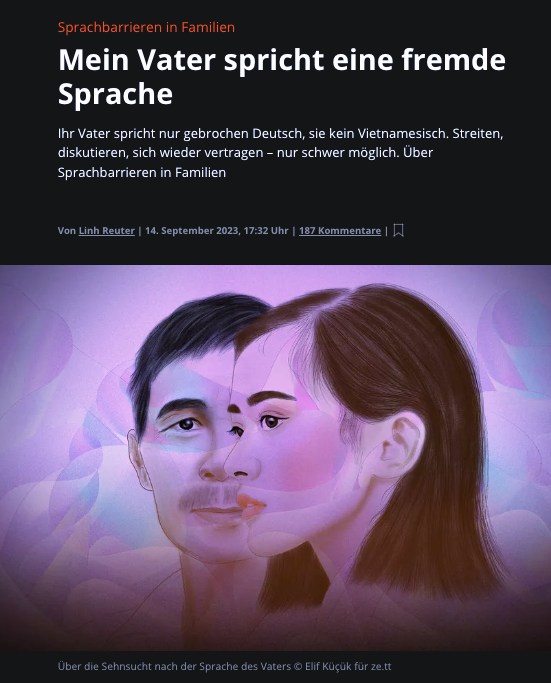
In this German article, a daughter emphasizes the importance of knowing her heritage language that, alas, her parents missed to teach her. 

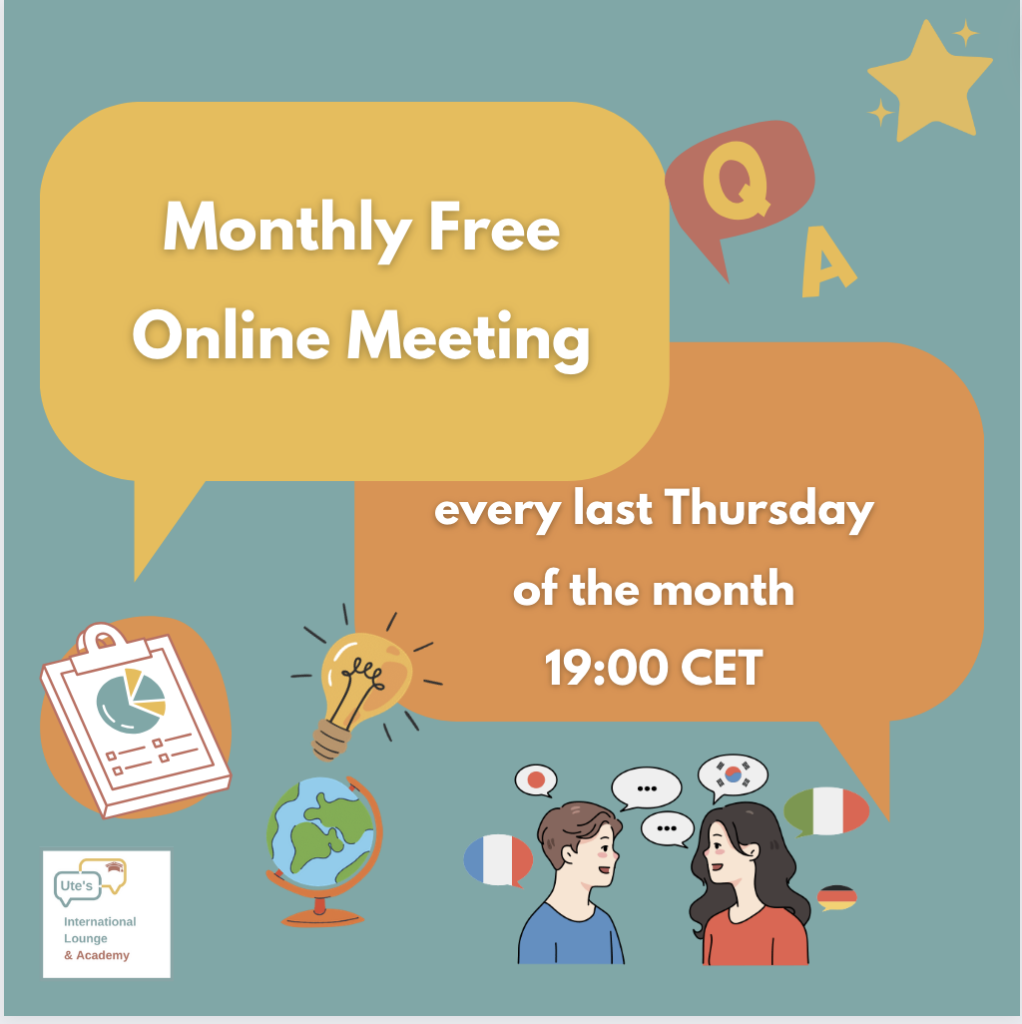
During my monthly free online meetings we talk about this and similar topics. We meet online every last Thursday of the month at  19:00 CET (you will receive the zoom link the same day at 9:00 am CET). You are welcome to join us by filling in this form.

We talk about topics like:

  • international life
  • raising children abroad
  • maintaining our languages and cultures whilst living abroad
  • staying motivated and keeping our children motivated to use the languages they need & embrace their cultures and those they learn along the way
  • effective communication
  • and more…

If you want to know how to foster your languages in the most effective way, have a look at my self-paced online courses for parents of 0-4 and 4-10 year old children:

Some cognitive, cultural and future benefits for multilinguals

The German and English version of this post was published in a slightly different version as part of the 20-day #BilingualBlogathon organized by TA-DA! Language Productions

by Ute Limacher-Riebold PhD


Please find the English, German, Italian, French and Dutch version of this post here below


Some cognitive, cultural and future benefits for multilinguals


More than half of the world’s population speaks more than one language or dialect, but “the pervasive monolingual bias present within many societies threatens the wellbeing of bilingual children and their families” (Annick De Houwer, 2022).

Beyond simply knowing two or more languages and dialects (or sign languages), being multilingual offers a wide range of cognitive, cultural, and future benefits that make it a skill worth cultivating.


Cognitive Benefits:

Enhanced cognitive abilities
Studies have shown that multilingual individuals tend to have enhanced cognitive abilities, including better problem-solving skills, visual-spatial skills, multitasking abilities, and improved memory. This cognitive flexibility is attributed to the constant need and ability of multilinguals to switch between languages, and think in different linguistic structures.

Delayed onset of cognitive decline

The use of several languages has also been linked to a delayed onset of cognitive decline and a lower risk of age-related disorders like Alzheimer’s disease. The constant mental exercise required to maintain several languages across the lifespan is helps to keep the brain more resilient.

Improved attention control

Individuals who use several languages on a regular basis are proven to be better at filtering out irrelevant information and focusing on what’s important due to their ability to switch between languages. This skill is particularly useful in tasks that require sustained attention.


Cultural Benefits:

Intercultural understanding

Knowing two or more languages often goes hand-in-hand with gaining a deeper understanding of the associated cultures. Multilingual individuals are more likely to appreciate and embrace different customs, traditions, and perspectives, fostering cross-cultural empathy and understanding.

Access to diverse literature and media

“The more languages we know, the more worlds we can explore”

(Ute Limacher-Riebold PhD)

Through our multiple languages we can access a broader world of literature, music, films, and other forms of media. We can explore the multiple facets of the different cultures, which enriches our life and broadens our worldview.

Improved communication

Each language comes with her own verbal and non-verbal communication style. The more languages we know, the greater our advantage when it comes to communicating with people from different backgrounds. Being able to “read the room” (or “the air”) is an invaluable skill in today’s interconnected society and can lead to enhanced personal and professional opportunities.


Future Benefits:

Education opportunities

Knowing multiple languages can open doors to educational opportunities abroad. Many universities offer programs in multiple languages, and scholarships and exchange programs often favour multilingual candidates.

Career advancement

Knowing several languages is a highly sought-after skill in many industries. Companies value employees who can communicate with international clients and colleagues, navigate global markets, and bridge cultural gaps. The more languages we know, the bigger our competitive edge in the job market.

Global citizenship

The more languages we know, the more likely we feel that we belong to diverse groups. Our languages can serve as bridge to other peoples and cultures, and are like a gateway to a global citizenship as they enable us to participate actively in international discussions, engage in diplomacy, and contribute to global problem-solving efforts.


Being and staying (!) multilingual across the lifespan is a lifelong project that is not just about mastering different languages, but also about expanding our horizon and seizing countless opportunities. By fostering multiple languages we enhance our cognitive abilities, foster our cultural understanding, and positions us for success in an increasingly interconnected world.


Einige kognitive, kulturelle und zukünftige Vorteile für Mehrsprachige


Mehr als die Hälfte der Weltbevölkerung spricht mehr als eine Sprache oder mehr als einen Dialekt, aber “die allgegenwärtige einsprachige Voreingenommenheit in vielen Gesellschaften, gefährdet das Wohlergehen zweisprachiger Kinder und ihrer Familien” (Annick De Houwer, 2022).

Über die bloße Kenntnis von zwei oder mehr Sprachen und/oder Dialekten (oder Gebärdensprachen) hinaus, bietet die Zweisprachigkeit* eine Vielzahl kognitiver, kultureller und zukünftiger Vorteile, die sie zu einer wichtigen Fähigkeit macht, die es zu kultivieren lohnt.


Kognitive Vorteile:

Bessere kognitive Fähigkeiten

Studien haben gezeigt, dass zweisprachige Personen tendenziell über bessere kognitive Fähigkeiten verfügen. Sie sind besser im Problemlösen, ihre visuell-räumlichen Fähigkeiten sind ausgeprägter, sie sind besser im Multitasking und haben ein besseres Gedächtnis.

Diese kognitive Flexibilität wird auf das ständige Bedürfnis und die Fähigkeit von Zweisprachigen zurückgeführt, zwischen zwei oder mehr Sprachen hin- und her zu wechseln, und in unterschiedlichen Sprachstrukturen zu denken.

Verzögerter Beginn des kognitiven Verfalls

Das Benutzen mehrerer Sprachen wird auch mit einem verzögerten Einsetzen des kognitiven Verfalls und einem geringeren Risiko für altersbedingte Erkrankungen wie Alzheimer in Verbindung gebracht.
Die ständige geistige Anstrengung, die erforderlich ist, um ein Leben lang den Gebrauch mehrerer Sprachen aufrecht zu erhalten, trägt dazu bei, das Gehirn widerstandsfähiger zu machen.

Verbesserte Aufmerksamkeitskontrolle

Personen, die regelmäßig mehrere Sprachen verwenden, sind aufgrund ihrer Fähigkeit, zwischen Sprachen zu wechseln, nachweislich besser darin, irrelevante Informationen herauszufiltern und sich auf das Wesentliche zu konzentrieren.
Diese Fähigkeit ist besonders nützlich bei Aufgaben, die anhaltende Aufmerksamkeit erfordern.


Kulturelle Vorteile:

Interkulturelles Verständnis

Die Kenntnis zwei oder mehrerer Sprachen geht oft mit einem tieferen Verständnis der zugehörigen Kulturen einher.
Zweisprachige Menschen schätzen und akzeptieren eher unterschiedliche Bräuche, Traditionen und Perspektiven und fördern so interkulturelles Einfühlungsvermögen und Verständnis.

Zugang zu vielfältiger Literatur und Medien

“Je mehr Sprachen wir kennen, desto mehr Welten können wir erkunden” (Ute Limacher-Riebold PhD)

Durch unsere vielfältigen Sprachen haben wir Zugang zu einer größeren Welt der Literatur, Musik, Filme und anderen Medienformen.
Wir können die vielfältigen Facetten der unterschiedlichen Kulturen erkunden, was unser Leben bereichert und unsere Weltanschauung erweitert.

Verbesserte Kommunikation

Jede Sprache hat ihren eigenen verbalen und nonverbalen Kommunikationsstil.

Je mehr Sprachen wir beherrschen, desto größer ist unser Vorteil bei der Kommunikation mit Menschen unterschiedlicher Herkunft.
Die Fähigkeit, “den Raum” (oder “die Luft”) zu lesen, ist in der heutigen vernetzten Gesellschaft eine wertvolle Fähigkeit, und kann zu besseren persönlichen und beruflichen Chancen führen.


Zukünftige Vorteile:

Bildungschancen

Die Kenntnis mehrerer Sprachen kann Türen zu Bildungschancen im Ausland öffnen. Viele Universitäten bieten Programme in mehreren Sprachen an. Stipendien und Austauschprogramme begünstigen ausserdem häufig zweisprachige Kandidaten.

Karriereförderung

Die Beherrschung mehrerer Sprachen ist in vielen Branchen eine sehr gefragte Fähigkeit.
Unternehmen schätzen Mitarbeiter:innen, die mit internationalen Kund:innen und Kolleg:innen kommunizieren, sich auf globalen Märkten zurechtfinden, und kulturelle Lücken schließen können.
Je mehr Sprachen wir beherrschen, desto größer ist unser Wettbewerbsvorteil auf dem Arbeitsmarkt.

Weltbürgerschaft

Je mehr Sprachen wir beherrschen, desto größer die Wahrscheinlichkeit, dass wir uns unterschiedlichen Gruppen zugehörig fühlen. Unsere Sprachen können als Brücke zu anderen Völkern und Kulturen dienen. Sie sind wie ein Tor zur Weltbürgerschaft, da sie es uns ermöglichen, aktiv an internationalen Diskussionen teilzunehmen, uns in Diplomatie zu üben, und zu globalen Problemlösungen beizutragen.


Mehrsprachig zu sein und zu bleiben (!) ist ein lebenslanges Projekt, bei dem es nicht nur darum geht, verschiedene Sprachen zu beherrschen, sondern auch darum, den Horizont zu erweitern und unzählige Chancen zu nutzen. Durch die Förderung mehrerer Sprachen verbessern wir unsere kognitiven Fähigkeiten, fördern unser kulturelles Verständnis und positionieren uns erfolgsversprechend in einer zunehmend vernetzten Welt.


I benefici cognitivi, culturali e futuri per multilingui


Più della metà della popolazione mondiale parla più di una lingua o dialetto, ma “il pervasivo pregiudizio monolingue presente in molte società minaccia il benessere dei bambini bilingui e delle loro famiglie” (Annick De Houwer, 2022).

Oltre a conoscere semplicemente più lingue e dialetti (o lingue dei segni), essere multilingue offre un’ampia gamma di benefici cognitivi, culturali e futuri che la rendono un’abilità che vale la pena coltivare.


Benefici cognitivi:

Migliori capacità cognitive

Gli studi hanno dimostrato che gli individui multilingui tendono ad avere migliori capacità cognitive, comprese migliori capacità di risoluzione dei problemi, abilità visuo-spaziali, capacità di multitasking e memoria migliorata. Questa flessibilità cognitiva è attribuita al costante bisogno e alla capacità dei multilingui di passare da una lingua all’altra e di pensare in strutture linguistiche diverse. 

Ritardato declino cognitivo

L’uso di diverse lingue è stato inoltre collegato ad un ritardo nell’insorgenza del declino cognitivo e a un minor rischio di disturbi legati all’età come il morbo di Alzheimer. Il costante esercizio mentale necessario per mantenere diverse lingue nel corso della vita aiuta a mantenere il cervello più resiliente. 

Miglioramento del controllo dell’attenzione

È dimostrato che coloro che utilizzano diverse lingue regolarmente sono più bravi a filtrare le informazioni irrilevanti e a concentrarsi su ciò che è importante grazie alla loro capacità di passare da una lingua all’altra. Questa abilità è particolarmente utile nei compiti che richiedono un’attenzione prolungata. 


Benefici culturali:

Comprensione interculturale

Conoscere più lingue spesso va di pari passo con l’acquisizione di una comprensione più profonda delle culture associate. Gli individui multilingui hanno maggiori probabilità di apprezzare e abbracciare costumi, tradizioni e prospettive diverse, favorendo l’empatia e la comprensione interculturale.

Accesso a letteratura e media diversi

“Più lingue conosciamo, più mondi possiamo esplorare”(Ute Limacher-Riebold PhD)

Attraverso le nostre molteplici lingue possiamo accedere a un mondo più ampio di letteratura, musica, film e altre forme di media. Possiamo esplorare le molteplici sfaccettature delle diverse culture, il che arricchisce la nostra vita e la nostra visione del mondo.

Comunicazione migliorata

Ogni lingua ha il proprio stile di comunicazione verbale e non verbale. Più lingue conosciamo, maggiore sarà il nostro vantaggio quando si tratta di comunicare con persone di diversa estrazione. Essere in grado di “leggere la stanza” (o “l’aria”) è un’abilità inestimabile nella società interconnessa di oggi e può portare a maggiori opportunità personali e professionali. 


Vantaggi futuri:

Opportunità di istruzione

Conoscere più lingue può aprire le porte a opportunità educative all’estero. Molte università offrono programmi in più lingue e borse di studio e programmi di scambio spesso favoriscono i candidati multilingui. 

Avanzamento di carriera

Conoscere più lingue è una competenza molto ricercata in molti settori. Le aziende apprezzano i dipendenti che possono comunicare con clienti e colleghi internazionali, navigare nei mercati globali e colmare le lacune culturali. Più lingue conosciamo, maggiore sarà il nostro vantaggio competitivo nel mercato del lavoro.

Cittadinanza globale

Più lingue conosciamo, più è probabile che sentiamo di appartenere a gruppi diversi. Le nostre lingue possono fungere da ponte verso altri popoli e culture e sono come una porta verso una cittadinanza globale poiché ci consentono di partecipare attivamente alle discussioni internazionali, impegnarci nella diplomazia e contribuire agli sforzi globali di risoluzione dei problemi.  


Essere e rimanere (!) multilingui per tutta la vita è un progetto permanente che non consiste solo nel padroneggiare lingue diverse, ma anche nell’ampliare i nostri orizzonti e nel cogliere innumerevoli opportunità. Promuovendo più lingue miglioriamo le nostre capacità cognitive, favoriamo la nostra comprensione culturale e ci posizioniamo per il successo in un mondo sempre più interconnesso.


Les bénéfices cognitifs, culturels et futures pour les multilingues


Plus de la moitié de la population mondiale parle plus d’une langue ou dialecte, mais “le préjugé monolingue omniprésent dans de nombreuses sociétés menace le bien-être des enfants bilingues et de leurs familles”
(Annick De Houwer, 2022).

Au-delà de la simple connaissance de plusieurs langues et dialectes (ou langues des signes), le fait d’être multilingue offre un large éventail d’avantages cognitifs, culturels et futurs qui en font une compétence qui mérite d’être cultivée.


Bénéfices cognitifs:

Capacités cognitives améliorées

Des études ont montré que les individus multilingues ont tendance à avoir des capacités cognitives améliorées, notamment de meilleures compétences en résolution de problèmes, des compétences visuo-spatiales, des capacités multitâches et une mémoire améliorée. Cette flexibilité cognitive est attribuée au besoin constant et à la capacité des multilingues de basculer entre les langues et de penser selon différentes structures linguistiques.

Déclin cognitif retardé

L’utilisation de plusieurs langues a également été associée à un début retardé du déclin cognitif et à un risque moindre de troubles liés à l’âge comme la maladie d’Alzheimer. L’exercice mental constant nécessaire pour maintenir plusieurs langues tout au long de la vie contribue à maintenir le cerveau plus résilient.

Contrôle de l’attention amélioré

Il a été prouvé que les personnes qui utilisent régulièrement plusieurs langues sont plus à même de filtrer les informations non pertinentes et de se concentrer sur ce qui est important grâce à leur capacité à passer d’une langue à l’autre. Cette compétence est particulièrement utile dans les tâches qui nécessitent une attention soutenue.

Bénéfices culturels:

Compréhension interculturelle

La connaissance de plusieurs langues va souvent de pair avec une compréhension plus approfondie des cultures associées. Les personnes multilingues sont plus susceptibles d’apprécier et d’adopter différentes coutûmes, traditions et perspectives, favorisant ainsi l’empathie et la compréhension interculturelles.

Accès à une littérature et des médias diversifiés

“Plus nous connaissons de langues, plus nous pouvons explorer de mondes” (Ph.D. Ute Limacher-Riebold)

Grâce à nos multiples langues, nous pouvons accéder à un monde plus vaste de littérature, de musique, de films et d’autres formes de médias. Nous pouvons explorer les multiples facettes des différentes cultures, ce qui enrichit notre vie et amplifie notre vision du monde.

Communication améliorée

Chaque langue a son propre style de communication verbale et non verbale. Plus nous connaissons de langues, plus nous sommes en mesure de communiquer avec des personnes d’horizons différents. Être capable de « lire l’air » est une compétence inestimable dans la société interconnectée d’aujourd’hui et peut conduire à de meilleures opportunités personnelles et professionnelles.

Avantages futurs :

Possibilités d’éducation

Connaître plusieurs langues peut ouvrir les portes à des opportunités d’études à l’étranger. De nombreuses universités proposent des programmes dans plusieurs langues, et les bourses et programmes d’échange favorisent souvent les candidats multilingues.

L’avancement de carrière

Connaître plusieurs langues est une compétence très recherchée dans de nombreux secteurs. Les entreprises apprécient les employés capables de communiquer avec des clients et des collègues internationaux, de naviguer sur les marchés mondiaux et de combler les écarts culturels. Plus nous connaissons de langues, plus notre avantage concurrentiel sur le marché du travail est grand.

Citoyenneté mondiale Plus nous connaissons de langues, plus nous avons le sentiment d’appartenir à des groupes divers. Nos langues peuvent servir de pont vers d’autres peuples et cultures et sont comme un pont vers une citoyenneté mondiale car elles nous permettent de participer activement aux discussions internationales, de nous engager dans la diplomatie et de contribuer aux efforts de résolution de problèmes mondiaux.

Être et rester (!) multilingue tout au long de la vie est un projet de toute une vie qui ne consiste pas seulement à maîtriser différentes langues, mais aussi à élargir notre horizon et à saisir d’innombrables opportunités. En favorisant plusieurs langues, nous améliorons nos capacités cognitives, nous favorisons notre compréhension culturelle et nous nous positionnons pour réussir dans un monde de plus en plus interconnecté.


Cognitieve, culturele en toekomstige voordelen voor meertaligen

Meer dan de helft van de wereldbevolking spreekt meer dan één taal of dialect, maar “de alomtegenwoordige eentalige vooroordelen die in veel samenlevingen aanwezig zijn, bedreigen het welzijn van tweetalige kinderen en hun gezinnen” (Annick De Houwer, 2022).

Naast het simpelweg kennen van meer talen en dialecten (of gebarentalen), biedt meertaligheid een breed scala aan cognitieve, culturele voordelen, maar ook voordelen voor de toekomst. Dit maakt meertaligheid een voordeel wat het de moeite waard is om te cultiveren.


Cognitieve voordelen:

Verbeterde cognitieve vaardigheden

Studies hebben aangetoond dat meertalige individuen over het algemeen betere cognitieve vaardigheden hebben, waaronder betere probleemoplossende vaardigheden, visueel-ruimtelijke vaardigheden, multitasking-vaardigheden en een beter geheugen. Deze cognitieve flexibiliteit wordt toegeschreven aan de constante behoefte en het vermogen van meertaligen om tussen talen te schakelen en in verschillende taalstructuren te denken.

Vertraagd begin van cognitieve achteruitgang

Het gebruik van verschillende talen is ook in verband gebracht met een vertraagd begin van cognitieve achteruitgang en een lager risico op leeftijdsgebonden aandoeningen zoals de ziekte van Alzheimer. De constante mentale oefening die nodig is om gedurende het hele leven verschillende talen te onderhouden, helpt de hersenen veerkrachtiger te houden.


Verbeterde aandachtscontrole

Het is bewezen dat personen die regelmatig meerdere talen gebruiken, beter zijn in het filteren van irrelevante informatie en zich beter kunnen concentreren op wat belangrijk is, dankzij hun vermogen om tussen talen te schakelen. Deze vaardigheid is vooral nuttig bij taken die langdurige aandacht vereisen.

Culturele voordelen:

Intercultureel begrip

Het kennen van twee of meer talen gaat vaak hand in hand met het verkrijgen van een dieper inzicht in de bijbehorende culturen. Tweetalige personen zullen eerder verschillende gewoonten, tradities en perspectieven waarderen en omarmen, waardoor interculturele empathie en begrip worden bevorderd.


Toegang tot diverse literatuur en media

“Hoe meer talen we kennen, hoe meer werelden we kunnen verkennen” (Ute Limacher-Riebold PhD)

Via onze meerdere talen hebben we toegang tot een bredere wereld van literatuur, muziek, films en andere vormen van media. We kunnen de vele facetten van de verschillende culturen verkennen, wat ons leven verrijkt en ons wereldbeeld verbreedt.

Verbeterde communicatie

Elke taal heeft haar eigen verbale en non-verbale communicatiestijl. Hoe meer talen we kennen, hoe groter ons voordeel als het gaat om de communicatie met mensen met verschillende achtergronden. In staat zijn om “de kamer” (of “de lucht”) te kunnen lezen is een vaardigheid van onschatbare waarde in de hedendaagse onderling verbonden samenleving en kan leiden tot verbeterde persoonlijke en professionele kansen.

Toekomstige voordelen:

Onderwijsmogelijkheden

Het kennen van meerdere talen kan deuren openen naar onderwijsmogelijkheden in het buitenland. Veel universiteiten bieden programma’s in meerdere talen aan, en ook beurzen en uitwisselingsprogramma’s geven vaak de voorkeur aan tweetalige kandidaten.

Loopbaanontwikkeling

Het kennen van meerdere talen is in veel sectoren een zeer gewilde vaardigheid. Bedrijven waarderen werknemers die kunnen communiceren met internationale klanten en collega’s, over mondiale markten kunnen navigeren en culturele verschillen kunnen overbruggen. Hoe meer talen we kennen, hoe groter ons concurrentievoordeel op de arbeidsmarkt.

Wereldburgerschap

Hoe meer talen we kennen, hoe groter de kans dat we het gevoel hebben dat we tot diverse groepen behoren. Onze talen kunnen als brug dienen naar andere volkeren en culturen, en zijn als een toegangspoort tot mondiaal burgerschap, omdat ze ons in staat stellen actief deel te nemen aan internationale discussies, deel te nemen aan diplomatie en bij te dragen aan inspanningen voor het oplossen van mondiale problemen.

Meertalig zijn en blijven (!) gedurende het hele leven is een levenslang project dat niet alleen gaat over het beheersen van verschillende talen, maar ook over het verbreden van onze horizon en het grijpen van talloze kansen. Door het bevorderen van meerdere talen verbeteren we onze cognitieve vaardigheden. We bevorderen ons cultureel begrip en positioneren ons voor succes in een steeds meer onderling verbonden wereld.

Ressources on this topic:

De Houwer, Annick, 2022, The danger of bilingual-monolingual comparisons in applied psycholinguistic research, in Applied Psycholinguistics 44 (3): 1-15.

Grosjean, François, 2010 Myths about bilingualism,  accessed 13 September 2023, <https://www.francoisgrosjean.ch/myths_en.html>; from Bilingual: Life and Reality (Harvard University Press, 2010).


cognitive advantages

Bialystok E, Craik FI, Luk G. Bilingualism: Consequences for mind and brain. Trends in Cognitive Sciences. 2012;16(4):240–250.

Cook Vivian, Li Wei. The Cambridge Handbook of Linguistic Multicompetence, CUP, 2016.

Luk G, Bialystok E, Craik FI, Grady CL. Lifelong bilingualism maintains white matter integrity in older adults. Journal of Neuroscience. 2011;31(46):16808–16813.

Thierry G, Wu YJ. Brain potentials reveal unconscious translation during foreign-language comprehension. Proceedings of the National Academy of Sciences of the United States of America. 2007;104(30):12530–12535.

Viorica, Marian, Shook, Anthony, The Cognitive Benefits of Being Bilingual, Cerebrum, 2012 Sep-Oct: 13.

cultural advantages

Yinjie Chen, Amado M.Padilla, Role of Bilingualism and Biculturalism as Assets in Positive Psychology: Conceptual Dynamic GEAR Model, Front Psychol. 2019, 10, 2122.

Beacco Jean-Claude, Specifying languages’ contribution to intercultural education. Lessons learned from the CEFR, 2013.

future advantages

OECD – How Language Learning Opens Doors, accessed 13 September 2023, < https://www.oecd.org/pisa/foreign-language/opens-doors.pdf>

COE – Language Policies, accessed 13 September 2023, <https://www.coe.int/fi/web/commissioner/-/language-policies-should-accomodate-diversity-protect-minority-rights-and-defuse-tensions>

Why it is never to late to learn about your heritage language and culture…

I'm sorry Tokyo – by Brooke Alexx

When I came across the video by Brooke Alexx the other day, I had to write about it.

It is a very touching song, but also sad, as she thinks that she missed the chance to learn Japanese and about one of her heritage cultures. The feeling she shares in this song is what every parent of a multicultural child or a child that grows up abroad, cross-culturally, should know about. No matter if a TCK, CCK, immigrant, refugee: we all share the same worry and need. We worry that we stand out, we want to fit in, be like our peers.
We don't want to be the one who brings "smelly/different" lunchboxes to school, who dresses in a different way, whose parents have an accent or look different than the other parents.
I remember thinking exactly the same about my mother, my parents: that they sounded different, they had an accent, they dressed slightly different from local parents. I had the chance to learn about my heritage language and culture, but was I proud of it? Not really. This always depends from how our heritage culture is valued in the place we grow up in. As a German – looking very German... – growing up in Italy in the 70-80ies, I felt the difference. It wasn't something to be proud of for me, as most Germans would be "loud", "disrespectful" (think about the way many German tourists behave when abroad) etc. I didn't want to be associated with them. I stood out in pictures we took when I was a child. I was the only "biondina con gli occhi chiari". So, I fully understand Brooke. 

In her song, Brooke apologizes to Tokyo, which stands for her heritage country, culture and language. She describes her need to distance herself when she was 13, but now she regrets it:


Wish that I could go back now andBe okay outside the crowd, yeahLove myself and mean itBrave enough to lean inWish I hadn't kept my distanceGrew up with some pieces missingIs it too late to call you home?I'm sorry, Tokyo


I don't think it is ever too late to call home the place, culture and language that we carry with us. Even if hidden or not yet acknowledged! It is already part of us. The same way others don't have a say whether we feel that we belong or not, WE choose the places and groups we call home and we want to belong to.

Learning Japanese, or any other later, is always possible. It might take a while, but we can learn it much more consciously and the experience can be quite intense, even cathartic, liberating. It can feel like freeing ourselves from chains that the society put on us willing or unwillingly.

"Bi-ethnic children need to be taught from a young age about their double heritage and identity, that both are assets, and parents bear this responsibility, isn't it?" (Eliane L. in my fb group Multilingual Families)

I replied: "Yes, we do. But I also know that not every parent is "ready" to do so, for various reasons: they maybe had negative experiences, memories they don't want to revive whilst speaking the language or holding on to some traditions etc.." I really don't want parents to ever feel guilty if they didn't transmit their language yet. They can have valuable reasons for it. Sometimes we need to wait until we are ready...

I was not sure if I wanted to transmit my German culture and language to my children, and the Italian one. I managed to do both, whilst also embracing the other cultures we are in touch with on a daily basis (Dutch and English). 
Even if we associate difficult memories with our culture and language, as parents we have the chance to re-write the narrative even after trauma*. With our children we can start afresh and transmit a chosen view on our heritage culture. I decided to do so. I made the effort to focus on the positive sides of German culture and language, because I don't want my children to carry on a burden that is not theirs.

Brooke doesn't mention her parents, but she mentions her grandma:

My grandma gave me books to readBut I didn't think that'd be cool back at 13Embarrassed of the way she talkedI thought that I was better offTryna sound like all the girls on my TV

There are many lessons we can learn from Brooke's song:
1) keep on trying to transmit your culture and language, even if the child is resistant,
2) as a child, keep on asking about your heritage culture and language; be curious about it and not afraid for how it is different from what surrounds you!
3) that it is never too late to learn our heritage language and culture (or any other for that matter)


On Linkedin, Laura Wright, an Educator and Entrepreneur, wrote:

"What does your school do to foster an awareness of and respect for heritage languages?

And then, how do you make it apart of the school culture?
This is such a beautiful yet heartbreaking song about a heritage language pushed aside.
This makes me wonder:
- Would a school culture of plurilingualism and intercultural awareness /respect have changed this girls experience?
- Would her grandmothers accent be seen as a sign of a fascinating life rather than an embarrassment in such a school?
- Would a culture of multilingual pedagogies including translanguaging have provoked this girl to reconsider her heritage language earlier? Perhaps even taken pride in it?"

I replied: "Heritage language loss is very real. Especially from the second generation onwards, when one keeps in living outside of the culture of origin/heritage. I'm first generation and already wasn't very keen on learning my parents language, and my children are second generation growing up abroad.
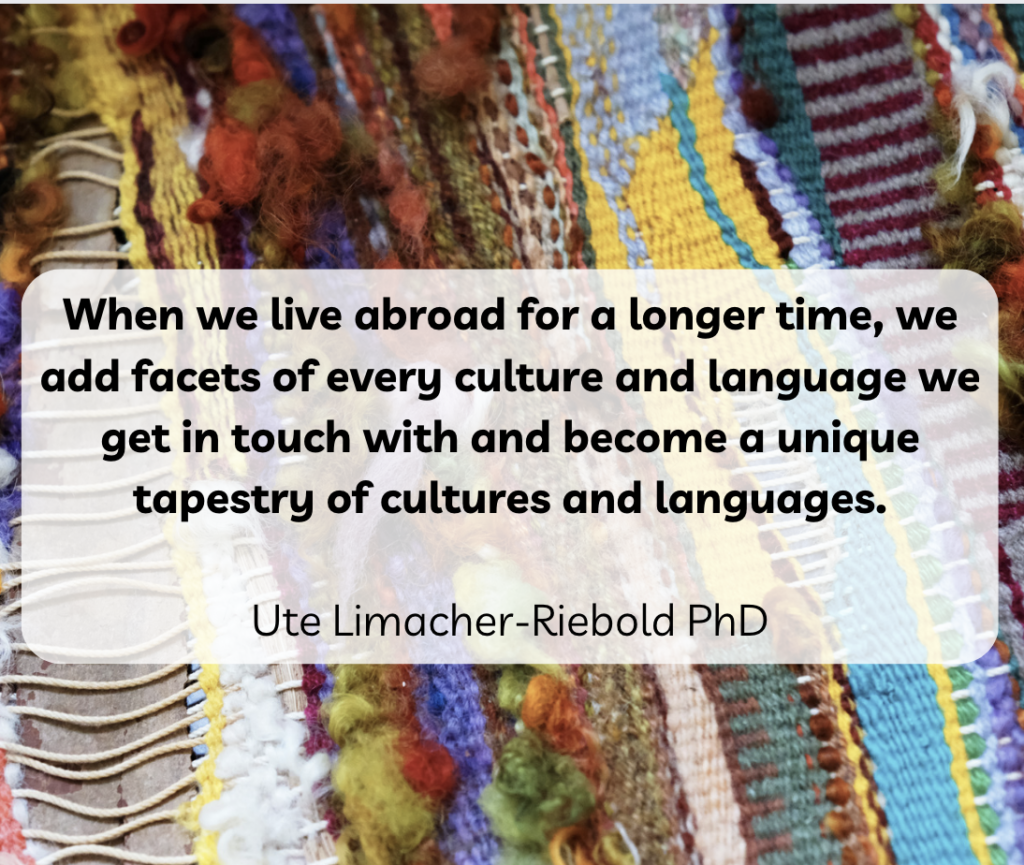
Although I /we made and make the effort to keep their heritage cultures part of their daily life, I know it will fade. This is very natural: when we live abroad, we add facets of every culture and language we get in touch with and make it our very personal one. We become a unique tapestry of cultures and languages."

The reason I always encourage parents to maintain their languages and cultures, at least to some extent, and to offer their children the opportunity to explore them is exactly what is expressed in this song. 
We can use this song to make our children reflect on their multi-faceted identity, the beauty of the many colors and shapes. "Tokyo" and "Japanese" in this song can be replaced by any other minoritized language.
Please share this with other multilingual and multicultural families, teachers, educators, and whoever might need to understand that our children, we are "not only...but also..." and have the right to be very proud of it!

–––––––––––––––––––––––––––––––––––––––––––––––––––––––

The lyrics of the song by Brooke Alexx:

I could've learned JapaneseMy grandma gave me books to readBut I didn't think that'd be cool back at 13Embarrassed of the way she talkedI thought that I was better offTryna sound like all the girls on my TV
Paid the price to fit right inClosed my mind to chase the trendsMade the joke before someone else did
Wish that I could go back now andBe okay outside the crowd, yeahLove myself and mean itBrave enough to lean inWish I hadn't kept my distanceGrew up with some pieces missingIs it too late to call you home?I'm sorry, Tokyo
Tokyo
I thought guys wouldn't like me backWhen I saw an ex in photographsAnd she looked like everything I know I can't be
And I let myself get so blinded by comparisonsI watered down my differencesMade the joke before someone else did
Wish that I could go back now andBe okay outside the crowd, yeahLove myself and mean itBrave enough to lean inWish I hadn't kept my distanceGrew up with some pieces missingIs it too late to call you home?
I wasn't ready thenI hope you're listeningI'm sorry, I'm sorryNo, I'm not innocentI should've let you inI'm sorry, I'm sorry
Wish that I could go back now andBe okay outside the crowd, yeahLove myself and mean itBrave enough to lean inWish I hadn't kept my distanceGrew up with some pieces missingIs it too late to call you home?I'm sorry, Tokyo

Tokyo

I invite you to have a look at the website from Shelly Robinson, "Raising Yourself".


Challenges in Multilingualism – Navigating Language Dynamics in Multilingual Families


Being or becoming multilingual has numerous advantages, but it also comes with its fair share of challenges.

Understanding and addressing these challenges is essential for successful language development and maintenance in multilingual families.

Let's look at some common challenges that arise in multilingual families and discuss strategies to overcome them.


Language Dominance

When one language becomes stronger or more dominant than the other(s), we have to do with language dominance. One (or more) language(s) become more dominant when language exposure, schooling, or societal influences are supporting the target language(s) more than the others.

To address this, parents can provide a more balanced language input, i.e. make sure that there is enough exposure to the target languages in terms of qualitative high verbal interactions. Furthermore, they can encourage language use in various contexts, and seek support from language professionals if needed.


Code-Mixing and Code-Switching

Code-mixing and code-switching, where individuals switch between languages within a sentence of within a conversation, is very normal among multilinguals and usually nothing to worry about. But while this is a natural phenomenon, it can be a challenge when we struggle with having conversations in one language only. In fact, when we notice that our children can not hold a conversation in the target, i.e. the expected language in contexts where a monolingual language use is necessary, we may want to reinforce some language separation strategies, such as setting language rules for specific contexts. These strategies have proven to be very effective not only with children but also for multilingual adults!


Language Loss and Attrition

Language loss or attrition can occur when a language is not actively used or maintained. This language shift usually occurs gradually. It can become a concern when multilingual children are not exposed to the target languages consistently over a longer period of time.
To prevent language attrition and language loss, it is important to create and maintain (!) opportunities for language practice. Engaging with as many people as possible in the target language, fostering a great variety of language input – from speakers with a various interests and language use (formal, informal etc.) and of course also keeping the contact with extended family members who speak the language can help keep children motivated to use the language. If where we live we don't have enough speakers of the target languages, we can use all kind of audio and video resources to keep the language as varied and interesting as possible!

In our Toolbox for Multilingual Families we share activities and games that foster understanding, speaking, reading and writing.


Limited Language Resources

As mentioned above, access to resources in all languages spoken within the family can be limited, especially for less commonly spoken languages or languages that are not transmitted in written form (like dialects for example). However, leveraging online resources, local community networks, language exchange programs, and cultural organizations can help overcome this challenge and provide opportunities for language exposure and learning. – Make sure to join my facebook group Multilingual Families where you might find the "multilingual village" you need!


Maintaining Language Motivation

As children grow older, they may question the relevance or importance of maintaining multiple languages. Especially those they don't need with their peers or to function in social settings on a daily basis. It is crucial to foster a positive attitude towards multilingualism in general, and to highlight the advantages of having language skills in multiple languages.
In my online course for parents of 10-15+ year old children* I focus on fostering this awareness in our preteens and teens with regards to communication, cognitive development, cultural understanding, and future opportunities.

Celebrating cultural heritage and promoting meaningful language use can enhance the motivation of our chidren (and us!) to keep using the language**.


Social and Peer Pressure

As soon as children attend daycare or school, and participate in society, they are more prone to face social pressure or ridicule for speaking multiple languages or just "other" languages. Depending on where they grow up, the community will be more or less accepting towards other languages and cultures. In more monolingual settings, using other languages and coming from a more diverse cultural background can cause all kind of reactions.
As parents and caregivers, we can help our children cope with those situations by building their confidence and resilience of being "not only... but also...". educating others about the benefits of multilingualism, and fostering a supportive social network can help counteract this challenge.


Balancing Language and Academic Demands

Although more and more schools support multilingual children, i.e. their use of multiple languages, there are still some challenges our children can face. These challenges have to do with balancing language learning with academic demands. Especially when the language and overall academic expectations are not met, or not met at the expected moment, teachers and parents tend to blame the multiple languages. It has been proven that in the majority of cases academic struggles have nothing to do with the number of languages a child is exposed to. It is usually an imbalance in support for the target languages and the skills related to language learning and subject learning that cause a problem.
Whenever we observe an imbalance that lasts longer than a few months, and exceed the usual transition period (when our children changed school and maybe even school language etc.), we should work closely with educators to create a supportive environment that values and integrates multilingualism into the academic curriculum. In my over 30 years of experience with working in international settings I observed that the problem usually stems from the environment the child is exposed to, not the child. Therefore I always invite parents to find ways to create an environment where their children's needs are met and where they can develop in the most healthy way.


Conclusion

I am a defender of multilingualism as I know about the advantages about knowing multiple languages. I have acquired and learned more than 10 languages and dialects, and 5 of them to a high level of proficiency (in understanding, speaking, reading and writing). But like everything else in life, knowing multiple languages also comes with challenges. But these challenges can be overcome with awareness, proactive strategies, and support.
Embracing linguistic diversity, providing a balanced and hight quality of language exposure, fostering a positive language environment, and seeking professional guidance when needed, are essential for successful language development and maintenance in multilingual families and I'd say "across the lifespan".

By acknowledging and addressing these challenges, we can create a nurturing environment that allows multilingual individuals to thrive and embrace the richness of multiple languages and cultures.


If you are multilingual and raising multilinguals, please let me know in the comments what kind of challenges you faced or are currently facing with regards to using or fostering and learning multiple languages.


*The online course for parents of 10-15+ year old multilinguals will be available in fall 2024. If you want me to keep you informed for when the course will be ready, please leave a comment here below. No strings attached.
** I am preparing a course about Motivation for multilingual families. If you want me to keep you informed for when the course will be ready, please leave a comment here below. No strings attached.


Can a country be too language friendly?

Guest post by Artemis Pepelasi
We recently learned about the unique language situation in Iceland. This lovely country of the North could make the first place as the most language-friendly country.

The situation in Iceland

Icelandic society is very welcoming towards immigrants. The government helps newcomers, providing translators and mediators to them in order to smoothly adapt to the new reality. English is widespread in the country and used as the primary means of communication between newcomers and locals.
The Icelandic government follows the fundamental right to education: all children attend everyday school from early on once they live in a neighbourhood. Within the school premises, children are encouraged to use their first language(s) in order to feel comfortable and welcomed.
Regardless of the community and schools' attempts to help newcomers, Iceland faces a great issue. And that is a potential risk for the Icelandic language. Statistics have shown that many immigrant pupils still need to obtain their age-appropriate language skills in Icelandic, according to PISA [OECD, 2019 ], which leads them not to access higher education. In addition, many immigrant adults still need to learn the Icelandic language, and as a matter of fact, the language is used less and less in everyday life also by locals. 
© Ute's International Lounge, 2023


What we observed 

We had the opportunity to discuss the aforementioned situation with professionals from Iceland. We noticed various aspects which need further exploration. As a start, the government provides access to translators (face-to-face or via phone) to the newcomers. This policy proves the government's intention to foster an inclusive society and seems an ideal practice for newcomers.
However, that help is provided unconditionally and without any time limit, which creates a potential risk: If constant help is given for language translation, people will not see the need to learn the local language. Knowing that help will be provided regardless of the circumstances, they are not motivated to learn the language. Furthermore, they get the impression that learning Icelandic is a very hard and meaningless process. 
This attitude towards the language also might lead to less motivation for children to learn Icelandic. Parents seem to have low expectations regarding academic skills and success, which could lead children to have less motivation for school too—a vicious circle.
As for the children, by not being encouraged to learn the local language at home or in society, the school needs to support them in the language learning direction. However, teachers are concerned about students' transition to the new situation at school, so they provide constant help. As we got informed, teachers sometimes learn their pupils' languages and use them to give instructions. Furthermore, teachers also encourage interaction in English, as that is the international language which is available to everyone. So teachers' actions at school, accompanied by low parental motivation towards language skills, can negatively influence pupils' academic progress. This all seems to lead to under-education and causes pupils to be unable to attend the local higher education. 
Shifting the focus to society, another issue arises. The citizens born and raised in the county might feel that the situation threatens their heritage language. The risk of language attrition is apparent, and so is the risk of cultural attrition. This fear and frustration could lead to discriminating behaviours towards newcomers, which is the exact opposite outcome the government intended in the first place.
Language attrition is a common situation when an individual unconscious change occurs within an adult or a society. It happens when people use the target language or lose their proficiency in a language due to the lack of contact with the language ("Language Attrition", 2022). Multilinguals switch languages according to environmental needs. This coexistence makes the languages interact and influence each other (Kupske, 2019). So within communities that use several languages in everyday social interaction, the language used less frequently tends to be suppressed. 
The beauty of our world is the existence of many different cultures. And all these different cultures (so different perspectives of life) are unique and make our world colourful. Iceland tries very hard to be welcoming (and many other countries should recognize that). However, Icelanders are worried about losing their unique cultural characteristics, with the first being the language, through the unconditional help they provide. But then, where is the balance point? 
  • Which is a healthy way for them to retain their characteristics and also keep welcoming all the people they would like to live in their country? 
  • How can we keep the rainbow bright when living abroad or open our countries to other people without sacrificing our language?  
Inclusion has the perspective of interaction. We interact with others, which might change how we think and act, but always with respect to what we know and the way we already behave in our everyday life.
Inclusive policies are very important for every country in order for everyone to live with dignity. However, we need to structure the policies in a way that all people are free to behave according to their unique cultural characteristics and simultaneously respect and not suppress the local cultures. 

© Ute's International Lounge, 2023

About the author:

Artemis Pepelasi lives in the Netherlands. She studied at the National and Kapodistrian University of Athens Philosophy, Pedagogics and Psychology.  She worked as a therapist for children with developmental disorders and decided this year to strengthen her knowledge and is attending the master program “Parenting and Child Development” in Leiden University. She is currently completing an internship at Ute’s International Lounge.

References 
Language Attrition. (2022). encyclopedia.pub. https://encyclopedia.pub/entry/37367
Kupske, F. F. (2019). The impact of language attrition on language teaching: the dynamics of linguistic knowledge retention and maintenance in multilingualism. Ilha Do Desterro: A Journal of English Language, Literatures in English and Cultural Studies. https://doi.org/10.5007/2175-8026.2019v72n3p311

The Dominant Language Constellation Model to visualize our use of multiple languages

[Transcript of my video on youtube]


How do you use your languages?

Which ones do you feel are more in the foreground and which ones are more in the background?

There are different ways to visualize the language use and practices of individuals and one of them is the Dominant Language Constellation, I quote Larissa Aronin: “It denotes the set of a person’s most expedient languages, functioning as an entire unit and enabling an individual to meet all their needs in a multilingual environment.”

It is a modeling tool that describes the current language practices of multilingual speakers.

The Dominant Language Constellation is practice based and captures, I quote, “a subset of the languages that are deemed to be of prime importance in the repertoire of an individual or a group” and it contains or considers three factors:

1) the dominant languages, so the choice of which languages are used the most frequently

2) the participants self-reported proficiency in each language and

3) the perceived typological distance from language to another in the individual’s dominant constellation.

As the name indicates, the model focuses on the most prominent languages which means that it leaves aside the other languages that are in a multilingual person’s language repertoire, but used less frequently.

Fact is, that multilinguals can have two to four dominant languages! Interestingly the prominence of our languages can change and shift over time. When looking at our Dominant Language Constellation in different phases of our life, the languages that are most dominant in one phase might not be in the other phase.

The way I like to use this model with my languages is exactly in a dynamic non-static way; after all ,language use is something that changes constantly from face to face situations to situations depending on what we talk about, with whom, where and for what purposes. Our languages act like a team that helps us communicate effectively.

We know that our languages are always somehow present or retrievable to some extent: The languages we use more frequently are those we are more confident using, but our language repertoire is more than the sum of the languages or the parts! We also use our languages in different ways depending whether we are in a monolingual setting or a multilingual one.

The linguistic qualities and social functioning of a language are not the same when it is used in a constellation, as compared to when it is used separately in a monolingual mode. I quote here again Larissa Aronin.

So, my Italian is important and dominant in Italian contexts, but when using English it might shift into the background. But constellation of some kind always assumes that the languages are in contact with each other like a team as I just mentioned, or like a system of planets or stars.

What I find interesting is to find out what languages collaborate to help me express myself in a target language, but in a multilingual setting. This means that I can include for example other languages that those around me can also understand. Therefore my Dominant Language Constellation can adapt to different language constellations of the multilingual situation. What does this mean?

If I am in a group of French and German speakers, but they also understand English and Spanish, these are all the languages that can be used. Same goes also for a written language: when I write an email to a person with whom I share multiple languages, I have the option to use them all even when the context is formal.

Of course I’d use formal expressions in both or all the languages and not mix the registers. We can even use the dead languages we learned, like Latin – maybe not as frequently as the others, but when I’m looking for sayings or a quote, or a maxim: Si tacuisses philosophus mansisses sounds much better in Latin! Or when I’m writing a text message in German or with someone who would understand, I can write “Rin in de Kartuffeln, rus us de Kartuffeln” in the German dialect my mother grew up with. Or “vola bas e schiv’i piant” when I write to someone who also understands Northern Italian dialects or the Swiss Italian dialects.

The Dominant Language Constellation is a model that we can use to represent where our different languages are in any given moment but also how they rotate, how they move.

As I said it changes constantly depending on the situation the people we interact with, the texts we write or read, the topic, how do or use your various languages and dialects or sign languages.

  • How would you represent them when using the Dominant Language Constellation?
  • When do they change positions?

Let me know in the comments.


For further insights about this model, please check the website Dominant Language Constellation:
https://www.dominant-language-constellations.com/

And the website from Prof. Larissa Aronin: https://www.larissa-aronin.com/

I recommend the following reads about DLC:

Aronin, Larissa & Laurent Moccozet (2021). Dominant language constellations: Towards online computer-assisted modelling. International Journal of Multilingualism. https://doi.org/10.1080/14790718.2021.1941975.

Aronin, Larissa (2021). Dominant Language Constellations in Education: Patterns and Visualisations. In: Aronin L., Vetter E. (eds) Dominant Language Constellations Approach in Education and Language Acquisition. Educational Linguistics, vol 51.(pp.19-41). Springer, Cham. https://doi.org/10.1007/978-3-030-70769-9_2

Aronin, Larissa (2021). Dominant Language Constellations: Teaching and learning languages in a multilingual world. In Raza, K., Coombe, C., & Reynolds, D. Policy development in TESOL and multilingualism: Past, present and the way forward. (pp. 287-300). Cham, Switzerland: Springer.

Aronin, Larissa (2019). Dominant Language Constellation as a method of research. In E. Vetter, & U. Jessner (Eds.), International Research on Multilingualism: Breaking with the Monolingual Perspective (pp.13-26). Springer.

Aronin, Larissa (2019). Challenges of multilingual education: Streamlining affordances through Dominant Language Constellations. Stellenbosch Papers in Linguistics Plus, 58, 235-256.

Aronin, Larissa (2016). Multicompetence and Dominant Language Constellation. In V. Cook, & Li Wei (Eds.), The Cambridge Handbook of Linguistic Multicompetence (pp.142-163). Cambridge University Press.

Aronin, Larissa (2006). Dominant Language Constellations: An approach to multilingualism studies. In Muiris Ó Laoire (Ed.), Multilingualism in Educational Settings (pp. 140-159). Hohengehren: Schneider Publications.

I also mention the DLC in my post: Dominant Language Constellation

Speech and Language Therapists and Multilinguals

In my practice as Language Consultant for Multilingual Families I sometimes refer families to speech and language therapists (SLT's) when I think that the children need some professional support with their speech or language development.
I can't stress this enough, but SLT's who work with multilingual children should have a solid understanding of the typical patterns of language development in multilingual children. It is not enough to know how a typical and atypical development in one target language would look like, as each language presents unique challenges and opportunities.
Not knowing how the other language(s) function, their patterns, i.e. phonetics, phonology, morphology, syntax, as well as other cultural aspects one needs to consider when working with multilinguals and multilculturals can lead to misunderstandings and inaccuracies in assessments.


We can not expect that SLT's are proficient (i.e. understand, speak, read and write) all our languages, but they should be able to access and make assessments in the needed languages.


Speech and Language Therapists working with multilinguals should know that:

  1. Multilingual children's language development is not necessarily delayed or disordered. Multilingual children may reach language milestones at different rates. Furthermore, a delay is not a sign of a language disorder.
  2. Code-switching and code-mixing is a natural part of language development in multilinguals. Children may mix words or use different grammatical structures when switching between languages. This is a natural part of using multiple languages and is not a sign of a language disorder.
  3. Context and exposure are key. Children need sufficient exposure to rich language in each of their languages in order to develop proficiency in them. Furthermore, it is not realistic to assume or even aim for equal language proficiency in all languages. Multilingual children acquire and learn their languages in different contexts, for different purposes and through different persons. Therefore their language skills will vary across their languages. Consequently, the context in which each language is used affects the respective language development.
  4. Speech and language therapists should consider the child's entire linguistic repertoire. When evaluating multilingual children, speech and language therapists should consider all the languages used by the children, not just the dominant language. And they shouldn't only assess the children's oral skills, but also their non-verbal communication skills. As non-verbal communication skills can differ across languages (think about the way gestures are used in different languages), it is advisable that the speech and language therapist is familiar with the non-verbal communication in the target languages.
  5. Speech and language therapists should involve parents and caregivers in therapy. Parents and caregivers play a crucial role in supporting their children's language development, and should be involved in therapy whenever possible. 
  6. Cultural factors can impact language development. Speech and language therapists should be aware of cultural factors that may affect language use and development, and should work to understand the cultural context in which the children are growing up in. For example: how are children expected to interact with adults in their home cultures? Are they expected to address adults in a formal way only, or are they allowed to speak informally? Are they allowed to make eye contact with adults?
  7. Speech and language therapists should be familiar with assessment tools for multilingual children. Standardized assessment tools may not always be appropriate for evaluating multilingual children. Speech therapists should be familiar with alternative approaches and tools for assessing language skills in multilingual children.

Overall, speech and language therapists who work with multilingual children should approach language development from a culturally and linguistically responsive perspective, taking into account the unique needs and experiences of each child and their family.

Speech and Language Therapists should work with Teachers

What we also may need to ask is how the speech and language therapist who works with our children collaborates with our children's teachers. There should be a close collaboration between the speech and language therapist and the teachers, as the SLT will need to know how to help our children progress in the school language. Furthermore, our children's teachers need to know what our children are working on so that they can take this into account when assessing our children's language at school. 


Some schools have in-house SLT's, who are a great help as they are familiar with the curriculum and can keep teachers informed about our children's progress. Moreover, as SLT's tend to have long waiting lists, schools offering SLT's in-house services allow quicker intervention.


I recommend the following books on this topic:

Dual Language Development and Disorders, A Handbook of Bilingualism and Second Language Learning, by Johanne Paradis, Fred Genesee, Martha Cargo. 

Taalstoornissen bij meertalige kinderen, by Manuela Julien

Multilingual Children, by Dr. Mary-Pat O'Malley

Difference or Disorder: Understanding Speech and Language Patterns in Culturally and Linguistically Diverse Students, by Ellen Stubbe Kester


Language Assessments for Bilingual and Multilingual Children


How to maintain our languages whilst living abroad

Living abroad is a great opportunity to learn and immerse ourselves in a new culture and language! For those who do this for a few years, this can be a refreshing and inspiring experience. It allows them to discover new facets of their own culture and language.

When we live abroad for a longer period and the local language is not one we use(d) at home or regularly before moving there, it can become challenging to learn new languages whilst maintaining our proficiency in all our “other” languages, i.e. those we acquired and learned before. Many of us experience some kind of language attrition at some point. This can be a frustrating and scary experience!

I grew up with several languages and added more throughout the years (and am still learning new ones). At times, one or two of my languages would shift into the background, while I was focusing on the new language; this is very normal when we need to get proficient as quickly as possible in a new language. But there always comes the time where I feel the need to dust off the languages I used more frequently before and it is not always easy to do so. Certainly not if there are not many users of the language where I currently live.

Here are some tips on how to maintain all (!) our languages whilst living abroad:

Speak your languages with a variety of speakers! We can learn from everyone who speaks the target language. No matter their level of proficiency! The broader and diverse the community of speakers in terms of language use and proficiency, the better.
I didn’t always find like-minded people who would use the target language in the places I live(d), but we can find people in social media groups or local organizations (eg. Internations, Meet Up) to share a common interest with or, if we want, to improve our language skills a bit everywhere in the world.

Speaking our languages with people who use them in different social settings – formal and informal, colloquial, slang etc. – and talk about various topics, helps us improve and consolidate our vocabulary and metalinguistic skills. Furthermore, speaking with people of various age groups and provenience allow us to develop our vocabulary and overall language skills.


Reading books, newspapers, magazines, comics etc. in our languages will help us keep up with news and literature from the country (or countries). Reading helps us to maintain our language skills, learn new terms in context and makes it easier to keep connected to the culture and current events. As storylines can differ considerably across languages, through books we can deep-dive into the way thoughts are expressed in the target language and metaphorically take a “language bath” in them. Audiobooks and podcasts are a great resource too! 


Watching TV shows movies in our languages help us maintain our language skills and keep us up to date with popular culture. It will help us understand cultural references, metaphors that are used in everyday conversations, and we might be able to understand “insider” jokes in the target languages. And most importantly, the visual aspect allows us to strengthen our non-verbal communication skills in the language, i.e. gestures, body-language and “reading the air”.


Practicing regularly seems easy, but it’s not. Setting aside time each day to practice our language skills is not something we think needs any planning. But after a while, when we realize that we use our language less and less, that we struggle with finding words, we should start taking this language attrition a bit more seriously. Practice includes speaking, writing, or listening exercises. If we choose topics we are interested in, that we find compelling, it will be much easier to be consistent! And if we can’t find an interlocutor, we can “listen to ourselves” by commenting on things out loud, express our thoughts out loud – I know, it sounds crazy, but when we listen to ourselves using the target language we get used to the sound, intonation and rhythm again, and we get confident (again) to use the language also with others.


Using language-learning apps and websites are not only for language learners! There are many language-learning apps and websites available that can help us practice and improve our skills also at higher levels. They can be a great supplement to other methods of language maintenance.


We can maintain our language skills whilst living abroad even for a longer period

I personally manage to maintain multiple languages. Although I don’t live in the respective countries since almost 20 years (I talk about this in some of the interviews), and I actually never lived in countries where some of my languages are the community language – English for example – the practices mentioned here above help me keep my level of fluency high.

Consistency and curiosity are key! I try to listen to and use my languages on a regular basis. During designated times per week where I immerse myself fully into a language:  I watch a show, listen to a podcast or a recorded article.

I made it a habit to read in any of my languages. Whether it is a news article or a novel, a scientific article or a poem, reading helps me foster at least my receptive vocabulary. The more I read a new term, and read it out loud, the higher the chance that I will use it when I speak.


I try to speak at least my 5 most dominant languages – English, German, Italian, French and Dutch – on a weekly basis. I not always get the chance to meet people speaking all of them, but I try to at least meet people online who share them with me. Writing in multiple languages per day is very efficient.


It is a natural process that some of my languages move to the background whilst others shift to the foreground every now and then. But whenever I notice that I struggle in one of my languages, I try to “nurture” it a bit more, until I feel more confident again.
In this video I share a model that allows us to visualize our language use:


I use some of my languages mainly for personal purposes, whereas others for professional ones.

  • How is it with your languages?
  • What languages would you like to foster more?
  • What strategies are effective for you to maintain your languages?

Please let me know in the comments.