When the home language is not the dominant language

If you are a multilingual, is your home language your most dominant language?

Something that surprises me when I read about language policies in schools and elsewhere is, that it is always assumed that people – children and adults – are most proficient, i.e. most fluent, in their home language. This might be correct for those who learned other languages later in life and were first schooled in their home language, but reality is very different for multilinguals who are schooled in other languages!

If you are a simultaneous bilingual and you have the chance to maintain those first languages at school (because the school teaches several subjects in both or all the languages!), all your languages might be more or less at the same level – usually one or two are more dominant than the others, depending on many factors. You may be bi- or pluriliterate.

If you acquired and learned several languages, simultaneously and successively, lived in different places, were schooled in one of the languages, or maybe not..., worked using one of these languages – it might be that your most dominant language is not the first language you acquired or learned.

If our children are schooled in another language chances are high that their most dominant language is the school language...



The reason for this is very simple: we don't (or can't) foster all the vocabulary they learn and use at school also in their home language, because it would mean that they hear the same lessons twice once at school in the school language, once from us at home. 

Recently many schools – not only the international ones! – are opting for a more inclusive policy when it comes to home languages, which I fully support. It is proven that integrating home languages in the practice at school, helps new students, i.e. those who were schooled in their home language earlier, to adapt and integrate easier.

But what about those multilinguals who are schooled in languages that are not their home language(s) since day one? Who maybe had to learn two (or more!) school languages in addition to their home languages due to their moves?

I see a problem in the overall approach, because these latter children are often lacking behind their peers in their countries of origin language wise. They need a whole other support!

Many multilingual families bridge the school and the home languages by discussing about school topics, by providing the necessary input, fostering the right vocabulary. This is hard work! And it requires collaboration and transparency from the teachers and the school in general, and not only on primary school level, but throughout the whole school curriculum!

We parents – even those who are teachers – can't provide all the input that our children receive at school in their school language. We have to make compromises. For my family it means that I focus on the topics my children like the most. I must confess that I find it sad that my children don't count in German or Italian, that they prefer English when it comes to explaining complex subjects, but I know that with patience and our many conversations, they will acquire as much as they can.

I honestly hope that there will be more studies about multilingual families whose children are schooled in another language and who do everything possible for their children to become fluent also in their home languages. I am looking for testimonials from other multilingual families whose children are schooled in another language.

I want to hear from you, how you foster your home language(s) and how it is going, what support you get, what support you would need.

Please share your experience with me, by leaving a comment here below. 

I will gather all the information I can get to write an article, present it at conferences and hopefully we will get more help from governments, schools, teachers, the community we live in.
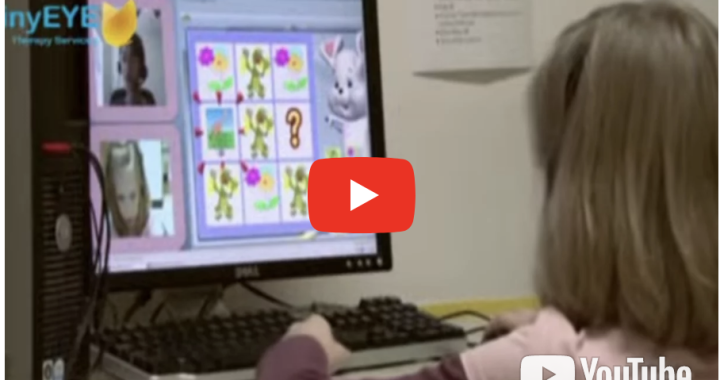


TinyEYE online speech therapy from your home or school

In my practice as Language Consultant I sometimes work as mediator between parents and schools when there are some misunderstandings concerning the speech and language development of the child.

Speech therapists usually help the child either during school hours or after school with the school language. They usually work closely with the teachers in order to provide the best support to the child.

What many parents of bi- or multilingual children don't know is that their children should get this support it in all the languages they speak!

As not every parent is a linguist or a speech therapist, who can provide this support themselves or at least bridge between the languages.

Also, finding a speech therapist who is expert in the school and the home languages is very difficult.

The online service offered by TinyEYE can be a solution for some.

I'm very thankful that Mila Rozema, TinyEYE British-Dutch speech and language pathologist, agreed on answering a few questions about the services TinyEYE can offer to bi- or multilingual families.


  • What age group are you targeting with TinyEYE?

TinyEYE is an online speech therapy company that has been helping clients of all ages for many years now. From children with speech and language disorders to teenagers who stutter and adults who have had a stroke.


  • How does this work?

To be able to know whether a person needs speech therapy, one of our TinyEYE speech therapists plans in an intake interview with you. During this interview you can elaborate on the problem and the speech therapist will ask questions about the medical history. The speech therapist will then give advice and discuss starting up speech therapy or not.


  • What kind of information do you need from parents and schools in order to know if you can help the child (or adult)?

Our TinyEYE speech therapists find it important to get in contact with others involved in the client’s daily life. Think of teachers or doctors.


  • Is the speech therapy you're offering at TinyEYE covered by the health insurance?

Our online speech therapy is fully covered by the Dutch health insurances.


  • What about multilingual children: can your speech therapists provide the service in more than one language?

Our speech therapists are also specialized in working with multilingualism and different cultures. We can test and treat in different languages.


  • What are the languages do your speech therapists cover at the moment?

The languages we provide are: Turkish, Dutch, British, German, French and Malayalam.


  • Is this service available worldwide or do you only serve specific time-zones?

Our services are world wide. Flexible hours, so time difference isn’t an issue at TinyEYE!


  • Can parents assist the online sessions together with their children?

The good thing about online speech therapy, is it can take place from the client’s home environment. This means parents can be present during the speech therapy of their child for example. We also work with international schools. In some cases the equipment is set up at a school and we see children online, during school time.


  • Do you use online games when working with the children or do you also give homework they can do offline?

When working with children, we use our TinyEYE speech and language games. We then place these games, with personal instructional video’s in their homework so they can practice whenever they please. When working with adults, we use a large screen, writing or photo material. All therapy materiaal is integrated in our software programme.


  • How long does a session last?

The duration of a TinyEYE session is 20 minutes. Short but effective. We tend to plan in two or three sessions a week.


  • Some families who live in remote areas where they don't have the appropriate speech therapy for their children, also struggle with internet connection problems. What system do you use when working with the clients online and is it safe for children to use?

We use our own TinyEYE software programme for the live audio-visual sessions. Client and speech therapist login via the website. This programma doesn’t need a strong internet connection so families living in remote areas or in the mountains can also receive online help.


To see a brief introduction of the bilingual speech therapists, please click on the following link: https://tinyeye.eu/en/about/ and https://tinyeye.eu/wie-zijn-wij/


Please don't hesitate to contact TinyEYE if you are interested in online speech therapy for yourself or someone you know.


Mila Rozema, British-Dutch speech and language pathologist at TinyEYE