First signs of communication

Guest post by Artemis Pepelasi


A milestone of human development is speech. Speech is not only about the number of words an individual knows but also the effective and meaningful communication with the environment, which also includes non-verbal characteristics like eye contact and gestures. Parents tend to be very anxious about their babies' first words and get worried if their children do not speak at a specific age. However, they sometimes ignore that the preparation of speech and communication began before their children were born. 

(Pixabay.com)


Why do infants cry?

Babies cry to communicate their needs, like hunger, illness, frustration etc. Regarding their needs, infants cry in different ways. That is their very first attempt to communicate with the environment. Nevertheless, communication does not only rely on the individual's needs; communication also has social aspects. And children need to learn those aspects from their caregivers.


What can a caregiver do to teach communication?

There are several ways for caregivers to teach communication. Naturalistic context is always effective for children to learn dyadic interaction and conversation. Naturalistic context is whichever procedure has “natural” characteristics. For instance when teaching our children to play with others, we will do so on the playground. If we want to teach them how to communicate, we should try to communicate with them in the same way we communicate with verbal people.

In order to attract children’s attention, adults can talk louder and show how words are pronounced through emphasizing facial expressions. 

Another effective way to foster communication is by describing all the activities happening: describe the food preparation or that infants will have their bath. Moreover, caregivers can ask questions to infants while making eye contact and waiting for a response. In that way, infants learn that a conversation needs at least two people, everyone has time to speak, and each conversation participant pays attention to the one who is talking. We must remember that we all have learned to speak and communicate because we listened to someone talking and imitated this behavior.

What is the right time to teach an additional language? 

Communication skills can be taught regardless of the caregivers’ language and culture. Research has shown positive cognitive effects in multilingual infants. Experiments have shown that bilingual infants were more likely than monolingual infants to remain engaged to a stimulus and switch faster from one stimulus to another.
There is an excellent opportunity for children to acquire different languages early on in life and learn that different sounds and gestures can be included in communication. Nevertheless, caregivers should be careful because the same gestures may have different meanings in different cultures. It is suitable for all caregivers to come to an agreement about the gestures used with the child.


What are the psychological effects of communication? 

The interaction caregivers have with children is not only helpful in teaching languages and communication. Another essential aspect of this interaction is the children’s secure attachment to their primary caregiver. Since infancy, children communicate to fulfill their needs. However, they have to know they can turn to a specific person in distress or because of illness. This need for safety is essential for all infants. The lack of that safety combined with individual characteristics (i.e. temperament and environmental factors) can lead to later internalizing and externalizing problems, such as anxiety and maladaptive behaviors.


Talk to your infants even though they cannot speak yet. They are capable of communication and need it in order to feel safe and secure with you. Communication is the key to the emotional connection of children with their caregivers! 


  • What is your experience communicating with your infant? 
  • Please feel free to share your experience in the comments.


About the author:

Artemis Pepelasi lives in the Netherlands. She studied at the National and Kapodistrian University of Athens Philosophy, Pedagogics and Psychology.  She worked as a therapist for children with developmental disorders and decided this year to strengthen her knowledge and is attending the master program “Parenting and Child Development” in Leiden University. She is currently completing an internship at Ute’s International Lounge.


If you wish to read about naturalistic context/ education, have a look at these sites:

https://www.qualityresearchinternational.com/socialresearch/naturalistic.htm

https://cognitiveresearchjournal.springeropen.com/articles/10.1186/s41235-022-00435-0


4 communication styles in (multilingual) children

We all have different communication styles. And so do our children.
Parents often assume (or expect) that their children will have their same communication style, but that is not as simple. Especially in multilingual families, communication styles can be very different and children who grow up in such settings might switch back and forth between these different communication styles.

When we know what communication style our children have, we can understand them better, not only because of what they say, but also how they say it, what makes them communicate in one way or the other.

Elaine Weitzman  distinguishes 4 communication styles in children* that depend on 2 factors:

  • their ability to initiate interactions with others
  • their ability to respond when other people initiate an interaction with them. 

The way we interact with others differs from culture to culture, from language to language. Depending on the communication style that is most common in a language – which affects or influences intonations, turn takings, making (or not making) eye contact, the pace of a communication and the way adults communicate with children in general – our children will most probably follow the one of the language they are exposed to for the majority of the time. Or, in other words, the language of the person they are mostly communicating with. This can be a parent, peers, teachers etc.. 

I take Elaine Weitzman’s the 4 communication styles in children (see here below) as starting point to explain the different communication patterns that we can observe not only across cultures but across languages.

This is only a very generic explanation that I usually analyze more in detail with the multilingual and multicultural families I work with.

1) Sociable Communication Style

Children with a sociable communication style initiate interactions with others and are quick to respond to others’ initiations. Even if they only have a few words or are hard to understand, they continue to try and communicate with others. They are often considered “outgoing” or “extrovert”. Sometimes they insist communicating even if the other person can’t really understand what they mean.

If one of your child’s culture and languages is one that fosters and encourages this sociable communication style, i.e. interactions of children (or at any age) with adults and peers, chances are high that your child will have this style too.

But even if parents, and communities our children grow up in, foster this communication style, it is not a given that our children will adopt this style and feel comfortable with it. There are many factors that influence a child’s communication style (character traits, experience in different settings etc.).

2) Reluctant Communication Style

Children with a reluctant communication style are more likely to respond to others than to initiate an interaction on their own.

They can be considered “shy” and might need time to “warm up”, to become comfortable with new people and new environments. When these children are not given time to adjust and respond at their own pace, they tend to “fly under the radar” or risk to be labelled as “not fluent in the language”, although they are often much more capable than they appear!

Those who grew up in a context where children are not encouraged to interact with others (especially not adults), might need some time to adjust to a more “sociable” communication style. Especially in multilingual and multicultural contexts, it is difficult to determine if a child has this communication style because he/she is rather cautious in general, or because this is a style that is fostered by his/her parents.

Teachers who work with children coming from diverse cultural backgrounds, should be trained to understand and support the children’s different ways to relate and communicate with others.

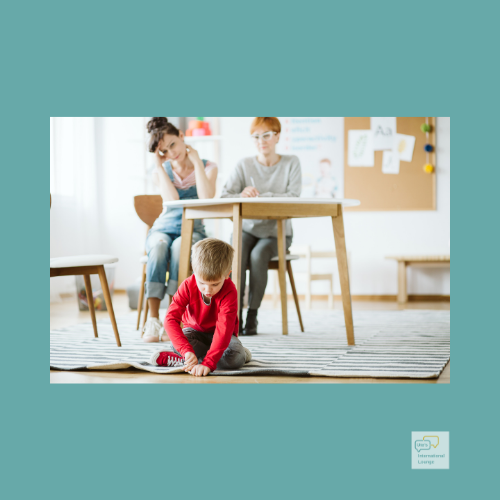
3) Inactive Communication Style

Elaine Weitzman defines this style as passive communication style, as the passive behaviour of children with this particular style can be a sign of autism or other developmental issues.

Children with this communication style seem hard to connect with because they seem uninterested in people and objects – also toys, games etc. A developmental delay, a sickness or being on medication can lead to this more “inactive” communication style. – I prefer the term of “inactive” as I assume that these children are, in some way, receptive for their environment, i.e. that they understand and connect with their parents, teachers, siblings, friends etc. at least to some extent.

This is why I distinguish two (or more) categories of children with this communication style: those who have a developmental delay, a sickness or are on medication, which affects their way to connect with others, and those who have this more inactive communication style because they don’t understand the language (yet) or don’t know how to behave in given situations (yet)!

In fact, children who are schooled in an additional language, i.e. that is not one of their home languages and they are still in the adaptation and adjusting phase, can have this kind of communication style in specific situations only. This is very important to know because this helps us to find ways to help our children become “proactive”.

If your child has this communication style in specific societal contexts only,  it is advisable to explain this to the teachers and to invite them to find ways to interact with your children’s language, or to find ways to bridge between the home languages and the daycare/school language.

If after a few months the child still struggles with becoming confident in the new setting, despite the help from the teachers and environment (including the parents, of course), it is advisable to contact a child psychologist.


4) Own Agenda Communication Style

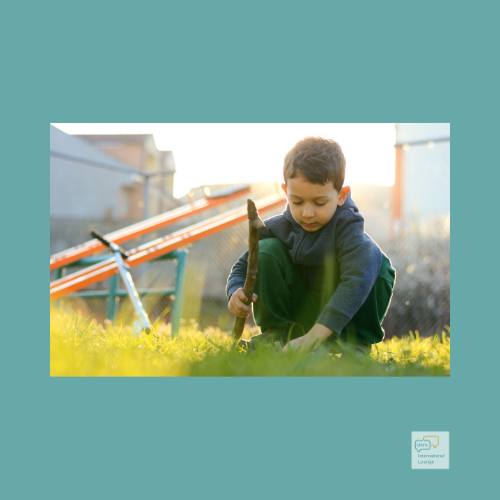
Children with this own agenda communication style, usually initiate communications with others only when they need something. They can be found playing independently and alone. It might be difficult to get a message across to these children as they seem as if they are in their own little world. They might struggle to successfully play and share with others. There are several reasons for children to have this own agenda communication style. It can be that they are the only child, that they are not used to social interactions with peers or other adults (yet), that they are used to play by themselves, or that for some reason they have problems to connect with others.  

One reason for children to have this communication style are hearing problems: they simply don’t hear when others’ speak to them, and only react when they are addressed through eye contact or touching the arm or shoulder for example. It is always advisable to check out the hearing of the child and to observe him/her in a variety of settings and situations.

If children with this communication style are schooled in an additional language that is not one of their home languages and that are still adjusting to the new language and environment, it is, once again, advisable for parents to explain the situation to teachers and to invite them to find ways to bridge between the home languages and the daycare/school language, or to find ways to interact with the child in his/her language. 
This is only a short overview and introduction about communication styles in children and some ideas on how they can apply to multilingual and multicultural children.

  • What communication style best describes your child most of the time?
  • Does your child have the same communication style in all his/her languages?
  • Does your child have the same communication style in all the societal settings, i.e. when at home with the family, at the daycare/school, with extended family and friends etc.?

If your child has an inactive, reluctant  or own agenda communication style: does she/he have the same style in all his/her languages? Does he or she have the same style in all societal settings, i.e. with adults she knows (like parents, and other adults in their daily life) and peers, in formal and informal circumstances?

If your child currently has predominantly one of the aforementioned communication styles, it can be that either your child has hearing problems (maybe has an ear infection), in which case it is advisable to let your infant’s or toddler’s hearing be checked (especially if they are prone to ear infections). If your child has one of these three communication styles but does not have an ear infection, is not ill and doesn’t take medications, and struggles with communicating, they might need some support and encouragement to get involved in interactions.

All children benefit from parent’s and other people’s efforts to make interactions more successful, interesting and engaging. If your school aged child has one of these three communication styles in specific situations only, it might be that he or she is struggling with either the language, the situation (at school or at home) or with peers/friends.

In any case, it would be helpful and beneficial for your child, if you could help him/her become more confident in sharing their thoughts, communicate effectively with you, so that you, as a parent, can understand what is going on and help or find help. 

If you want to find out how to optimize the communication with your children to support their way to communicate and connect with others in the most effective way, don’t hesitate to contact me.

And if you are looking for ways to foster understanding and speaking in a fun and entertaining way with your 0 to 15+ year old children have a look at our Toolbox for Multilingual Families, where Ana Elisa Miranda and I share 60 activities that foster understanding and speaking

Last but not least: multilinguals can have different communication styles depending on the language they speak (which doesn’t mean that they have multiple personalities…)


Some more questions: 

  • Do your children have different communication styles?
  • What communication style did you have when you were a child?
  • What style can you relate to most?
  • What style makes you feel comfortable/uncomfortable?

Please let me know in the comments here below.

*Weitzman, E. (2017) It Takes Two To Talk: A Practical guide for Parents of Children with Language Delays, Toronto, ON: The Hanen Centre.

– Finding out the communication style of your children is important to better support their language development – at home and at school. It is one aspect that you learn in my online course ENJOY Raising children with multiple languages for parents of 0-4 year olds.


All pictures © Canva.com

How to adjust your international language

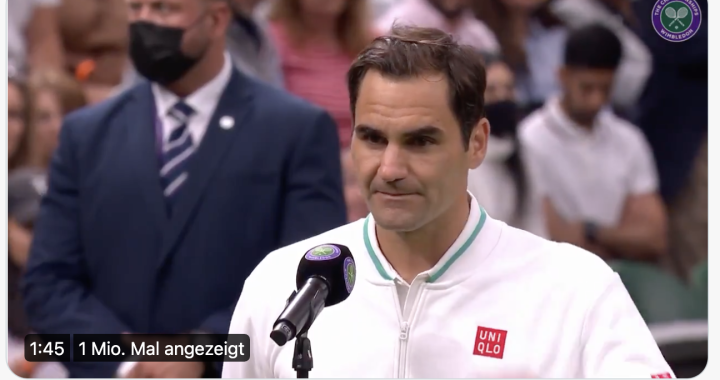
When I saw this interview with Roger Federer the other day, I couldn't resist but share it in my facebook group Multilingual Families.

It is a perfect example for why, when we use our language in international settings, we shouldn't assume that sayings, metaphors (and abbreviations!) are universal.


In this particular example, Roger Federer made it very clear that "his mind went blank" when the journalist asked him if " (his) absence (on Centre Court) made the heart grow fonder (to come back, playing at Wimbledon)" applied to him too.

Let's have a look at the interview:
Journalist: "...is it true what they say that absence (is) making the heart grow fonder, being back here?"

Roger Federer: "I, I... sorry I didn't understand it." (look at his smile, he puts the arms behind his back, smiles to the public) "I heard that something absence, then, I don't know... my mind went blank-"

Journalist (smiles and repeats slightly louder): "I..Is it true they say about absence making the heart grow fonder and being back on Centre Court?"

Roger Federer (still his arms behind his back, shakes his head, looks into the public...): "I don't understand that saying..." (laughs and the public laughs with him; he looks at the interviewer) "My English is not good enough" (continues smiling and laughing...)

Journalist: "Fair enough... So, basically, having missed out last year [Federer: "Yes..."] away from this place for two years, how special is it to be back here?"

Roger Federer: (nods, puts the arms in front of him again) "Yes, there you go (public laughs, then claps, Federer crosses the arms in front of him, touches his face and waits until the public calms down) A good reminder my English is not very good but it's ah... (Journalist: "It's better than mine!") no, no no...  Ah, no, look, ah... I think we're all very happy, all the players, I think including all the fans and the organizers and everybody... that we get a chance to black ah... playing again back on tour overall. Especially here in Wimbledon and plus with the crowd, it would have been the worst to have this term with no fans. This would have been ... absolute killer... (cheering from the public) but it's ah...(applause and cheering from the public). That's... it's... it's such a privilege to play here. (puts his arms again on his back) Look, I couldn't be more excited. I made it after a long hard road last year and so forth, but ah... I'm happy I get a chance for a second match and I'll see how it goes, but I hope everybody else is having a great time (puts his hand up on the side) but even though it's raining but that's normal so (puts his arms on his back again, smiles, nods and talks to the public; the public is cheering) I'll see you at the second round".


This kind of mis-communications happen all the time in international settings (and not only in international settings) for the simple reason that we usually assume that the way we express ourselves is "clear enough", that the other person will understand what we mean and how we mean it. I like to quote Karl Popper: "It is impossible to speak in such a way that you cannot be misunderstood". The same applies to the receiver: you can not assume that you'll understand everything the other person says. Not because you are not "good enough", "fluent enough" (whatever that means!!) in the language, but because the context, the word choice and the intonation, articulation, the use of sayings, metaphors etc. usually allows multiple interpretations and can be misleading.

In this particular situation, the interviewer could have explained what he meant immediately, without putting Federer on the spot. He could have rephrased it, paraphrased it, made an example... But he assumed that Federer "zoomed out" for other reasons – like acoustics, short distraction or because he was tired – and repeated exactly the same question.

Now, in this kind of situation we all know that some people would just ignore, do as if they understood something else and answer whatever they want to share, without letting the other person know that they didn't understand.
It requires a high sense of loyalty towards the interviewer and self confidence to react the way Roger Federer did. His English is very good and the way he reacted was top. After saying that he didn't know the saying he added "my English is not so good" – like an excuse. For this last comment or self-judgment people on twitter said that "he might have British humor after all". 
I think it has more to do with Federer being used to international settings and not taking this kind of situation too seriously, not personally. Federer is perfectly able to laugh at himself – a skill that comes with being multilingual and multi-cultural.

It is always ok to ask for clarification, no matter if in a private conversation or, like here, in front of a big public and when we're put on the spot. Roger Federer, who is perfectly capable of adjusting to the British communication patterns, gave the journalist the chance to reformulate the question by saying overtly what happened: his mind went blank which means: "something triggered my mind to go blank, aka, I didn't understand what you just said...".

This is a very polite and indirect way to signalize that one needs clarification. People who are used to "reading the air" or "reading in between the lines" would have reacted accordingly, without putting him on the spot. But in this particular situation, the journalist assumed that this meant that Federer didn't "hear" him (acoustically). He took it at face value, i.e. that Federer really didn't hear what he just asked, and chose to repeat the question. Let's not forget the situation: the journalist knew how fluent Federer is in English and didn't assume that he wouldn't be familiar with the saying and, he most probably expected a more direct hint.

Federer realized that the journalist didn't understand and specified why his "mind went blank" by adding that he didn't understand that saying. 

Now, one can be quick at judging the journalist and saying that he didn't manage to understand what went wrong. But when Roger Federer said that he didn't know the saying and that his English wasn't "good enough", the journalist replied that "it's better than mine".

I think most people who listened to this interview didn't understand what the journalist wanted to point out here: he realized that he didn't manage to adjust his language in this interviewee, and caused what could have been a very embarrassing situation for Roger Federer. He apologized in his own way. He emphasized with Federer's situation and quickly positioned himself and his English "under" the level of comprehension of his interviewee, which, in my opinion, saved the situation.

When the journalist explains what he means, Federer says "there you go", triggering the public to cheer, and relaxing the situation that could have been quite embarrassing. By responding in this colloquial way, Federer showed his flexibility and capacity to steer the interview back to where it was.

You can tell that I am a fan of Roger Federer – not only because he is Swiss! – but that's not the reason I chose this example. I think we should always look at both participants in a conversation: how are they adjusting to the other's way of communicating? 


I train internationals and those who work with internationals, become internationally fluent or multi-competent in international settings.

There are very effective strategies one can learn to master this kind of situation with dignity, without loosing the face, self respect and the trust of the other person, exactly how Roger Federer and the journalist did in this example.

In every conversation – and interviews are conversations! – both interlocutors need to adjust their "communication game" to the situation. I like to compare turns in a communication to a tennis game, where you want to have "many successful turns" (without dropping the ball...) and where the pass to the other player can trigger some new reaction, a new way of playing/communicating that you may not have explored yet, but that makes it fun and entertaining. Like every effective communication we want it to be enjoyable and to have a positive outcome for everyone involved.


My questions for you:

  • Does it happen to you that in one or more of your languages you don‘t get certain meanings/allusions etc?
  • How do you respond? Do you feel inadequate, or blame yourself?
  • Do you adjust your language to your interlocutor? If so, by doing what exactly?


Please let me know in the comments.


Infant Communication Baby Sign Language with Multilingual Children

When I first heard about baby sign language, my children were already verbal. Here in Europe it seems not as common to teach babies and infants signs if they are not deaf growing up with deaf parents. I have since read about this and met families who have taught their babies how to sign words in order to communicate before they become verbal.
I was particularly interested in how to use baby sign language to bridge between languages in multilingual families as I believe that it is a great tool to facilitate communication between all family members: the baby, the parents who might speak two different languages and not be fluent in the partner’s language (yet), and siblings, not to mention extended family and caregivers!

I met Roya Caviglia who offers Infant Communication Baby Sign Language courses online and in the Delft area (Netherlands)  and interviewed her on my youtube channel about this topic.

If you have ever wondered how baby sign language can help you communicate earlier with your baby/infant, before they even become verbal, and how it can bridge communication in all your home languages, find out in the interview with Roya.

These are some of the questions we discuss about:
4:23 How does the Infant Communication Baby Sign Language (ICBSL) differ from the official Sign Languages?
8:42 When can we start with learning the ICBSL, and when can we expect our children to respond by using the signs?
12:52 And if my child is already 2,5 years old and verbal: is it too late to start with ICBL, will it hinder my child becoming more verbal?
18:42 Is it not too much for multilingual families to add ICBSL to their other home languages?
25:05 How ICBSL can help daycare and preschool teachers communicate with children who are not verbal (yet) in the required language.
27:57 What happens when my child gets older? How will this ICBSL evolve?

  • Do you use baby sign language with your baby or infant?
  • What is your experience with it?
  • What did you find particularly helpful, and what would you advise new parents about baby sign language?
  • Please let me/ us know in the comments here below!

About Roya:
Roya Caviglia has spent many years teaching people how to improve their communication in English while moving from one European country to another. Now she runs a language school in South Holland looking after international professionals and their families. One day she had kids and started out on the crazy wonderful journey of parenting. It was a shock to find out how challenging and physically demanding being a parent can be. But she also made the wonderful discovery of how much babies have to tell us. Now she is passionate about helping families bond through clear communication before their babies can even speak.

Find out more about Roya’s Infant Communication Baby Sign Language course and the video with babies signing


Further readings on this topic: 
Enhancing early communication through infant sign training “Sign training might facilitate rather than hinder the development of vocal language”! 


What is speech? What is language?

When I explain to people what I do, that I focus on language and communication but that I also can help with the speech, as I have studied and taught phonology, I often need to explain the difference between speech and language.

What is Speech?

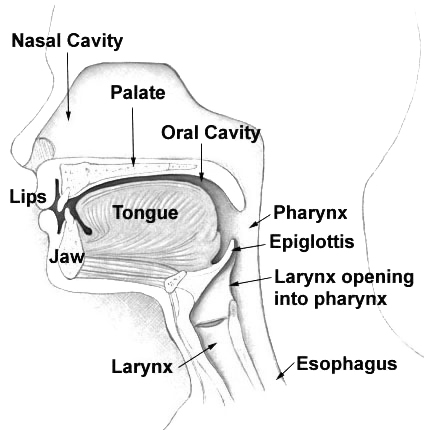
With speech we refer to the articulation of the sounds, the phonological skills, the speech fluency and the voice. 

When I focus on the speech of a person, I focus on her or his ability to use the human vocal tract:

  • Physically produce the individual sounds and sound patterns of his/her language (Articulation)
  • Produce speech with appropriate rhythm (and free of Stuttering behavior)
  • Produce speech with an appropriate vocal quality for his/her age and sex.

When a child or an adult has problems to pronounce a sound, we focus about the phonological level of his/her production of language and try to help with it.


What is Language?

Language is a system that consists of the development, acquisition, maintenance and use of complex systems of communication. Every language – German, English, French etc. – has its “symbols” that can be words, either spoken or written.

Most languages also have gestures that are a form of non-verbal communication, or non-vocal communication, where bodily actions communicate or accentuate particular messages. For example, waving hands to say “goodbye”.

What determines a language are the socially shared rules that include:

  • semantics: what a word means. In different contexts “star” can refer to the bright object in the sky, a celebrity or a bright person etc.
  • morphology: how to make a word so that it can function in the sentence and make sense: friend (a friend), friendly (a friendly person), unfriendly (someone who is not friendly) etc.
  • syntax: how to put words in an order so that the message is understood (we also talk about grammatically correct sentence): Lisa drives the car, and not *Car Lisa the drives
  • pragmatics: the ways in which language use is patterned and how these patterns contribute to meaning. In all languages, linguistic expressions can be used not just to transmit information, but to perform actions.


Language without speech

Speech and language are related, but we don’t need speech to have language. When we use sign language, speech is not involved. Sign language has its own set of rules to govern how it is used: its own symbols, syntax, pragmatics, etc.


What is communication?

Communication, then, is the process of conveying a message or meaning to establish a shared understanding to others. We don’t need speech or a shared language to communicate.

We can always use our hands and gestures that make others understand what we mean or draw pictures of what we are looking for. By using gestures and pictures we can communicate without using speech or shared language.


Communication is always the first goal

Sometimes a person’s ability to communicate with speech and/or language is so impaired, that Speech Therapists need to bypass those methods and use an alternative or augmentative communication (AAC) system to get the child communicating as soon as possible.

This could be by using signs, pictures, or an electronic device to give the person the ability to communicate his or her wants and needs.

Once the person starts communicating, we can focus on trying to improve the speech skills so that he/she can use speech to communicate his/her wants and needs. 

Just think about toddlers who still don’t talk: they are communicating through gestures, facial expressions, and body language even though they aren’t using a lot of speech yet.

– Although speech and language are related to each other, they are different.

Please watch my interview with Speech and Language Therapist Weronika Ozpolat.