Understanding testing in Dutch primary education

Testing is crucial to every child’s journey in Dutch primary education. But what exactly do these tests entail? How are the results used, and how do they impact your child’s future? This article explains everything parents need to know about the M-test, E-test, and the final placement test.

Twice-yearly assessments: M-Test and E-Test

Dutch primary schools administer method-independent tests for language and math twice a year. These are called the M-test (taken in the middle of the school year) and the E-test (taken at the end of the school year).

Often referred to as LOVS tests (standing for Leerling- en Onderwijsvolgsysteem, or student and educational tracking system), they provide a snapshot of a student’s math and language skills at a specific point and how those skills develop over time.

Legally mandated tracking

Dutch law mandates that all primary schools utilize a student tracking system with systematic testing. These tests must assess students’ Dutch language, arithmetic, and mathematics knowledge and skills. Additionally, schools must administer an objective final placement test to students in their final year (group 8).

However, schools have some flexibility. They can choose from four recognized LOVS systems: Cito LOVS, IEP LVS, Boom LVS, and DIA LVS.

Schools are also free to select their teaching methods and associated method tests. This means your child’s specific tests may vary depending on the school. The school guide typically provides information on the teaching methods used.

Beyond scores

LOVS tests provide valuable insights into your child’s math and language skills at a particular point in time. These tests cover various difficulty levels, revealing individual differences and identifying students needing extra support or challenges   (eg. high gifted children). Teachers use this data to tailor instruction for each student and the whole class.

It’s important to remember that LOVS tests are just one piece of the puzzle. Teacher observations and method-based assessments are equally crucial for understanding your child’s development. A child’s growth encompasses not just academic skills but also social-emotional development. Teachers observe children daily and collect information about their social-emotional well-being within the LOVS system.

Understanding test results

Most primary schools invite parents two to three times a year to discuss their child’s progress with the teacher. These meetings often coincide with issuing student reports prepared after the M-test and E-test.

LOVS tests: potential limitations

Like any assessment, LOVS tests have some limitations. Here are a few key points to consider:

  • Snapshot: M and E tests capture performance at a single point in time. Unforeseen factors like student stress or events at home or school can influence results.
  • Test fit: The test format might only sometimes be ideal for all students. For example, unfamiliar cultural references in the test questions may pose a challenge. It’s important to note that, for instance, the IEP system focuses on student growth, while Cito additionally focuses on achievement.
  • Test prep concerns: Schools are incentivized to make their results public, which can lead to some schools “teaching to the test” by having students practice with old LOVS tests. This practice can undermine the reliability of the tests.
  • Decision-making: Important decisions about your child’s education should not solely rely on test scores. Consider them alongside teacher observations and your child’s overall development.

The final placement test and the school choice

The final placement test assesses students’ language and math skills against national reference levels. This test serves as a guide for determining the most suitable type of secondary education for each student based on their language and math proficiency. It’s not an exam; students cannot pass or fail.

Additionally, the results provide insights into the overall learning outcomes at the school, which the Education Inspectorate uses to inform their comprehensive assessment of the school (except for special needs schools).

Schools can choose from various final placement tests for the 2024-2025 school year. These include AMN, Diataal, IEP, Cito Leerling in Beeld, A-VISION Route 8, and the government-issued DOE test.


Choosing a Test Provider and Support for Your Child

Schools select a test provider, meaning all students take the same test in the spring, even at different school locations. Exceptions are made for students with disabilities or specific support needs. For these students, schools can administer a different final placement test from another provider.

Additional Resources

If you’d like to learn more about the specific tests, which one might be best suited for your child, and how your child can be helped to prepare for these tests, please visit Dutch for Children for more information, or send me an email directly at info@dutchforchildren.nl to schedule an orientation meeting.

Dutch education explained

Every country has its own education system. The Netherlands is no exception to that.


Primary school


In the Netherlands, primary school starts with kindergarten at age four. From age five it is compulsory to attend school fulltime. There are hardly any private schools in the Netherlands.  Schools can have a certain religious orientation such as Protestant, Catholic, Islamic, Hindu, any other religion or no religion at all.  In addition, schools can follow a certain educational philosophy such as Montessori, Jenaplan, Dalton or Vrije School (internationally also known as Waldorf).  Children with special educational needs will find offerings more frequently in primary than in secondary schools.

All primary schools teach English, at least in groups seven and eight (ages 11-12). Between 2014 and 2023 took place an experiment with bilingual primary education, in which teachers spoke English during 30-50% of the time: “The research shows that the TPO schools score at least as well on Dutch language skills and arithmetic and that their English language skills are significantly higher. These research results have led to a continuation of bilingual primary education in the Netherlands”. [Please find more detailed information on the NUFFIC website

At the age of 12 (in group eight of primary school) children get advice which kind or secondary education is a best fit. This advice is based on the results of an independent national test and information the school has gathered during the child’s eight years of primary school. Schools have a system in which they register each child’s progress in all subjects. A child may be good at arithmetic in general but not good in multiplying or it takes a lot of time to understand it; another child may have problems with spelling and grammar.

It is often said in the Netherlands that children have to choose a secondary education level at a very young age. This may be true, but the level chosen does not necessarily have to be the final level. When you have finished secondary school at a certain level and your grades are good enough, you can continue at a higher level.

Secondary school

There are four options for secondary school:

  • Practical education (praktijkonderwijs): This takes five years. It is for children for whom VMBO (see below) is too difficult. Every child follows an individual package of subjects. Most children may start working when they have finished this school, while some go on to medium level vocational education (middelbaar beroepsonderwijs, MBO)
  • Preparatory secondary vocational education (voorbereidend middelbaar beroepsonderwijs, VMBO): Within VMBO there are four levels. They all take four years. Depending on the level, children focus on practical training, theoretical training or a combination of both. VMBO prepares children for medium level vocational education (middelbaar beroepsonderwijs, MBO)
  • Senior general secondary education (hoger algemeen vormend onderwijs, HAVO): This takes five years and prepares students for universities of applied science (hoger beroepsonderwijs, HBO) During the third year, the student chooses one out of four streams (so-called profielen). In the last two years, the student follows subjects for the stream he/she has chosen; some subjects are compulsory for everyone and at least one subject is of the student’s choice (depending on what the school offers). Streams available are: culture and society, economy and society, nature and technique, nature and health.  The student takes exams in seven subjects.
  • Pre-university education (voorbereidend wetenschappelijk onderwijs, VWO): This takes six years and prepares students for research universities. During the third year, the student chooses one out of four streams (so called profielen) . Streams available are: culture and society, economy and society, nature and technique, nature and health. In the last three years the student follows subjects for the stream he/she has chosen; some subjects are compulsory for everyone and at least one subject is of the student’s choice (depending on what the school offers). The students take exams in eight subjects. Some VWO schools also offer Latin and ancient Greek from the first year on. Such a VWO school is called   In these schools it is compulsory to take the exam in either Latin or ancient Greek.

There are secondary schools for HAVO/VWO that offer a so-called Technasium.  This kind of secondary education emphasises research and development and it is compulsory to take the exam in this subject.

Some secondary schools (VMBO, HAVO and VWO) offer bilingual education. In the first few years, some lessons are in English. As the national, central exams are in Dutch, the lessons in the higher classes are mainly in Dutch. The subjects that are not part of the national, central exam are usually taught in English.

Many bilingual schools offer the possibility to take the IB (International Baccalaureate) English B Higher Level Exam (if the student is following HAVO) or the IB English A Language and Literature Higher Level Exam (if the student is following VWO).  This means that the student’s English is at the level of a near-native speaker. It offers good preparation for tertiary study that is partly or completely taught in English. – Bilingual education is aimed for children who have Dutch as a native language and want to improve their English.

For more detailed information about Dutch secondary education, please look at the website of the Ministry of Education.

Tertiary education


After secondary school there are several options:

  • Medium level professional education (middelbaar beroepsonderwijs, MBO) for those who have finished VMBO. Like VMBO this has four levels.
  • University of Applied Science (hoger beroepsonderwijs, HBO) for those who have finished HAVO (or MBO at the highest level)
  • Research University (universiteit) for those who have finished VWO ( or first year -called propedeuse – at HBO)

When a student finishes at a University of Applied Science, a bachelor’s degree is conferred. If a student wants to obtain a master’s degree he/she can attend a Research University. For some studies at Universities of Applied Science there is also the possibility to obtain a master’s degree. If the student wants to pursue a career as a researcher, a PhD can be an option. Usually a student does a research master’s to prepare for this.

For students who have finished MBO and don’t want to commit to a full HBO study, there is an opportunity to do a two-year study and obtain an associate’s degree. The level is in between the highest level of MBO and the HBO bachelor’s.  After obtaining an associate’s degree the student can either start working or continue studying for a bachelor’s degree.

Special education

In the Netherlands children go to a regular school and get extra support there if necessary. However, sometimes a child needs more support than a regular school can offer.

In such situations a child can be referred to special education. Find some more details about this here.

There are two kinds of special education:

  • Special primary education (or Special Basisonderwijs (SBO)) The difference with a regular primary school is that the classes are smaller and there are more people who can offer support. The children take the same national test at the end of primary school. 

This type of education especially caters for children who have more serious learning difficulties, a low IQ, or behavioral problems. (Xpat)

  • Special education for primary school or secondary school (VSO). This is special needs education. These schools are aimed for:
    • Cluster 1: children who are blind or are visually impaired
    • Cluster 2: children who have serious communication problems (are deaf, have severe hearing problems, speech disorders etc.)
    • Cluster 3: children who have cognitive or physical disabilities or a chronic illness that makes going to school difficult
    • Cluster 4: children with psychiatric or serious behavioral issues (autism, ADHD, PDD-NOS, ODD, CD, etc.). (please find more details about this on the Xpat site)

All schools for special education have to make a development plan for every child. Such a plan is made together with the parents. It contains the goal to be achieved and the way it will be achieved. Goals can be: obtaining a diploma, finding a job or finding a place in an organisation that offers meaningful activities during the day.

In the Netherlands there is one international school that focusses only on special education: Lighthouse Special Education in The Hague. There is also an international preschool for children aged three to four years with special facilities for those who have special needs: https://threelittleships.nl. It was founded in 2006 by Lighthouse Special Education. However, there are several international schools who either have a special education department or include children with special needs in their regular classes. – There are several support groups for expat parents who have children with special needs. You can find these groups on http://eseng.nl/.

Learning Dutch for newly-arrived children


If you want your child to attend a Dutch school, you may wonder how he/she can cope with the rest of the class as he/she doesn’t know any Dutch. – For this purpose there are special classes:

  • For primary school there are several options: schools with special courses to learn Dutch for children aged six to eleven. These can be a school which only teaches newly-arrived children often called opvangschool (reception school), regular basisscholen (primary schools) with one or more special classes for newcomers, often called opvangklas (reception class) or schools that integrate newcomers in regular classes.  In all schools there is a lot of attention for learning Dutch, but they also teach other subjects such as arithmetic, history, geography, science, biology, crafts and arts. Your child may still need extra support for Dutch once the initial Dutch lessons are finished.
  • For children from 12-18 years there is an Internationale Schakelklas – ISK (bridging class). Here they are taught Dutch as well as other subjects offered at secondary school. When the level of Dutch is good enough, a child goes to a regular Dutch secondary school.  He/she may need extra support for Dutch for some time to get a similar level as the other pupils.
  • Tertiary education in the Netherlands is partly offered in Dutch and partly in English. If you want to do a study in Dutch but don’t have (much) knowledge of the Dutch language you can attend a special course: Dutch as a second language (Nederlands als tweede taal, NT2).

There are two programmes: programme one is suitable if you want to do practical work or study at MBO-level; programme two is suitable if you want to work or study at the level of higher education. You can directly choose the programme that fits your needs. If you want to work or study at the level of higher education, you don’t need to do programme one first; you can start immediately with programme two.

If you feel overwhelmed by all the options of Dutch education, the figure below may help.

If you have any further questions, please look at www.access-nl.org  or contact ACCESS at helpdesk@access-nl.org.

For updated information in English, please visit the ACCESS website.

Dutch language resources

The best way to learn Dutch is to fully immerse into the language and join the worldwide 23 million native speakers in the Netherlands, Flanders, Suriname, or the 4 million people who speak Dutch as a second or foreign language.

You can also start with listening to a local radio (online), watch local TV, get in contact with locals and learn by speaking (making lots of mistakes, asking locals about how to say it right, ignoring when one responds in English and insist…). 

One way to feel prepared is to listen to music, watch some videos, TV shows etc and learn at least the basics of the local language.

If you are a beginner, I recommend you to start also with easy texts and songs. If you have children, you can start with songs for children – and learn alongside your children.

Here is a list with online resources that can help you and your children to exercise your Dutch. – It is an ongoing list : please let me know in the comments if you would like me to add any links.

Ik wens je alvast heel veel success!

Find some books – also audiobooks! – in the OnlineBibliotheek

At LearnDutch you can learn Dutch online with Bart de Pau. He has many videos and resources for you to start right away!


coLanguages offers a flexible learning path through its online platform, combining self-study with real Dutch content for immersive learning and personal teacher support — all aligned with official NT2 guidelines.


Dutch homeschooling (payed) programs:

Dutch for children

Taalzee

Squla

or 

Hotel Hallo

Digital Dialects

CoLanguage

More resources for Dutch at home:

Woordkasteel

Dutch literature (books for children)

Forvo (find out how to pronounce words)

Magazines for children:

Kinderbladen 

Newspaper for children:

Kidsweek

Digital story books:

for children & adults

Lees me voor

Prentenboek

Storytel  

Goedekennis gesproken schoolboeken

Luisterboeken

De Woorden in Beeld

Childhood Stories

Videos about school

School TV

Leerspellen

Scratch: Learn how to programme /code

Proefjes: Discover and explore

Kindertube.nl 

How to train for your CITO exam

Dutch radio channels (online):

I always recommend to “shower” in the language! You can do this from all around the world and it helps you to have a head start in the Netherlands if you already know the language. A very effective way to understand the intonation of the language and some words and more, is to listen to it as much as you can. Have a look at the radio channels and choose one where you can listen to news and some other shows that allow you to build your vocabulary.

Dutch Radio Channels

Online Luisteren

Radio Online fm

Radio Via Internet (music)

All Radio NL

Dutch TV programs suitable for learners of Dutch:

Zandkasteel, Kikker, Nijntje, Koekeloere, Sesamstraat, Karel & Kaatje (for beginners)

Nieuws uit de natuur, Schooltv weekjournaal, Jeugdjournaal are for more advanced learners

uitzending gemist

Dutch Apps

Look for apps with the search words: Learn Dutch Vocabulary, Learn Dutch for children, Kinderboeken (children’s books), Duo Lingo etc.

Kindergebaren

Choose the right app for the age of your child here: Consumentenbond

Sites with Dutch songs:

  • for children

Liedjesland

Kinderliedjes

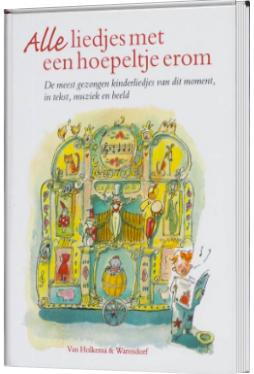
Liedjes met een hoepeltje erom are songs that children sing at daycares and they come with a CD and you can find the songs online (youtube) to practice

  • for adults (I just indicate a few that are easy to understand)

Andre Hazes Jr.

Bløf

Guus Meeuwis

Jan Smit

Jeroen van der Boom

Maaike Outboter

Maan de Steenwinkel

Marco Borsato

(etc.)

Videos (with stories and songs for children):

KinderTube

Kinderliedjes – Kids Tube

Learn about all kind of topics for free (!) from experts at the Universiteit van Nederland


Related posts:

 4 tips to learn the local language for adults

5 tips to encourage your child to learn the local language