When the home language is not the dominant language

If you are a multilingual, is your home language your most dominant language?

Something that surprises me when I read about language policies in schools and elsewhere is, that it is always assumed that people – children and adults – are most proficient, i.e. most fluent, in their home language. This might be correct for those who learned other languages later in life and were first schooled in their home language, but reality is very different for multilinguals who are schooled in other languages!

If you are a simultaneous bilingual and you have the chance to maintain those first languages at school (because the school teaches several subjects in both or all the languages!), all your languages might be more or less at the same level – usually one or two are more dominant than the others, depending on many factors. You may be bi- or pluriliterate.

If you acquired and learned several languages, simultaneously and successively, lived in different places, were schooled in one of the languages, or maybe not..., worked using one of these languages – it might be that your most dominant language is not the first language you acquired or learned.

If our children are schooled in another language chances are high that their most dominant language is the school language...


The reason for this is very simple: we don't (or can't) foster all the vocabulary they learn and use at school also in their home language, because it would mean that they hear the same lessons twice once at school in the school language, once from us at home. 

Recently many schools – not only the international ones! – are opting for a more inclusive policy when it comes to home languages, which I fully support. It is proven that integrating home languages in the practice at school, helps new students, i.e. those who were schooled in their home language earlier, to adapt and integrate easier.

But what about those multilinguals who are schooled in languages that are not their home language(s) since day one? Who maybe had to learn two (or more!) school languages in addition to their home languages due to their moves?

I see a problem in the overall approach, because these latter children are often lacking behind their peers in their countries of origin language wise. They need a whole other support!

Many multilingual families bridge the school and the home languages by discussing about school topics, by providing the necessary input, fostering the right vocabulary. This is hard work! And it requires collaboration and transparency from the teachers and the school in general, and not only on primary school level, but throughout the whole school curriculum!

We parents – even those who are teachers – can't provide all the input that our children receive at school in their school language. We have to make compromises. For my family it means that I focus on the topics my children like the most. I must confess that I find it sad that my children don't count in German or Italian, that they prefer English when it comes to explaining complex subjects, but I know that with patience and our many conversations, they will acquire as much as they can.

I honestly hope that there will be more studies about multilingual families whose children are schooled in another language and who do everything possible for their children to become fluent also in their home languages. I am looking for testimonials from other multilingual families whose children are schooled in another language.

I want to hear from you, how you foster your home language(s) and how it is going, what support you get, what support you would need.

Please share your experience with me, by leaving a comment here below. 

I will gather all the information I can get to write an article, present it at conferences and hopefully we will get more help from governments, schools, teachers, the community we live in.


Home Language Maintenance with Teenagers

[update May 2023]

If you have teenagers whose school language is not one of the home languages it might be difficult to make them read, write and “immerse” into the home languages.

If they don’t get any formal education in those languages it is very difficult to maintain them at home. The switching to the more dominant language, the language of school or of the community, together with a general “I don’t want to” or “you can not make me talk this way” attitude is often the reason why parents give up fostering the home languages when their children become teens.

I personally think and know by my own experience, that keeping the interest in the home languages alive throughout the school years is hard work especially when we don’t visit the countries where these languages are spoken regularly, when our teenagers don’t speak the language to peers and don’t have a connection with the teen-world in that language.

But this is a very critical period in language acquisition – yes, they are still acquiring the language! – and international parents need help from their community and schools to re-confirm the value of the home languages. Many schools are becoming more and more inclusive when it comes to home language-use in the classroom and the school premisses. It is a relief for parents like me to know that “school language only” policies are being abandoned in favor of “use your home language to foster your overall knowledge” practices. But what schools are not aware of is that these teenagers might not read in their home languages regularly. They might not have the words to even look up more complex topics. 

I call this work that we parents and caregivers are doing with our teenagers Home Language Maintenance: we try with all the tools and means we have at our disposal to maintain something that we instilled from a very early stage, but which suffered due to the fact that our children are schooled in another language and this became the most dominant and most “important” one at some point.
Some of us missed the moment to send our children to language lessons for many reasons:

  • Why should we do that, our child uses the language at home every day…
  • I can’t force him/her to take those language lessons on top of all the lessons at school… the school language has priority…

It is very difficult for multilingual parents to motivate their children foster all their language! We often need to let one language (or two) become less important. This is when we question our whole project of raising our children with all these languages and experience something I would call the multilingual parenting fatigue.

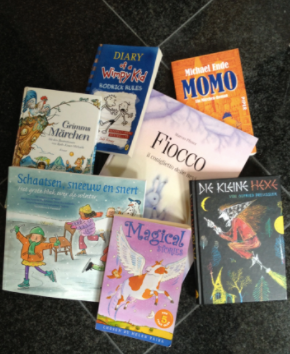
We have tons of books, resources and frantically search for more input that they might find appealing. But what if our children and teens are not interested in them anymore, if they simply don’t have the time to speak, maybe read and write in the language (if they ever learned to read and write in it…)?

This is when we have to come up with alternative solutions.

Some send their children to summer camps for a full immersion into the language for at least 1-2 weeks per year, to give them a real language boost.

Others spend their holidays in those countries year after year, hoping that somehow the language will stick and become interesting for the child.

Full immersion does wonders: we know that since we experienced the first language boosts our children had after every summer spent in the country where our home language was spoken!

What can we do to help our children stay motivated in speaking the home languages?

Here are 5 tips that I found worked with my children:

1) Make sure the topic is compelling and comprehensible! Especially when our children have a richer vocabulary and feel more confident in another language, making the target language as compelling and comprehensible is key! Let them choose a topic they are passionate about – there is no “off topic” when it comes to fostering language. 

2) Let them choose resources! We can not possibly provide input for every imaginable topic our children are interested in. Therefore resources resource that fosters the target language in some way are the best way to access the target language whilst living abroad! It can be news articles, comics, cookbooks, manuals about a hobby or a skill they are interested in, a game, short stories, poems, novels. It doesn’t matter what they read, it is important that they read!
By focusing on the topic and not on the format of the resource, they are less likely to be discouraged to reading in the target language. It will take them some time to feel more confident in reading in a language they are not used to read regularly. They can also opt for audiobooks (or podcasts) to start with.

3) Video, audio and text. Encourage them to watch shows, videos, series in the target language. Memorizing new words is easier when we hear them, read them and “see them used in action” on screen.

4) Music with lyrics. Everyone likes music. To foster language it would be obviously better to opt for music with lyrics. If they like heavy metal, find an equivalent in the target language. Remember that music is a very powerful learning tool – think about how they learnt the nursery rhymes when they were younger! Listening to music in the home languages that peers in the respective countries listen to will help our children feel less excluded once they meet.  

5) Look for diverse contexts for them to experience their home languages: at home we talk in the kitchen, the living room etc. and our children will learn the vocabulary necessary in these settings. Find places outside home and various contexts where your teens can use a broader range of vocabulary! Sports, culture, science, music, politics, ecology, literature, life in general: there is no limit to explore language! And don’t worry if they learn slang: it’s part of the broad repertoire of language our teenagers and young adults need to communicate with peers.

If you have teens, you will notice that what worked with younger children doesn’t always work with teens. The need we created to speak our home languages when our children were younger might have changed and shifted towards another language. Make sure that you find other ways to make your home language use a pleasant, enjoyable need for your children throughout their teenage years! During those years our children try to find out who they are, what they like and dislike. When the home language is considered “nice to have” but not a necessity and a pleasure, something to be proud of, chances are high(er) that the motivation will diminish.

I always recommend to negotiate language use with teenagers. They understand what it means to use a language in given settings and that everyone has the right to express their needs and feelings towards language, cultures, music, anything.
No matter your parenting style, if you want to keep the communication with your teenagers flowing, and if you want to stay connected with them, you need to listen and understand what their needs and worries are, what they are interested in etc..

So, my bonus tip here is to first stay connected with your teenagers and find an effective way to communicate with them. The language use and preference depends on each individual, and the more we understand what our teenagers need, the better we’ll connect and the more ready they will be to negotiate language use (and anything else, actually). Involve them in decision making processes around languages as well as other aspects of life.


What made me discover the positive sides of my parent’s language when I was a teenager, was connecting with peers, exploring the slang and music, discovering new books that were read by peers in the country. 

– Please share your thoughts and experiences in the comments here below. I’m looking forward to continuing the conversation!

Using different languages at home…and at school…

Families who juggle several languages on a daily basis, tend to switch from one language to the other when a word in the other language comes to mind faster and fits the context so that we can make our point in a conversation.

We use to code-switch only with people who share the languages we switch words from and children do this intuitively from a very early stage on.

I used to compare code-switching like fishing for pieces out of a big box of a united repertoire of the languages that are required or possible in the conversation. We don't do this randomly and in every situation. We usually use code-switching only in a multilingual context, ie. with people who share the languages we're switching in.

For example, I wouldn't switch between French and Italian with someone who doesn't understand one of the two languages. 

When my daughter tells me about a discussion on a topic she had at school in English, she will switch from English to German (our home language) in order to adapt to the family policy (German at home). She knows that I understand English so she can use both languages. She might even add some Dutch words or concepts if she needs them to make things clearer (and she knows I speak Dutch too), but the switching only takes place in a setting where both – or all – those involved in the conversation share the languages we switch words and sentences in.

On a side note, as a code-switcher between several languages, I don't use the term of code-switching assuming that the codes are like two or more monolingual codes that can be used without reference to each other because:

Bilinguals are not two monolinguals in one! (cfr. François Grosjean 1985).

Translanguaging and code-switching

In the last ten years (and more) the term of translanguaging came up, especially in the area of bilingual education. Professor Ofelia García of the Graduate Center of the City University of New York defines it as "the deployment of a speaker's full linguistic repertoire without regard of watchful adherence to the socially and politically defined boundaries of named (and usually national and state) languages".

Some thought that translanguaging in class is like code-switching at home, and I must admit that some early descriptions of the concept were misleading because in both cases, the speaker uses the linguistic repertoire from all the languages he/she knows, to communicate effectively.

Despite the very diverse panorama in most of the schools – at least here in Europe – many schools still follow the school-language-only policy, which perfectly works for monolinguals.

But every person knows multiple languages would be far better off if they could use their all the languages they speak also in the school setting, in order to communicate effectively, to better support their arguments when asked to find the main idea of a text, or to better understand a concept or theory in science, maths, physics etc..

From the point of view of a parent who raises her children with multiple languages that are not all supported by the school, I can tell that it is a great effort to keep up with the vocabulary of all (!) school topics!  And I'm not only talking about literature and linguistics: every multilingual family knows the struggles and challenges when it comes to discuss about ways to do maths, explain science concepts, etc... 

I had the chance to attend a European School in Italy, where I was in the German section, i.e. I had most of the subjects in German. Geography and History lessons were taught in French (it was the first foreign language I took at school starting from age 6) and other topics were taught in Italian.

Fact is that if one learns a subject in a given language and doesn't translate it – and we usually don't do this as we tend to memorize concepts in the language they're taught to us! – we can end up in not talking about a subject in another language that easily because we don't make the connection between the terminology in the two languages on a cognitive level!

Just an example to explain what can happen: I learned about Charlemagne, but only when I talked about his achievements with my German cousins, it occurred to me that Charlemagne and Karl der Große are the same historical person: Charles the Great ...

Many parents of multilingual children who are schooled in a language which is not one of the home languages, in fact, constantly check on the subjects taught at school in order to foster and consolidate their children's vocabulary in their home languages too.

The reason for this is to guarantee a certain degree of biliteracy*

In fact, isn't it one of the main goals of parents who embark the multilingual journey with their children, that their children become biliterates?

What schools can do to help bilingual children become biliterate

The recent research and policies about translanguaging are actually meeting multilingual parent's needs!

By legitimizing the use their home languages at school in order to support their learnings, the translanguaging pedagogy puts the teacher in a similar position as the parents at home.

The same way the parent experiences (or learns) the topics in the school language through the child, the teacher co-learns with the student at school.

Of course, teachers can't know all the languages of their students! But they "can build a classroom ecology where there are books and signage in multiple languages; where collaborative groupings are constructed according to home language so that students can deeply discuss a text in the dominant school language with all their language resources; where students are allowed to write and speak with whatever resources they have and not wait until they have the "legitimate" ones to develop a voice; where all students language practices are included so as to work against the linguistic hierarchies that exist in schools" (cfr. García)

Families and schools need to work together

Like García says: "any teacher, including a monolingual one, can take up translanguaging to enable their bilingual students to make deeper meaning and legitimize their home language practices" (cfr. What is translanguaging from Psychology Today, an interview of Prof. François Grosjean with Professor Ofelia García).

I completely understand that teachers wonder how they can make sure that the school language stays the main language of their lessons. Allowing students to use all their languages in a lesson can easily lead to a chaos if not done in a structured way – the same way language policies within a family can run out of hand if we don't make sure every family member sticks to the rules!

In fact, schools need to "develop students' critical metalinguistic awareness" – and repeatedly remind  students about the rules. Multilingual students also need to learn to suppress some of their "language features from their repertoire at appropriate times" (cfr. García). What this means is that the multilingual speakers who engage in translanguaging won't vacillate between the different languages systems in an arbitrary manner but that they do it with a clear intention and a metacognitive understanding of the way their language practices work.

School = home

If we compare this with the situation in a multilingual home setting: this is exactly what we do at home too! Whenever we discuss about topics where we allow definitions, explanations and more information from the other languages, we do so with the intention to gain a deeper understanding of the topics and when a family has a clear family language policy, these discussions are always "rounded up" by focusing on the home language!

Translanguaging pedagogy should be introduced in every school and lesson because it is actually one of the most natural ways to learn for multilinguals!

In fact, translanguaging pretty much seems like what we did among students using different languages: when working on a topic in teems at school, we would use all the resources we got in the different languages, discuss in several languages (that we had in common) and finally present the outcome in the school or class language.

What needs to be clear though is, that the performance of bilingual students should not be compared to those of the monolingual students in the same language. When bilingual students are assessed like monolinguals it is like one would assess a student only in maths, disregarding all the other school subjects! This would clearly put a student who is brilliant in all the other subjects but struggles with maths in a very disadvantaged position... – but this is the topic for another post that I'll write soon!...

What is your opinion and experience about this?

If you liked this post and/or would like to share your thoughts, please do so in the comments here below!

Thank you for taking the time to read! ~ Ute


Biliteracy is the ability to use language, numbers, images, computers, and other basic means to understand, communicate, gain useful knowledge and use the dominant symbol systems of more than one culture.

– Cfr. The concept of literacy is expanding in OECD countries to include skills to access knowledge through technology and ability to assess complex contexts.

If you want to know more about family language policies for multilingual families, you can contact me at info@UtesInternationalLounge.com, or have a look at my Family Language Consultancy