What happens when multilinguals shift language?
The process of language shift, also known as language transfer or language replacement or language assimilation, is when a community of speakers of a language shifts to speaking a completely different language, usually over an extended period of time.
From a historical perspective, this happened for example when in the now France shifted from Gaulish to Latin during the Roman Empire. The reasons for this were that Latin was perceived as to be higher status and it spread at the expense of the other language, Gaulish, that was perceived by its speakers as to be lower-status.
In the past 150 years many countries developed a standard language, shifting from regional languages to a language that was considered more prestigious and therefore more valuable. In Italy, for example, since the times of the Renaissance, a trans-Italian language was developed in central Italy, based on the Florentine Tuscan because of its cultural prestige. This Forentine Tuscan (think about the Tre Corone: Dante, Petrarca, Boccaccio) started to be employed for formal, literary and written purposes among the literate classes from the various states of mainland Italy, Sicily and Corsica (France), sidelining the other dialects in education and formal settings. Literary speaking, Florentine established itself as the single most representative dialect of Italy long before its political unification in 1861. Thus, Tuscan has been officially adopted by the pre-unitarian states. Italian further expanded as a commonly spoken linguistic form for everyday use throughout the country after World War II.
Nowadays, we can observe a validation of the local dialects and regional variants again, but that’s a topic for another post.
What is interesting to see is that the historical language shift can be observed also on a sociolinguistic level in multilingual people.
Those who speak multiple languages usually have (a few) languages that are more dominant for a certain period of time.
There are multiple factors that determine what language is more dominant in a given period.
Depending on the situation, the personal preference and the actual need of using the language on a regular basis influence the individual status of the language.
For example, although I was fluent in German most of my life, I spent 6 years using it only sporadically, and preferring Italian and French because I needed them daily for work and research. German became less important, less valued in the community I lived in and among my friends, which lead to a language shift and almost language loss. In fact, I had to invest considerable energy and time in reactivating my German which I perceived then as “dormant” – i.e. present in terms of I knew and understood the language but didn’t use it frequently enough to be able to have fluent communications in it anymore. The same happened to my English that I used only sporadically during the same period of time, and that I only re-activated 14 years ago and use daily since.
Language shifts happen to multilingual speakers who usually live, study and work in settings where one or two (or three) of their languages are required more than the others. Although all the languages that we acquire and learn at some point in life, are still in our language memory, those we use more often are more in the foreground and ready to be used, whereas those we use only sporadically or only in reading for example, are less “present” and ready to be activated.
Language shift in children
When our multilingual children start attending daycare or school in another language, their language preference will shift towards the language of their education. They will need to become as fluent as possible in the school language in order to succeed academically. Many parents are advised to focus more on the school language and some are even told to drop their home language(s)!… This is completely unnecessary and actually counterproductive. In fact, skills that our children acquired and learned in their home languages can be transferred to the school language, and vice versa.
It is a fact, though that the home languages, as a consequence of more exposure in the school or community language, will become less important. If children don’t receive adequate input in their home languages that foster understanding, speaking and maybe reading and writing, the language shift from home language to school language can go so far as for children not to respond in the home languages anymore.
In order not to have a complete language shift that could lead to language loss if not taken seriously, parents, educators and the community – ideally! – would support and foster the home language too!

Have you ever experienced language shift?
Please share in the comments!
If you have questions about language shift and language loss, don’t hesitate to contact me at info@UtesInternationalLounge.com!
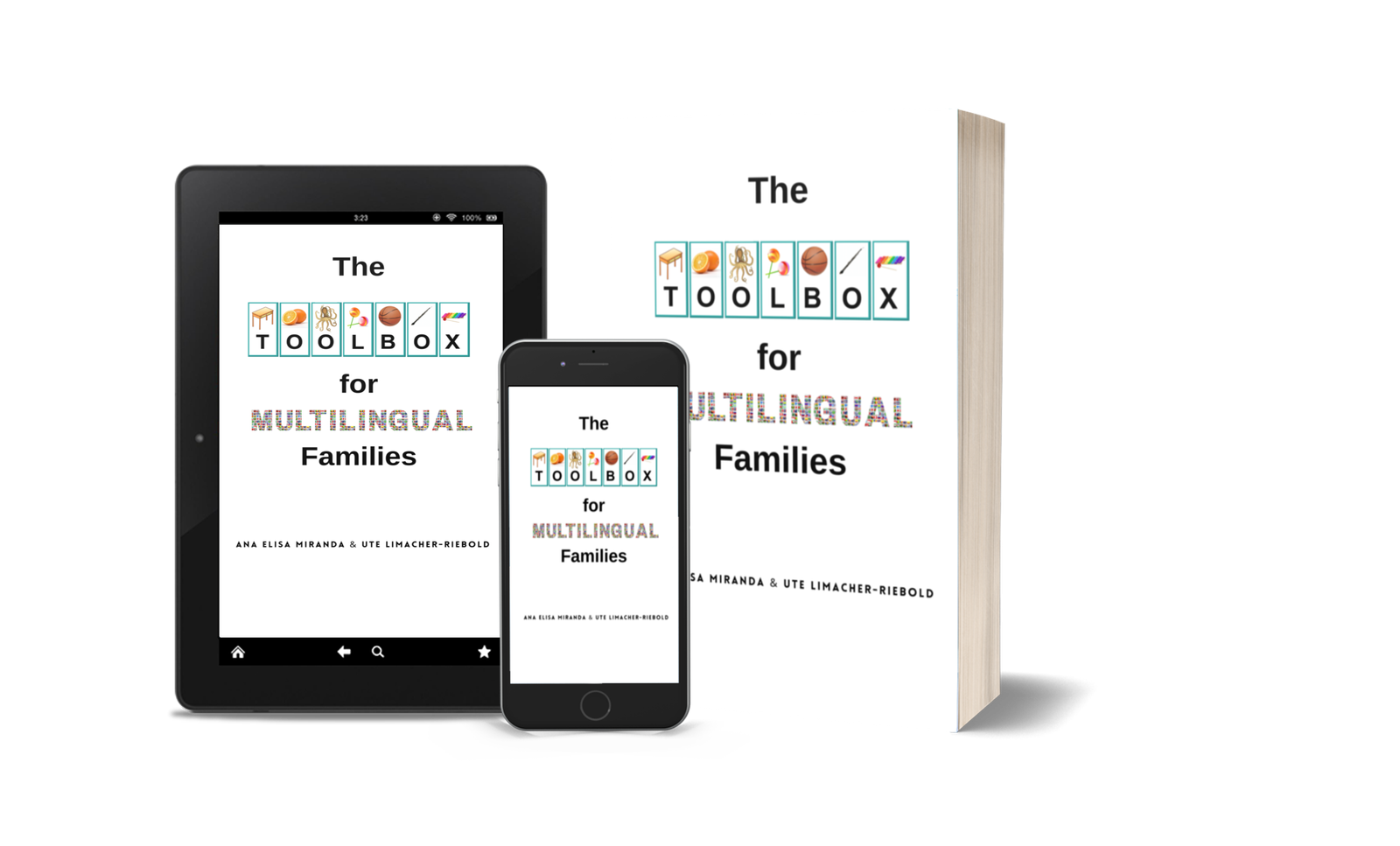
Please have a look at our Toolbox for Multilingual Families to get inspired about how to foster family language skills with no or very little preparation!
– For further readings I recommend the post about Language shift, attrition and loss