First signs of communication

Guest post by Artemis Pepelasi


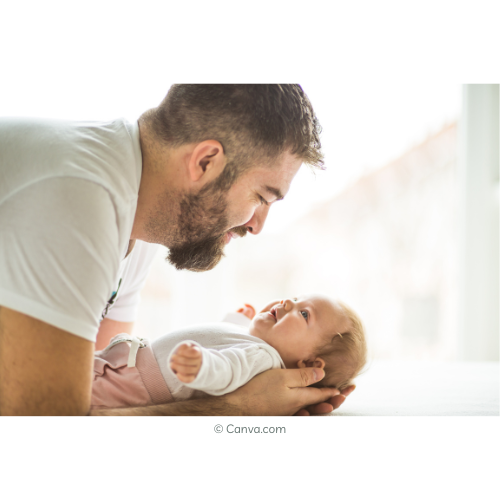
A milestone of human development is speech. Speech is not only about the number of words an individual knows but also the effective and meaningful communication with the environment, which also includes non-verbal characteristics like eye contact and gestures. Parents tend to be very anxious about their babies' first words and get worried if their children do not speak at a specific age. However, they sometimes ignore that the preparation of speech and communication began before their children were born. 

(Pixabay.com)


Why do infants cry?

Babies cry to communicate their needs, like hunger, illness, frustration etc. Regarding their needs, infants cry in different ways. That is their very first attempt to communicate with the environment. Nevertheless, communication does not only rely on the individual's needs; communication also has social aspects. And children need to learn those aspects from their caregivers.


What can a caregiver do to teach communication?

There are several ways for caregivers to teach communication. Naturalistic context is always effective for children to learn dyadic interaction and conversation. Naturalistic context is whichever procedure has “natural” characteristics. For instance when teaching our children to play with others, we will do so on the playground. If we want to teach them how to communicate, we should try to communicate with them in the same way we communicate with verbal people.

In order to attract children’s attention, adults can talk louder and show how words are pronounced through emphasizing facial expressions. 

Another effective way to foster communication is by describing all the activities happening: describe the food preparation or that infants will have their bath. Moreover, caregivers can ask questions to infants while making eye contact and waiting for a response. In that way, infants learn that a conversation needs at least two people, everyone has time to speak, and each conversation participant pays attention to the one who is talking. We must remember that we all have learned to speak and communicate because we listened to someone talking and imitated this behavior.
What is the right time to teach an additional language? 

Communication skills can be taught regardless of the caregivers’ language and culture. Research has shown positive cognitive effects in multilingual infants. Experiments have shown that bilingual infants were more likely than monolingual infants to remain engaged to a stimulus and switch faster from one stimulus to another.
There is an excellent opportunity for children to acquire different languages early on in life and learn that different sounds and gestures can be included in communication. Nevertheless, caregivers should be careful because the same gestures may have different meanings in different cultures. It is suitable for all caregivers to come to an agreement about the gestures used with the child.

What are the psychological effects of communication? 

The interaction caregivers have with children is not only helpful in teaching languages and communication. Another essential aspect of this interaction is the children’s secure attachment to their primary caregiver. Since infancy, children communicate to fulfill their needs. However, they have to know they can turn to a specific person in distress or because of illness. This need for safety is essential for all infants. The lack of that safety combined with individual characteristics (i.e. temperament and environmental factors) can lead to later internalizing and externalizing problems, such as anxiety and maladaptive behaviors.


Talk to your infants even though they cannot speak yet. They are capable of communication and need it in order to feel safe and secure with you. Communication is the key to the emotional connection of children with their caregivers! 


  • What is your experience communicating with your infant? 
  • Please feel free to share your experience in the comments.


About the author:

Artemis Pepelasi lives in the Netherlands. She studied at the National and Kapodistrian University of Athens Philosophy, Pedagogics and Psychology.  She worked as a therapist for children with developmental disorders and decided this year to strengthen her knowledge and is attending the master program “Parenting and Child Development” in Leiden University. She is currently completing an internship at Ute’s International Lounge.


If you wish to read about naturalistic context/ education, have a look at these sites:

https://www.qualityresearchinternational.com/socialresearch/naturalistic.htm

https://cognitiveresearchjournal.springeropen.com/articles/10.1186/s41235-022-00435-0


Signs of Communication Disorders

One of the reasons parents approach me as Language Consultant is that they wonder if their children who are exposed to multiple languages at home and in the community, aren’t having some kind of communication disorders.

Especially when we’re given the advice to either talk only one language at home or to even only talk the community language with our children, we wonder if “all those languages don’t cause not only a delay but a general confusion of our children” (I quote a parent who attended one of my workshops on Raising bilingual children).

I usually ask parents what makes them worry, what signs they observe in their children and in what contexts they observe them.

I am not a speech pathologist, but I know what signs one should worry about and when to reach out to other professionals for further assessments and intervention.

On the ASHA site (American Speech Language Hearing Association), you can find an overview of the signs of communication disorders that you can easily assess at home. 

Abby Gilbert Aubin, speech pathologist at Communicate without borders, suggests “the European organization for SLPs, CPLOL. It is mainly aimed at professionals rather than parents”, “also RADLD, a site from the UK has useful information for the general public about language disorders (…) and Talkingpoint has a lot of resources for parents and professionals in regards to speech, language and communication needs, as well as The Communication Trust.” 

As for the children’s acquisition of consonant sounds, this article shows when to expect our children to be able to produce these sounds: you may need to be trained in phonetics and phonology in order to fully understand the content of the article.

(these are only a few of the languages mentioned in the article)

Although some of these sites are mainly aimed at professionals, parents tend to become semi-professionals when it comes to anything related to their children’s health and wellbeing. Therefore I prefer sharing informative sites that require more study so that you can get the best possible information before you ask a professional for help. If you have any further question about this topic, please don’t hesitate to book a consultation with me

What is speech? What is language?

When I explain to people what I do, that I focus on language and communication but that I also can help with the speech, as I have studied and taught phonology, I often need to explain the difference between speech and language.

What is Speech?

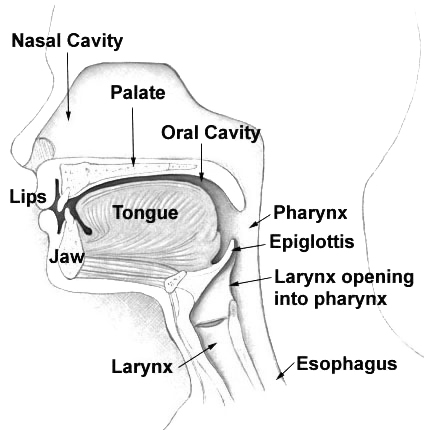
With speech we refer to the articulation of the sounds, the phonological skills, the speech fluency and the voice. 

When I focus on the speech of a person, I focus on her or his ability to use the human vocal tract:

  • Physically produce the individual sounds and sound patterns of his/her language (Articulation)
  • Produce speech with appropriate rhythm (and free of Stuttering behavior)
  • Produce speech with an appropriate vocal quality for his/her age and sex.

When a child or an adult has problems to pronounce a sound, we focus about the phonological level of his/her production of language and try to help with it.


What is Language?

Language is a system that consists of the development, acquisition, maintenance and use of complex systems of communication. Every language – German, English, French etc. – has its “symbols” that can be words, either spoken or written.

Most languages also have gestures that are a form of non-verbal communication, or non-vocal communication, where bodily actions communicate or accentuate particular messages. For example, waving hands to say “goodbye”.

What determines a language are the socially shared rules that include:

  • semantics: what a word means. In different contexts “star” can refer to the bright object in the sky, a celebrity or a bright person etc.
  • morphology: how to make a word so that it can function in the sentence and make sense: friend (a friend), friendly (a friendly person), unfriendly (someone who is not friendly) etc.
  • syntax: how to put words in an order so that the message is understood (we also talk about grammatically correct sentence): Lisa drives the car, and not *Car Lisa the drives
  • pragmatics: the ways in which language use is patterned and how these patterns contribute to meaning. In all languages, linguistic expressions can be used not just to transmit information, but to perform actions.


Language without speech

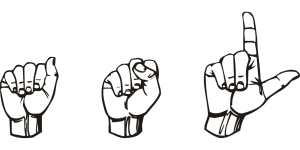
Speech and language are related, but we don’t need speech to have language. When we use sign language, speech is not involved. Sign language has its own set of rules to govern how it is used: its own symbols, syntax, pragmatics, etc.


What is communication?

Communication, then, is the process of conveying a message or meaning to establish a shared understanding to others. We don’t need speech or a shared language to communicate.

We can always use our hands and gestures that make others understand what we mean or draw pictures of what we are looking for. By using gestures and pictures we can communicate without using speech or shared language.


Communication is always the first goal

Sometimes a person’s ability to communicate with speech and/or language is so impaired, that Speech Therapists need to bypass those methods and use an alternative or augmentative communication (AAC) system to get the child communicating as soon as possible.

This could be by using signs, pictures, or an electronic device to give the person the ability to communicate his or her wants and needs.

Once the person starts communicating, we can focus on trying to improve the speech skills so that he/she can use speech to communicate his/her wants and needs. 

Just think about toddlers who still don’t talk: they are communicating through gestures, facial expressions, and body language even though they aren’t using a lot of speech yet.

– Although speech and language are related to each other, they are different.

Please watch my interview with Speech and Language Therapist Weronika Ozpolat.