
Home Language Maintenance with Teenagers

[update May 2023]

If you have teenagers whose school language is not one of the home languages it might be difficult to make them read, write and “immerse” into the home languages.

If they don’t get any formal education in those languages it is very difficult to maintain them at home. The switching to the more dominant language, the language of school or of the community, together with a general “I don’t want to” or “you can not make me talk this way” attitude is often the reason why parents give up fostering the home languages when their children become teens.

I personally think and know by my own experience, that keeping the interest in the home languages alive throughout the school years is hard work especially when we don’t visit the countries where these languages are spoken regularly, when our teenagers don’t speak the language to peers and don’t have a connection with the teen-world in that language.

But this is a very critical period in language acquisition – yes, they are still acquiring the language! – and international parents need help from their community and schools to re-confirm the value of the home languages. Many schools are becoming more and more inclusive when it comes to home language-use in the classroom and the school premisses. It is a relief for parents like me to know that “school language only” policies are being abandoned in favor of “use your home language to foster your overall knowledge” practices. But what schools are not aware of is that these teenagers might not read in their home languages regularly. They might not have the words to even look up more complex topics. 

I call this work that we parents and caregivers are doing with our teenagers Home Language Maintenance: we try with all the tools and means we have at our disposal to maintain something that we instilled from a very early stage, but which suffered due to the fact that our children are schooled in another language and this became the most dominant and most “important” one at some point.
Some of us missed the moment to send our children to language lessons for many reasons:

  • Why should we do that, our child uses the language at home every day…
  • I can’t force him/her to take those language lessons on top of all the lessons at school… the school language has priority…

It is very difficult for multilingual parents to motivate their children foster all their language! We often need to let one language (or two) become less important. This is when we question our whole project of raising our children with all these languages and experience something I would call the multilingual parenting fatigue.

We have tons of books, resources and frantically search for more input that they might find appealing. But what if our children and teens are not interested in them anymore, if they simply don’t have the time to speak, maybe read and write in the language (if they ever learned to read and write in it…)?

This is when we have to come up with alternative solutions.

Some send their children to summer camps for a full immersion into the language for at least 1-2 weeks per year, to give them a real language boost.

Others spend their holidays in those countries year after year, hoping that somehow the language will stick and become interesting for the child.

Full immersion does wonders: we know that since we experienced the first language boosts our children had after every summer spent in the country where our home language was spoken!

What can we do to help our children stay motivated in speaking the home languages?

Here are 5 tips that I found worked with my children:

1) Make sure the topic is compelling and comprehensible! Especially when our children have a richer vocabulary and feel more confident in another language, making the target language as compelling and comprehensible is key! Let them choose a topic they are passionate about – there is no “off topic” when it comes to fostering language. 

2) Let them choose resources! We can not possibly provide input for every imaginable topic our children are interested in. Therefore resources resource that fosters the target language in some way are the best way to access the target language whilst living abroad! It can be news articles, comics, cookbooks, manuals about a hobby or a skill they are interested in, a game, short stories, poems, novels. It doesn’t matter what they read, it is important that they read!
By focusing on the topic and not on the format of the resource, they are less likely to be discouraged to reading in the target language. It will take them some time to feel more confident in reading in a language they are not used to read regularly. They can also opt for audiobooks (or podcasts) to start with.

3) Video, audio and text. Encourage them to watch shows, videos, series in the target language. Memorizing new words is easier when we hear them, read them and “see them used in action” on screen.

4) Music with lyrics. Everyone likes music. To foster language it would be obviously better to opt for music with lyrics. If they like heavy metal, find an equivalent in the target language. Remember that music is a very powerful learning tool – think about how they learnt the nursery rhymes when they were younger! Listening to music in the home languages that peers in the respective countries listen to will help our children feel less excluded once they meet.  

5) Look for diverse contexts for them to experience their home languages: at home we talk in the kitchen, the living room etc. and our children will learn the vocabulary necessary in these settings. Find places outside home and various contexts where your teens can use a broader range of vocabulary! Sports, culture, science, music, politics, ecology, literature, life in general: there is no limit to explore language! And don’t worry if they learn slang: it’s part of the broad repertoire of language our teenagers and young adults need to communicate with peers.

If you have teens, you will notice that what worked with younger children doesn’t always work with teens. The need we created to speak our home languages when our children were younger might have changed and shifted towards another language. Make sure that you find other ways to make your home language use a pleasant, enjoyable need for your children throughout their teenage years! During those years our children try to find out who they are, what they like and dislike. When the home language is considered “nice to have” but not a necessity and a pleasure, something to be proud of, chances are high(er) that the motivation will diminish.

I always recommend to negotiate language use with teenagers. They understand what it means to use a language in given settings and that everyone has the right to express their needs and feelings towards language, cultures, music, anything.
No matter your parenting style, if you want to keep the communication with your teenagers flowing, and if you want to stay connected with them, you need to listen and understand what their needs and worries are, what they are interested in etc..

So, my bonus tip here is to first stay connected with your teenagers and find an effective way to communicate with them. The language use and preference depends on each individual, and the more we understand what our teenagers need, the better we’ll connect and the more ready they will be to negotiate language use (and anything else, actually). Involve them in decision making processes around languages as well as other aspects of life.


What made me discover the positive sides of my parent’s language when I was a teenager, was connecting with peers, exploring the slang and music, discovering new books that were read by peers in the country. 

– Please share your thoughts and experiences in the comments here below. I’m looking forward to continuing the conversation!
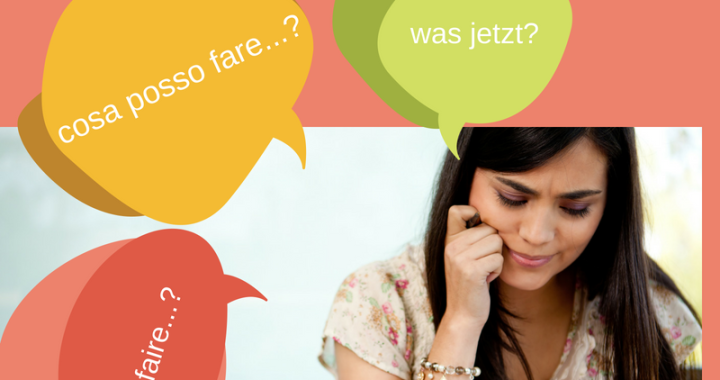
Multilingual Parenting Fatigue

If you have done everything you could possibly do to keep your home language alive, but your preteen or teenager doesn’t respond in your home language, or overtly states that “the home language is not cool” or “too difficult”, you may experience multilingual parenting fatigue.

Yes, I gave it a name!

I was the multilingual daughter who refused to respond in the home language (German) to my mother. Instead of getting impatient or upset, she would ask me to “take all the time you need to find the right words. I’ll wait. But try to form the whole sentence in German only”…

I remember the sense of anger, frustration and inadequacy I felt when my mother would sometimes walk away from me, not accepting my code-mixing… I knew that she understood all the languages I was mixing, so, why would she refuse “understanding” and listening to me? 

I was in the same situation, with my own teenage children. I know about raising children with multiple languages, about the different stages of language acquisition and learning, and about strategies to help our respond in the target languages. I know what research says, what the best practices and strategies are, but when it comes to our own children, it’s a whole other story!

When I help my clients find solutions to their struggles, I constantly switch between “best practices” and “alternative solutions” that are way more realistic. We can easily feel inadequate as parents if “research says that …% of the children respond positively to this strategy”, but ours don’t..
.

Also, I know (and can’t stress this enough!) that code-mixing is NOT a bad thing – and still love code-mixing and code-switching with my children and friends who share the same languages!

So, what’s the problem?

The problem is that although we raise multilinguals and in an ideal world they (and we!) would be allowed to use all their languages interchangeably and still be understood, our society still requires us to “stick to one language” at a time. – And it makes sense, don’t you think? I call it the Paradox of raising multilinguals.

So, we need to raise multi-competent multilinguals, which means, multilinguals who can adjust to a variety of situations, adjust their communication by using the right (expected!) language in the (expected) way to make sure the communication flows, misunderstandings are reduced to a minimum and “everyone is happy”.

But our children / teenagers / young adults are still learning these languages and they still need our help with figuring it all out.

My frustration level increases when my children constantly speak the school or community language, even in settings where we agreed that they should speak the home language. That’s where I wonder if they are still able to say those sentences in the target language. Is it laziness or something else? And – that’s when my blood pressure levels reach a high…: “Why are they not making the effort to talk in one language at the time, like at school?!”

And then I hear myself repeating my mothers words: “take all the time you need to find the right words. I’ll wait. But try to form the whole sentence in German only”. I sometimes add “let me know if I can help you”. This is the echo from the past. What I NEVER do is to walk away, or to make them feel inadequate. I don’t insist on this when they are tired, when the communication is flowing and at a high pace. – I ask them to focus on the target language mainly in the weekends and when they’re in a good mood.

I’ve been fostering German, a bit Swiss-German, and supporting English and Dutch on a daily basis. There are days I feel exhausted, days where I wonder why I insist on asking them to hone their language skills in these (and other) languages? It’s not only because I love languages, I’m multilingual myself and I work on all my languages constantly, challenge myself by reading more complex articles and books, learn new languages etc. I do not expect my children to do the same. I really don’t. Since they were toddlers I decided not to push them, but to guide and support them (it’s just my way of parenting). Children’s agency is, in my opinion, the key to success in anything our children do and learn. However, we need to combine our agency, the parents’ and caregivers’ agency, and the children’s agency in an effective way!
For my children to be(come) fluent and confident in all their language, they must take their own journey of ups and downs, and at this point I only play the role of the supporter.

I think every parent experiences a kind of fatigue at some point. In the first years I experienced physical fatigue due to severe sleep deprivation, then there were years of battles against a too restrictive system at school, misunderstandings concerning multilinguals and raising multilingual children, not to mention bullying and other “stumble stones”.

Raising children with multiple languages is a long journey and we should allow ourselves some time-outs every now and then. Those are the moments where we sit back and look at the results, at what our children have accomplished – language and non-language wise. And enjoy what we see!

My children can converse in all their languages, read and write in most of them (Swiss-German is not a written language!) to various extent, and that is enough. They also all learn additional languages they chose just for the fun of it.

When I feel the multilingual parenting fatigue, and, believe me, I felt it many many times, I look at the long-term goal. The one where my children will use the languages they need without fear of failure, or fear of making mistakes. They won’t be the one not sharing his or her opinion in a meeting because their language skills are “not perfect”, because they know that everyone has a say (a great side-effect of raising them in the Netherlands!).

When we started this journey, I wished that one day my children would love languages as much as I do, that they would understand that it is an incredible privilege to grow up with multiple languages, that they will be thankful one day for the effort and energy they’ve put into fostering all their language. Now (2025) I can say that they are. They are proud to be able to make their new friend feel comfortable by speaking his language, to ask people for advice on the street in Germany, Switzerland, Spain, The Netherlands, Belgium, France, Luxembourg, Italy and all English speaking countries.

We didn’t have supportive communities of German, Italian and Swiss-German speakers, where my children could have fully immersed, naturally, on a regular basis in conversations and confidently and proudly speak their languages. Unfortunately, neither my parents nor my parents in law managed to find a way to connect and communicate regularly with them, build up a relationship through their languages that goes beyond small talk and basic communication skills.

Maybe, if my children were born a bit later and our extended family would have taken the chance to take interest in my children’s lives and interests, this would have been possible. I don’t like to dwell on the past. We all do what we can with the people in our life that are ready to support us.

The multilingual parenting fatigue is real. I observe it in many families that, like mine, try to maintain their home languages over decades whilst living abroad and rarely visiting the countries of the target languages.


I just want to invite you to take a break. Let’s remind ourselves that:

  • our children don’t need to be perfectly fluent in all their languages
  • the most important thing is that they enjoy speaking the languages and to communicate and connect – to whatever extent they want!
  • That whatever we do is enough and more than many others manage to do!

Therefore it is ok to take time-out, reassess what we’ve done so far, what we have achieved, to acknowledge that our children are on an incredible journey and that the “down” phases are part of it. They are only a phase. Instead of thinking about what they don’t do (yet) and don’t like (yet), we should rather focus on what they are capable of, what they like, what they’re passionate about, and connect through our languages… one step, one-or-two languages at a time

Do you feel the multilingual parenting fatigue?

Could you need a break, some comforting words or a reassessment about the language situation in your multilingual family? 

Let me know in the comments here below. 


You’re also very welcome to join our facebook group multilingual families.

Please take the time to celebrate what you all have achieved. I invite you to read Chryssa’s post about “The End of the School Year” and to use the free download.