Multilingual Societies

Multilingual societies are a testament to the vibrancy and complexity of human culture, where multiple languages coexist and evolve within a shared social framework. These societies are not simply collections of diverse linguistic groups but intricate networks of communication that weave together histories, cultural identities, and social dynamics. The interplay between various languages and dialects in multilingual communities creates rich tapestries that reflect the diverse experiences and traditions of their members.

Defining Multilingual Societies

A multilingual society is one in which multiple languages and dialects are actively used across different domains – be it in the home, at school, in the workplace, or in public life.

The coexistence of these languages is not only a matter of daily communication but also a reflection of the community’s diverse histories and the continuous interaction of various social, cultural, and political forces.

The ability to speak and navigate between multiple languages provides individuals in these societies with a deeper understanding of their own identities while promoting understanding and collaboration between different groups.

In such societies, the use of language can be fluid, shifting depending on the context, purpose, and the participants involved in the interaction. This dynamic nature of multilingualism is what makes multilingual societies particularly interesting – they are always in flux, adapting to changing social realities while preserving the unique cultural heritage of each language.

Key Characteristics of Multilingual Societies

1. Diglossia and the Role of Varieties

One of the defining characteristics of many multilingual societies is the phenomenon of diglossia, where two or more varieties of the same language coexist, each having a distinct role in society. This concept, first introduced by sociolinguist Charles Ferguson in the 1950s, is particularly evident in societies like those in the Arab world. For example, Modern Standard Arabic (MSA) is typically used in formal contexts, such as in the media, literature, and religious settings. On the other hand, local dialects, such as Egyptian Arabic, are used in everyday interactions and casual conversations. This distinction between high and low varieties of a language serves as a way to maintain both cultural and social order, allowing for functional diversity within the same linguistic system.

Diglossia exists not only in the Arabic-speaking world but also in many other multilingual societies. In Switzerland, for example, German, French, and Italian are spoken in distinct regions, and these languages are used in formal and governmental settings. Meanwhile, regional dialects play an important role in social interactions, demonstrating how different linguistic varieties have their place in different domains of life.

2. The Richness of Dialects

Another fascinating aspect of multilingual societies is the presence of dialects, which add depth and texture to the linguistic landscape. Dialects are variations of a language that are often regionally or socially distinct. While Standard Italian is the official language of Italy, it coexists with a variety of regional dialects, such as Neapolitan, Venetian, or Sicilian. These dialects are not simply colloquial forms of the language but have their own unique lexicons, grammar, and cultural histories.

The presence of dialects within a multilingual society enriches cultural identity by reflecting the historical and geographical diversity of the community. Dialects are more than just ways of speaking; they are repositories of local traditions, folklore, and ways of life. For example, a speaker of Venetian might use words and expressions that reflect the history of the region, its unique interactions with other cultures, and its role in maritime trade.

While there is often a tension between the prestige of a standard language and the value of dialects, multilingual societies offer the potential for dialects to be celebrated and preserved. In places like Italy, the revival of interest in regional dialects is part of a larger cultural movement to maintain connections with local traditions and histories, even as the country embraces globalization and modernity.

3. Code-Switching and Language Shifts

Individuals in multilingual societies often shift between languages or dialects depending on the context in which they are communicating. This code-switching is a common phenomenon in these societies, where speakers fluidly alternate between languages or varieties of language within a conversation.

India provides a rich example of code-switching in action. In many urban areas, it is not uncommon for individuals to mix Hindi and English within a single sentence, especially in workspaces or social settings. This practice – often referred to as Hinglish – reflects the intersection of India’s rich linguistic diversity with the global influence of English. In multilingual societies, code-switching serves as a pragmatic tool for communication, allowing speakers to express themselves more effectively by drawing from a wider range of linguistic resources.

Code-switching can also serve as a marker of social identity and group membership. In multilingual societies, speakers often shift between languages to signal their affiliation with a particular group, region, or social class. For instance, a person in Spain might alternate between Catalan and Spanish depending on whether they are speaking with family, friends, or colleagues. These language shifts are not just about communication but about positioning oneself within a social context, reinforcing shared experiences, and maintaining a sense of belonging.

4. The Cognitive Benefits of Multilingualism

Living in a multilingual society also has cognitive advantages. Research has shown that multilingual individuals often exhibit enhanced mental agility and adaptability. Exposure to different languages and dialects helps improve cognitive flexibility, as individuals constantly switch between different linguistic systems. This ability to switch between languages fosters better problem-solving skills, increased creativity, and an enhanced capacity for multitasking.

Moreover, multilingualism is linked to improved executive functions, such as working memory, attention control, and the ability to focus. In a multilingual society, individuals who are constantly interacting with different languages and linguistic varieties develop stronger mental skills that can be transferred to other areas of life, including academic achievement, professional success, and interpersonal relationships.

The Role of Multilingual Societies in Fostering Communication

Multilingual societies are more than just linguistic landscapes; they are spaces of cross-cultural exchange and communication. In such societies, languages serve as bridges that connect diverse communities, fostering collaboration, mutual understanding, and social cohesion. Through language, individuals from different linguistic backgrounds can share ideas, build relationships, and negotiate shared meanings.

The use of multiple languages in a society also supports the preservation of diverse traditions and histories.

Languages are not static: they evolve and adapt to the needs of the communities that use them. In multilingual societies, this linguistic dynamism allows for the ongoing revitalization of cultural practices, as speakers continue to innovate and adapt their languages to new social realities.

Challenges of Multilingual Societies

While multilingual societies offer a wealth of opportunities, they also present challenges. One of the most significant challenges is the unequal prestige of languages. In many multilingual societies, certain languages are seen as more prestigious or valuable than others. For example, in Switzerland, while German, French, and Italian enjoy official status, the Romansh language has been marginalized, despite being one of the country’s national languages. Similarly, in many post-colonial countries, the dominance of colonial languages like English or French can overshadow indigenous languages, leading to their gradual decline.

The challenge of linguistic inequality is further compounded by globalization and the increasing prominence of English as a global lingua franca. As English becomes the dominant language of business, science, and technology, languages that are considered less prestigious on a global scale are at risk of disappearing, especially in societies where language shift is already occurring.

Ensuring linguistic equity is therefore a key challenge for multilingual societies. Governments, educational systems, and social institutions must work together to promote the value of all languages, ensuring that minoritised languages are not left behind. This requires policies that actively promote the use of these languages in public life, education, and media, and that support the teaching of these languages alongside more widely spoken ones.

Conclusion: Embracing Linguistic Creativity and Resilience

Despite the challenges, multilingual societies are a living proof of linguistic creativity and resilience. When languages and dialects are celebrated and nurtured, they enrich the cultural and social fabric of a society, making it more inclusive, dynamic, and adaptable.

Multilingual societies are spaces of constant linguistic innovation, where languages evolve and adapt to the needs of the people who speak them.

As we look towards the future, it is important to remember that multilingualism is not a challenge to be overcome but a resource to be cherished. In a world that is increasingly interconnected, multilingual societies offer valuable lessons in how to live together in linguistic harmony while celebrating the diversity that makes us unique.


References

  • Fishman, J. A. (1967). Bilingualism with and Without Diglossia; Diglossia with and Without Bilingualism. Journal of Social Issues, 23(2), 29-38.
  • Edwards, J. (2012). Multilingualism: Understanding Linguistic Diversity. Continuum.
  • Aronin, L., & Singleton, D. (2012). Multilingualism. Oxford University Press.

Dutch education explained

Every country has its own education system. The Netherlands is no exception to that.


Primary school


In the Netherlands, primary school starts with kindergarten at age four. From age five it is compulsory to attend school fulltime. There are hardly any private schools in the Netherlands.  Schools can have a certain religious orientation such as Protestant, Catholic, Islamic, Hindu, any other religion or no religion at all.  In addition, schools can follow a certain educational philosophy such as Montessori, Jenaplan, Dalton or Vrije School (internationally also known as Waldorf).  Children with special educational needs will find offerings more frequently in primary than in secondary schools.

All primary schools teach English, at least in groups seven and eight (ages 11-12). Between 2014 and 2023 took place an experiment with bilingual primary education, in which teachers spoke English during 30-50% of the time: “The research shows that the TPO schools score at least as well on Dutch language skills and arithmetic and that their English language skills are significantly higher. These research results have led to a continuation of bilingual primary education in the Netherlands”. [Please find more detailed information on the NUFFIC website

At the age of 12 (in group eight of primary school) children get advice which kind or secondary education is a best fit. This advice is based on the results of an independent national test and information the school has gathered during the child’s eight years of primary school. Schools have a system in which they register each child’s progress in all subjects. A child may be good at arithmetic in general but not good in multiplying or it takes a lot of time to understand it; another child may have problems with spelling and grammar.

It is often said in the Netherlands that children have to choose a secondary education level at a very young age. This may be true, but the level chosen does not necessarily have to be the final level. When you have finished secondary school at a certain level and your grades are good enough, you can continue at a higher level.

Secondary school

There are four options for secondary school:

  • Practical education (praktijkonderwijs): This takes five years. It is for children for whom VMBO (see below) is too difficult. Every child follows an individual package of subjects. Most children may start working when they have finished this school, while some go on to medium level vocational education (middelbaar beroepsonderwijs, MBO)
  • Preparatory secondary vocational education (voorbereidend middelbaar beroepsonderwijs, VMBO): Within VMBO there are four levels. They all take four years. Depending on the level, children focus on practical training, theoretical training or a combination of both. VMBO prepares children for medium level vocational education (middelbaar beroepsonderwijs, MBO)
  • Senior general secondary education (hoger algemeen vormend onderwijs, HAVO): This takes five years and prepares students for universities of applied science (hoger beroepsonderwijs, HBO) During the third year, the student chooses one out of four streams (so-called profielen). In the last two years, the student follows subjects for the stream he/she has chosen; some subjects are compulsory for everyone and at least one subject is of the student’s choice (depending on what the school offers). Streams available are: culture and society, economy and society, nature and technique, nature and health.  The student takes exams in seven subjects.
  • Pre-university education (voorbereidend wetenschappelijk onderwijs, VWO): This takes six years and prepares students for research universities. During the third year, the student chooses one out of four streams (so called profielen) . Streams available are: culture and society, economy and society, nature and technique, nature and health. In the last three years the student follows subjects for the stream he/she has chosen; some subjects are compulsory for everyone and at least one subject is of the student’s choice (depending on what the school offers). The students take exams in eight subjects. Some VWO schools also offer Latin and ancient Greek from the first year on. Such a VWO school is called   In these schools it is compulsory to take the exam in either Latin or ancient Greek.

There are secondary schools for HAVO/VWO that offer a so-called Technasium.  This kind of secondary education emphasises research and development and it is compulsory to take the exam in this subject.

Some secondary schools (VMBO, HAVO and VWO) offer bilingual education. In the first few years, some lessons are in English. As the national, central exams are in Dutch, the lessons in the higher classes are mainly in Dutch. The subjects that are not part of the national, central exam are usually taught in English.

Many bilingual schools offer the possibility to take the IB (International Baccalaureate) English B Higher Level Exam (if the student is following HAVO) or the IB English A Language and Literature Higher Level Exam (if the student is following VWO).  This means that the student’s English is at the level of a near-native speaker. It offers good preparation for tertiary study that is partly or completely taught in English. – Bilingual education is aimed for children who have Dutch as a native language and want to improve their English.

For more detailed information about Dutch secondary education, please look at the website of the Ministry of Education.

Tertiary education


After secondary school there are several options:

  • Medium level professional education (middelbaar beroepsonderwijs, MBO) for those who have finished VMBO. Like VMBO this has four levels.
  • University of Applied Science (hoger beroepsonderwijs, HBO) for those who have finished HAVO (or MBO at the highest level)
  • Research University (universiteit) for those who have finished VWO ( or first year -called propedeuse – at HBO)

When a student finishes at a University of Applied Science, a bachelor’s degree is conferred. If a student wants to obtain a master’s degree he/she can attend a Research University. For some studies at Universities of Applied Science there is also the possibility to obtain a master’s degree. If the student wants to pursue a career as a researcher, a PhD can be an option. Usually a student does a research master’s to prepare for this.

For students who have finished MBO and don’t want to commit to a full HBO study, there is an opportunity to do a two-year study and obtain an associate’s degree. The level is in between the highest level of MBO and the HBO bachelor’s.  After obtaining an associate’s degree the student can either start working or continue studying for a bachelor’s degree.

Special education

In the Netherlands children go to a regular school and get extra support there if necessary. However, sometimes a child needs more support than a regular school can offer.

In such situations a child can be referred to special education. Find some more details about this here.

There are two kinds of special education:

  • Special primary education (or Special Basisonderwijs (SBO)) The difference with a regular primary school is that the classes are smaller and there are more people who can offer support. The children take the same national test at the end of primary school. 

This type of education especially caters for children who have more serious learning difficulties, a low IQ, or behavioral problems. (Xpat)

  • Special education for primary school or secondary school (VSO). This is special needs education. These schools are aimed for:
    • Cluster 1: children who are blind or are visually impaired
    • Cluster 2: children who have serious communication problems (are deaf, have severe hearing problems, speech disorders etc.)
    • Cluster 3: children who have cognitive or physical disabilities or a chronic illness that makes going to school difficult
    • Cluster 4: children with psychiatric or serious behavioral issues (autism, ADHD, PDD-NOS, ODD, CD, etc.). (please find more details about this on the Xpat site)

All schools for special education have to make a development plan for every child. Such a plan is made together with the parents. It contains the goal to be achieved and the way it will be achieved. Goals can be: obtaining a diploma, finding a job or finding a place in an organisation that offers meaningful activities during the day.

In the Netherlands there is one international school that focusses only on special education: Lighthouse Special Education in The Hague. There is also an international preschool for children aged three to four years with special facilities for those who have special needs: https://threelittleships.nl. It was founded in 2006 by Lighthouse Special Education. However, there are several international schools who either have a special education department or include children with special needs in their regular classes. – There are several support groups for expat parents who have children with special needs. You can find these groups on http://eseng.nl/.

Learning Dutch for newly-arrived children


If you want your child to attend a Dutch school, you may wonder how he/she can cope with the rest of the class as he/she doesn’t know any Dutch. – For this purpose there are special classes:

  • For primary school there are several options: schools with special courses to learn Dutch for children aged six to eleven. These can be a school which only teaches newly-arrived children often called opvangschool (reception school), regular basisscholen (primary schools) with one or more special classes for newcomers, often called opvangklas (reception class) or schools that integrate newcomers in regular classes.  In all schools there is a lot of attention for learning Dutch, but they also teach other subjects such as arithmetic, history, geography, science, biology, crafts and arts. Your child may still need extra support for Dutch once the initial Dutch lessons are finished.
  • For children from 12-18 years there is an Internationale Schakelklas – ISK (bridging class). Here they are taught Dutch as well as other subjects offered at secondary school. When the level of Dutch is good enough, a child goes to a regular Dutch secondary school.  He/she may need extra support for Dutch for some time to get a similar level as the other pupils.
  • Tertiary education in the Netherlands is partly offered in Dutch and partly in English. If you want to do a study in Dutch but don’t have (much) knowledge of the Dutch language you can attend a special course: Dutch as a second language (Nederlands als tweede taal, NT2).

There are two programmes: programme one is suitable if you want to do practical work or study at MBO-level; programme two is suitable if you want to work or study at the level of higher education. You can directly choose the programme that fits your needs. If you want to work or study at the level of higher education, you don’t need to do programme one first; you can start immediately with programme two.

If you feel overwhelmed by all the options of Dutch education, the figure below may help.

If you have any further questions, please look at www.access-nl.org  or contact ACCESS at helpdesk@access-nl.org.

For updated information in English, please visit the ACCESS website.

Children are NOT translators or interpreters!

Children are NOT translators or interpreters!

The Complex Role of Children: Why They Aren’t Translators or Interpreters for Immigrant Parents

In many immigrant families, children often find themselves in the position of translators or interpreters for their parents, bridging the gap between their parents’ native language and the language of their new country.
While this may seem like a practical solution to communication barriers, the role of children as translators and interpreters can have profound implications on their development, family dynamics, and emotional well-being.

Children are not professional translators or interpreters, and expecting them to fulfill this role can place undue pressure and responsibility on their shoulders.

Here are several reasons why children should not be relied upon as translators for their immigrant parents:

Developmental Limitations:

  • Children may not have fully developed language skills, especially in complex or technical matters. Translating or interpreting nuanced concepts accurately requires a deep understanding of both languages, which children may not possess. 

Emotional Burden:

  • Acting as translators or interpreters can place immense emotional strain on children, who may feel burdened by the responsibility of conveying sensitive or difficult information between their parents and the outside world. They may also feel the weight of responsibility for accurately transmitting important messages.

Role Reversal:

  • When children assume the role of translators or interperters, traditional parent-child dynamics can become blurred. Children may feel a sense of role reversal, where they are compelled to take on adult responsibilities, potentially undermining their sense of identity and autonomy.

Educational Interference:

  • Serving as translators or interpreters can interfere with children’s education and personal development. Time spent translating detracts from opportunities for children to focus on their academic studies, and age appropriate activities and experiences, extracurricular activities, and social interactions critical for their growth and well-being.

Confidentiality and Privacy:

  • Children may inadvertently become privy to private or sensitive information shared between their parents and third parties during translation sessions, compromising their sense of privacy and security within the family unit.

Inaccuracy and Miscommunication:

  • Children may lack the language proficiency and cultural understanding necessary to accurately convey the intended message. Misinterpretations or mistranslations can lead to misunderstandings, conflicts, and potentially harmful consequences.

Impacts on Family Dynamics:

  • Relying on children as translators or interpreters can disrupt the natural flow of communication within the family. It may discourage parents from actively seeking language support or accessing professional translation services, ultimately hindering their integration and autonomy.

In conclusion, while children may possess language skills that make them convenient intermediaries for their immigrant parents, it is essential to recognize the limitations and potential consequences of this role. 

Instead of burdening children with translation and interpretation duties, immigrant families should prioritize accessing professional translation services, language classes, and community resources to facilitate effective communication and support the holistic development of their children.


By doing so, families can nurture healthy family dynamics, preserve children’s emotional well-being, and foster a supportive environment conducive to cultural integration and mutual understanding.


This campaign in the Netherlands in 2021 sat one step towards the child protection with regards to their role in the immigration and integration process of families.

  • Are children translating for their immigrant parents in the country you are living?
  • What is your experience and/or opinion about this?

I invite you to also read the following articles about this topic:
How Translating for My Parents Affected Me
Teenage Translators…
Immigrant children as translators

And please watch this video:

The Paradox of Raising Multilinguals


When raising children with multiple languages our vision is for them to become proficient in more than one language. This means that they ideally will be able to understand, speak, read and write in several languages, right?

When we are multilinguals ourselves, i.e. we use more than one language to a certain extent, we might encounter a few challenges along the way.


What language should we speak as the main or primary language with our children?


The primary or main language is the one we use when one-on-one with our children. It is the one that we will create our emotional bond with them and that we need to be very proficient in.
In my course for parents of 0-4 year old children I explain how to find out which of our languages is the one we should be using with our children as the main/primary language.

When we are used to speaking several languages on a daily or regular basis, chances are high that we mix them every now and then. We might mix them more often with our adult friends, which is fine as long as they understand each of the languages we are using.
But what about our babies and toddlers? They won't be able to distinguish between the languages we are mixing.
This is why I always advise neo-parents or parents-to-be, to get into the habit of not mixing their languages too much and to actually avoid this when speaking with their babies and toddlers.

Why? Because our young children will take all we say like "one language" and if we constantly mix them, they will not understand where one language ends and the next one starts. Which leads to the Paradox of Raising Multilinguals...


The Paradox of Raising Multilinguals


In my talks, trainings and workshops I call this the Paradox of Raising Multilinguals.
Why Paradox? Because despite raising children with multiple languages, and exposing them to multiple languages, we want to make sure that they are able to function in monolingual settings.
What is more important than the amount of languages we want to transmit, is to know how to transmit multiple languages in an effective way.
Our toddlers need to learn how to differentiate them, they need to understand what sound, what word, what sentence, what intonation etc. belongs to which language. It is like sorting out lego pieces of different shapes and colors, and learning how to stack them in a way that what is built is solid, and doesn't break easily.

Our children can only find out the underlying patterns of the language, the grammar rules, when the input in each language is as clear and intelligible as possible. Ideally this input is of high quality, i.e. coming from a confident and proficient user of the language.

Our young children acquire their first languages in the most natural and spontaneous way.
If we have the habit to constantly alternate "chien" with "Hund" when talking about dogs, they will think that these are just two words for the same animal in the same language, whereas they should learn to use "chien" when speaking French and "Hund" when using German. So, brick red goes into the red pile, brick blue into the blue pile...

The paradox lies also in the fact that our children should eventually be able to confidently retrieve the right words from this joined repertoire of all their languages. We know that multilinguals are not two monolinguals in one, that the language patterns they learn from all their languages are stored in the same place, and are retrievable from it whenever they use languages.

But our children need to be able to identify which elements pertain to each of the languages, and they will need to differentiate quickly, spontaneously in their speech.
The clearer the separation for each language is from the beginning, the easier they can switch between the languages, i.e. use the target language in social situations where only one language is required, in the most effective way.


Multilingual children do not translate!

Many people still assume that multilinguals are good translators. But multilinguals don't translate! Not constantly, at least, and usually what they learn in language green is stored in language green.

As babies and toddlers can not grasp the concept of time yet, and don't necessarily understand when a situation, a context changes and requires the use of another language, we need to be consistent with our (rich = varied and child directed) language use when one on one with them.

We are actually raising multiple-monolinguals in one person! I know some researchers might cringe at this as it sounds like I am going back 10 steps from where we actually are. But it is not: our children need to function in all the languages they are exposed to, i.e. in which people interact with them on a regular basis in micro (or mini, if you prefer) monolingual situations!

As much as multilingual adults may like to mix their languages when speaking to other adults who share the same languages, when they talk with their babies and toddlers they should make sure to focus on their primary/main language. Especially when they are one of the few or even the only person who transmits this language to their children.

Avoid mixing your languages when talking with your babies and toddlers


In this short video I talk about the Paradox of Raising Multilinguals


I explain how to find out which language you should choose as the main/primary language to speak with your children, and mention the Paradox of Raising Multilinguals.


Do multilingual children automatically become multilingual adults?

Everyone is talking about multilingualism. Until recently there were still many concerns about a multilingual upbringing – it was feared that children would not be able to speak one or the other language ‘properly’ (whatever this means!) – we now know that multilingualism has all sorts of positive effects on speaking, thinking and acting.

It is no longer difficult for parents-to-be to find information and specific advice on how to raise a child with multiple languages. However, the vast majority of guides, academic projects, and articles on multilingualism focus solely on the toddler and preschool years. Most of the guides encourage parents to maintain and support the family languages. They should also not be intimidated by advice that suggests to prioritize the use of the local language over the family languages, because the first few years are oh so important for a solid language acquisition.

The older the children get, the fewer advice from professionals one can find. It seems that multilingual exposure that needs to be supported especially in the earlier years of language acquisition, is completed once children start attending school. Or as if it is assumed that a good start leads to lifelong success.

Many families manage to support their family languages at home, sometimes with the help of babysitters or friends who speak the same language. But as soon as children start preschool, kindergarten or school, where they are increasingly exposed to the community language, many parents begin to doubt whether and how they can keep their family languages up to speed. Some let teachers and others convince them that the language of the community or school is now more important for their child to fully integrate in school and society, and be academically successful.

The fact that this goes to the expense of the family language is considered by many families as a natural consequence of linguistic and cultural integration. Others, who have the intent to preserve the family language, do not see enough opportunities to do so in everyday life and are looking for help.

Weekend schools are a popular solution.

Once a week, children can immerse themselves in their family languages outside of the family, and learn to read and write. Families who cannot afford these extra hours per week or who are not offered this opportunity either come to terms with a decrease or gradual loss of family language, or they revert to their own resources. Some parents become language teachers – with varying degrees of success.

Additional family language lessons work for younger school children, but the older children get, the more these lessons compete with sports and other hobbies. Furthermore, once children are in secondary school, there is simply no more time for extra lessons – not to mention the adolescents’ diminishing desire for attending them.

Many parents and teachers turst that the language skills children learn at school can automatically be transferred to the family language – this has been mentioned in research since the 1970s (see Jim Cummins Linguistic Interdependence Hypothesis and subsequent studies). The fact that language skills – understanding, speaking, reading and writing – are transferable skills is not an issue. However, the required active participation of parents and teachers in the school for this to happen is often underestimated.

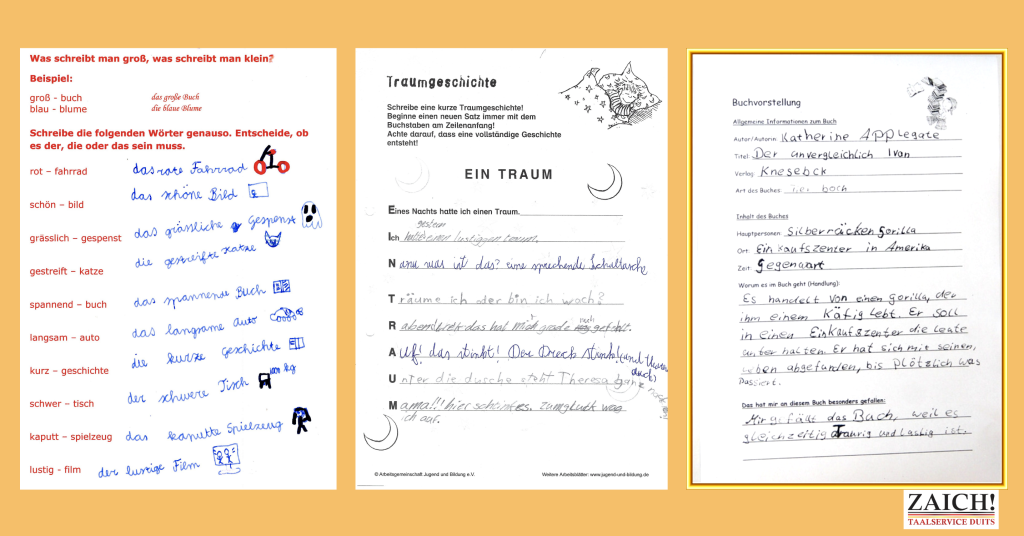
Children improve their school language skills enormously as soon as they start their education. They learn to read and write in the school language, they learn spelling rules, and they learn to tell stories and to write in a coherent manner. While the focus is on the school language, the linguistic goals in the family languages tend to be neglected. Children are encouraged to read in the school language and although many of them were eagerly read to in their family languages when they were preschoolers, they do not reach for a book in the non-school language once they start school. The step from being read to to independent reading is not a given. The pace of language development in the non-school language slows down early on. Elementary – or emergent to early-fluent – reading and writing is usually also possible in the family language, but children’s literacy skills often do not go beyond a short letter (or email) to grandma or a short text message.

The support schools offer in the family languages varies considerably. International schools offer lessons in some family languages for native speakers; other schools offer foreign language lessons. Even if one’s family language is taught as a subject, the language goal is often to be expected at the lower level of competence. Furthermore, the same teaching material is used for native speakers as for second language learners, which means that native speakers experience their family language as unappealing and boring, and drop the subject. Other students fail because of the teacher’s insistence on memorizing grammar rules or translating verbatim – but simultaneous bilinguals are not translators, they ‘store’ their languages separately and use them in different contexts.

Reading and writing a language does not come naturally like understanding and speaking. As Dr. Louisa Moats emphasizes: learning to read is rocket-science. Marianne Wolf (2008: 222) explains this difficulty with the emphasizing that brains are not wired to read: 

“Each brain of each ancestral reader had to learn to connect multiple regions in order to read symbolic characters. Each child today must do the same. Young novice readers around the globe must learn how to link up all the perceptual, cognitive, linguistic, and motor systems necessary to read. These systems, in turn, depend on utilizing older brain structures, whose specialized regions need to be adapted, pressed into service, and practiced until they are automatic ”.

Parents who raise their children multilingually should ask themselves the following questions:

  • What are the short term and long term goals of a multilingual upbringing?
  • After the initial enthusiasm when fostering your family languages with your babies and toddlers, what exactly do you want to achieve in the end?
  • Who can support your children (and you!) to attain their linguistic goals?
  • Do you find it sufficient if your child can converse with relatives in your home country?
  • Would you like your children to be able to function in two or more languages as adults, i.e. to be able to write and read in such a way that they can cope with their studies or professional life?

If the latter is the goal, this is hardly possible without appropriate instruction. After all, the school language is also a school subject from the first to the last day of school – here we do not assume that it suffices to hear, read and speak this language everywhere outside of school.

Why then should the use of a family language be enough to achieve full competence in all language skills? Only because you have learned to argue in language A does not mean that you can do the same in language B, even if you use language B as naturally as language A.

We know from Dutch students who after completing their education in the Dutch school system start studying in English, that even if they have successfully completed their school English lessons and at the corresponding CEFR level, they find it difficult to formulate in English as precisely as they could do in their mother tongue*. – How should this even work in a language that they not even received formal instruction in? 

What solutions do we suggest?

  • It is important to decide at an early stage who is part of our multilingual village and to establish in a realistic way which language goals are possible for the children in the social and linguistic environment in which they grow up.

“We need a multilingual village to raise a multilingual child” – Ute Limacher-Riebold

  • Parents should continue to cultivate their family languages, i.e. not only speak, but also carry on offering their children the opportunity to expand and deepen their language skills. If not otherwise possible, with the help of weekend courses and other activities in the family language. It is equally important for young people that parents set a good example: that they maintain their family language themselves, for example by reading or watching a film. One should also not forget the culture that is closely linked with the family language. The love for a language can go through the stomach – with typical dishes, typical celebrations etc.. Holidays in the home country or countries of the parents can intensify the young people’s knowledge and connection with this country.

“Language doesn’t stand alone. A language always includes a culture that is conveyed along with the language. ” – Katja B. Zaich

  • Teachers who have native speakers or bilingual speakers in their foreign language classes can accommodate these students with just a few resources. Most of them have little trouble with understanding, speaking, and reading, but with a little guidance they could improve their writing skills tremendously. Given their existing language skills, they benefit more from grammar in context than from memorized rules, lists and tricks. Although they need to expand their vocabulary, there is little point in dealing with bilingual vocabulary lists. This does not mean any significant extra work for the teachers and can be a valuable asset to the lessons for everyone.

Therefore, if we want our children to stay multilinguals, i.e. keep on improving their language skills in their home languages, we need to set clear and realistic goals, and find the right support throughout their childhood (and beyond).


Dr. Katja B. Zaich is a Germanist and lives as a language trainer, translator and author in the Netherlands. For years she has been teaching bilingual primary school children as part of a “weekend course” in their mother tongue, German. She is the author or co-author of several German textbooks for (adult) Dutch-speaking learners. She has two bilingual teenage daughters. www.zaich.nl

Dr. Ute Limacher-Riebold is a linguist and offers professional support and advice to multilingual families at Ute’s International Lounge, with the aim of promoting family languages and efficient communication in multilingual families. Her S.M.A.R.T. Family Language Plan© can be tailored to suit any multilingual family. She currently collaborates at a EU project PEaCH, which aims to “preserve and promote the European language and cultural heritage by strengthening bilingual children and families”. She is the co-author of the guide “How to raise a bilingual child” which was created as part of the project, and of “The Toolbox for Multilingual Families”. She has three multilingual teenage children. UtesInternationalLounge.com

* We use the term mother tongue as “person has grown up speaking from early childhood” / “their most dominant language”/ “the language they are most fluent in” .

Mentioned in the article:

Cummins, Jim, Linguistic interdependence and the educational development of bilingual children, Review of Educational Research, 1979, 49, 222–251. (and many other studies that followed!)

Wolf, Marianne, Proust and the Squid: The Story and Science of the Reading Brain, Harper Perennial, 2008. 

Louisa C. Moats, is project director, Washington D.C. site of the National Institute of Child Health and Human Development (NICHD) Early Interventions Project, and clinical associate professor of pediatrics, University of Texas, Houston, Health Sciences Center. Louisa C. Moats is a nationally recognized authority on how children learn to read and why some fail to learn. Widely acclaimed as a researcher, speaker, consultant, and trainer, Moats has developed the landmark professional development program LETRS for teachers and reading specialists (find out more here).

– This article has been published by the authors also on LinkedIn – in German, Dutch and English. 

How many languages are too many?


Have you ever wondered how many languages a child can learn at once or if there is a ‘window’ of opportunity?

Can it ever be “too late” to learn another language?

Can we learn multiple languages at any time?

And what are the cognitive benefits of learning more than one language?


You can find some answers in an interview with research psychologists and a language teacher about how kids acquire second, third or fourth languages and how it helps to feel even more strived to bring up multilingual children.

We don’t need to hear more reasons in favour of bringing up children with multiple languages.

There is no reason to doubt or to fear that it could confuse or overwhelm children. 


1) When should a child begin to “learn” or acquire a second/third etc. language?

This question hasn’t been asked in the interview which in 2024 is, alas, no longer available, but Laura-Ann Pettitto (Professor at the University of Toronto) points out that in early years, when children are still in the acquiring phase of the first language, they will use the same brain tissue for all the other languages they are exposed to. – This has been confirmed by many studies since.

If children are exposed to languages later in life, it seems that different parts of the brain are involved (3:00 sq) because “the part of the brain that is responsible for processing language is on a maturational timetable and we know very clearly what that timetable is, when the periods are most sensitive” (4:00).

Interestingly, this is not the case for all the parts of language. Some parts “remain open for life, like vocabulary and there are other parts of language, which are on a maturational timetable. Our brain reaches a stable processing capacity and then stops because it’s achieved it’s stable state” (4:20). – Now, it’s quite hard to determine when this happens because the different parts of language are affected differently by maturation.

What is important to know is that early exposure is ideal for good phonological competence and good syntactic competence (4:44). – I am always sceptic when someone says “good” or “native” language competence. It is not clear what is meant with that.

Young children have the advantage to articulate sounds easier because of their palate not being hardened yet, but they do need several years to be able to articulate more complex sounds because of the motor skills of their apparato fonatorio, the coordiation of their mouth, lips, tongue, air etc.  

Peter Gazzellone, teacher at the Ryerson Community School, presents the Integrated language program at his school. This program offers Arabic, Mandarin, Spanish and African heritage language lessons.

“The students get to choose from one of these languages and it’s usually the language that they speak at home” (5:29). The children also learn French (from grade 4) and then from kindergarten up to grade 8 all the children at school learn another language. – In Europe we have several immersion programs and know that this program benefits the children.

We all know that the task of acquiring a language later in life, when we’ve already acquired our first language (and learned it at school) is a different, much harder task.


2) Can adults learn new languages as “good” as children?

There is a very clear answer: yes, they can.

If adults want to make it possible and have the time for it, they will succeed.

Ellen Bialystock, Professor at the University of York, points out that “children are given the opportunity to learn languages in a way that supports every part of this very difficult task (…) everyone they interact with interacts with them for the purpose of helping them learn language”.

If adults had this opportunity and would “quit [their] job for five years, use a mentor who will speak to [them] at exactly the level [they] need (…) [they] will be very successful” (2:00 ssq).

Life, usually doesn’t give us that chance and “the main difference about learning languages as a child and as an adult is life“.

If adults want to learn a language, total immersion and the passion to learn it are the most important premisses to succeed.

Ellen Bialystock suggestion is meant for people who want to learn a new language “at home”, who don’t have the opportunity to learn it in loco.

But if we have to learn the language because we move to the country, it’s more probable that we will attain a very good fluency in a very short time due to our full immersion.

If total immersion is not possible, there are many other possibilities to create a monolingual exposure in the target language in real life or online etc. 


3) How much exposure?

There have been published many articles about the quantity of time someone should talk a language – or more than one – per day. For many years, parents were told that 20% of waking time is what we should aim for if we want our children to acquire and learn our language.

But the amount of exposure per day or week depends on our  language goals, our capacities to support our languages. Do we want our children to be able to understand and speak the language, or also to read and write? How much time can we invest? Who else can help us with this?

Laura-Ann Petitto points out that “systematical exposure is more important than the amount of time of the exposure. The human brain doesn’t work on quantity but on quality. Therefore, regular systematic exposure “with stable users across different contexts which are rich and varied” is what will help children reach fluency.

This means that immersion exposure at school only is not enough to become utterly fluent. It has to be enriched by “cultural material, linguistic material, movies etc” also outside the context at school.


4) Do all children have the same ability?

This is like with everything in life: some are more prone to learn languages, others are better in other sectors. Ellen Bialystock points out that “what our minds are prepared to do is make everybody a competent speaker of a language that is in the environment without additional effort” (11.00 ssq.). And to answer the question: “some [children or adults!] will find this fun and exciting and some will find it more effortful”.


5) Will children always have one dominant language?

We all know that there are differences even among multilingual siblings about their language preferences. And Laura-Ann Petitto confirms that “children have preferences for languages and the preferences are set by various things outside of our biology” (12:45 sq).

It depends on the language their friends, their family are speaking. Children are also very economic in their language choice.

About the concept of economy:  “a tenet or tendency shared by all living organisms – may be referred to as “the principle of least effort”, which consists in tending towards the minimum amount of effort that is necessary to achieve the maximum result, so that nothing is wasted.” cfr. Alessandra Vicentini, Università di Milano, The Economy Principle in Language. Notes and Observations from Early Modern English Grammars).

If children know that their parents understand all the languages they’re supposed to speak, they will probably prefer one of the dominant languages in their social context (the host country, school etc.), using the “minimum amount of effort to achieve the maximum result”.

The human biology enables us to extract patterns from one and the other language and to compare and fit them, but language acquisition is more about the need to speak this language.


6) Do multilinguals know less vocabulary than monolinguals?

Don’t worry about the vocabulary children have in one of the languages they are acquiring. Multilingual children seem to be “behind” their monolingual peers, but when we add all the words they understand and use in all their languages, they usually are at the same level if not above the norm. “We know from many studies that a multilingual child knows at least as many words and probably more and at least as many concepts and probably more as monolinguals”. (15:20 ssq). – And we should never forget that these are all averages!

If you look at the distribution of the data, “most children are in the normal part of the curve where it could go either way. The bilingual could have a higher English (or other language) vocabulary than the monolingual” (15:50).

If you take the vocabulary tests that are used to assess vocabulary – and the interesting part is, that they’re usually given out only in one language! – “and you divide the words up into words they are likely to encounter at home and words they are likely to encounter at school there is no difference!” (16:20 ssq).

There is definitely no academic risk or compromise to the main purpose for learning many languages (from an early stage on!).

Two final, very encouraging quotes for every multilingual from Laura-Ann Petitto:

The human vocabulary stays open to work for life.

The brain is not biologically set to learn only one language.


Please watch the interview I had with Prof. Ellen Bialystok in our series Raising Multilinguals LIVE on youtube:


Multilingual Parenting Fatigue

If you have done everything you could possibly do to keep your home language alive, but your preteen or teenager doesn’t respond in your home language, or overtly states that “the home language is not cool” or “too difficult”, you may experience multilingual parenting fatigue.

Yes, I gave it a name!

I was the multilingual daughter who refused to respond in the home language (German) to my mother. Instead of getting impatient or upset, she would ask me to “take all the time you need to find the right words. I’ll wait. But try to form the whole sentence in German only”…

I remember the sense of anger, frustration and inadequacy I felt when my mother would sometimes walk away from me, not accepting my code-mixing… I knew that she understood all the languages I was mixing, so, why would she refuse “understanding” and listening to me? 

I was in the same situation, with my own teenage children. I know about raising children with multiple languages, about the different stages of language acquisition and learning, and about strategies to help our respond in the target languages. I know what research says, what the best practices and strategies are, but when it comes to our own children, it’s a whole other story!

When I help my clients find solutions to their struggles, I constantly switch between “best practices” and “alternative solutions” that are way more realistic. We can easily feel inadequate as parents if “research says that …% of the children respond positively to this strategy”, but ours don’t..
.

Also, I know (and can’t stress this enough!) that code-mixing is NOT a bad thing – and still love code-mixing and code-switching with my children and friends who share the same languages!

So, what’s the problem?

The problem is that although we raise multilinguals and in an ideal world they (and we!) would be allowed to use all their languages interchangeably and still be understood, our society still requires us to “stick to one language” at a time. – And it makes sense, don’t you think? I call it the Paradox of raising multilinguals.

So, we need to raise multi-competent multilinguals, which means, multilinguals who can adjust to a variety of situations, adjust their communication by using the right (expected!) language in the (expected) way to make sure the communication flows, misunderstandings are reduced to a minimum and “everyone is happy”.

But our children / teenagers / young adults are still learning these languages and they still need our help with figuring it all out.

My frustration level increases when my children constantly speak the school or community language, even in settings where we agreed that they should speak the home language. That’s where I wonder if they are still able to say those sentences in the target language. Is it laziness or something else? And – that’s when my blood pressure levels reach a high…: “Why are they not making the effort to talk in one language at the time, like at school?!”

And then I hear myself repeating my mothers words: “take all the time you need to find the right words. I’ll wait. But try to form the whole sentence in German only”. I sometimes add “let me know if I can help you”. This is the echo from the past. What I NEVER do is to walk away, or to make them feel inadequate. I don’t insist on this when they are tired, when the communication is flowing and at a high pace. – I ask them to focus on the target language mainly in the weekends and when they’re in a good mood.

I’ve been fostering German, a bit Swiss-German, and supporting English and Dutch on a daily basis. There are days I feel exhausted, days where I wonder why I insist on asking them to hone their language skills in these (and other) languages? It’s not only because I love languages, I’m multilingual myself and I work on all my languages constantly, challenge myself by reading more complex articles and books, learn new languages etc. I do not expect my children to do the same. I really don’t. Since they were toddlers I decided not to push them, but to guide and support them (it’s just my way of parenting). Children’s agency is, in my opinion, the key to success in anything our children do and learn. However, we need to combine our agency, the parents’ and caregivers’ agency, and the children’s agency in an effective way!
For my children to be(come) fluent and confident in all their language, they must take their own journey of ups and downs, and at this point I only play the role of the supporter.

I think every parent experiences a kind of fatigue at some point. In the first years I experienced physical fatigue due to severe sleep deprivation, then there were years of battles against a too restrictive system at school, misunderstandings concerning multilinguals and raising multilingual children, not to mention bullying and other “stumble stones”.

Raising children with multiple languages is a long journey and we should allow ourselves some time-outs every now and then. Those are the moments where we sit back and look at the results, at what our children have accomplished – language and non-language wise. And enjoy what we see!

My children can converse in all their languages, read and write in most of them (Swiss-German is not a written language!) to various extent, and that is enough. They also all learn additional languages they chose just for the fun of it.

When I feel the multilingual parenting fatigue, and, believe me, I felt it many many times, I look at the long-term goal. The one where my children will use the languages they need without fear of failure, or fear of making mistakes. They won’t be the one not sharing his or her opinion in a meeting because their language skills are “not perfect”, because they know that everyone has a say (a great side-effect of raising them in the Netherlands!).

When we started this journey, I wished that one day my children would love languages as much as I do, that they would understand that it is an incredible privilege to grow up with multiple languages, that they will be thankful one day for the effort and energy they’ve put into fostering all their language. Now (2025) I can say that they are. They are proud to be able to make their new friend feel comfortable by speaking his language, to ask people for advice on the street in Germany, Switzerland, Spain, The Netherlands, Belgium, France, Luxembourg, Italy and all English speaking countries.

We didn’t have supportive communities of German, Italian and Swiss-German speakers, where my children could have fully immersed, naturally, on a regular basis in conversations and confidently and proudly speak their languages. Unfortunately, neither my parents nor my parents in law managed to find a way to connect and communicate regularly with them, build up a relationship through their languages that goes beyond small talk and basic communication skills.

Maybe, if my children were born a bit later and our extended family would have taken the chance to take interest in my children’s lives and interests, this would have been possible. I don’t like to dwell on the past. We all do what we can with the people in our life that are ready to support us.

The multilingual parenting fatigue is real. I observe it in many families that, like mine, try to maintain their home languages over decades whilst living abroad and rarely visiting the countries of the target languages.


I just want to invite you to take a break. Let’s remind ourselves that:

  • our children don’t need to be perfectly fluent in all their languages
  • the most important thing is that they enjoy speaking the languages and to communicate and connect – to whatever extent they want!
  • That whatever we do is enough and more than many others manage to do!

Therefore it is ok to take time-out, reassess what we’ve done so far, what we have achieved, to acknowledge that our children are on an incredible journey and that the “down” phases are part of it. They are only a phase. Instead of thinking about what they don’t do (yet) and don’t like (yet), we should rather focus on what they are capable of, what they like, what they’re passionate about, and connect through our languages… one step, one-or-two languages at a time

Do you feel the multilingual parenting fatigue?

Could you need a break, some comforting words or a reassessment about the language situation in your multilingual family? 

Let me know in the comments here below. 


You’re also very welcome to join our facebook group multilingual families.

Please take the time to celebrate what you all have achieved. I invite you to read Chryssa’s post about “The End of the School Year” and to use the free download.