
Together with a group of other linguists and language enthusiasts, we propose the 27th March as the International Day of Multilingualism. This is the day we want to embrace the variety of languages that we all hear, speak, read and write to different extents on a daily, weekly, monthly basis.
Because more than half of the worlds’ population speaks more than one language it is time to establish that #multilingalisnormal.
Why the 27th of March?
The 27th March was chosen for the International Day of Multilingualism because this is the date engraved on the Rosetta Stone: 27 March 196 BC, the world’s most famous multilingual text, engraved with Ancient Egyptian, in hieroglyphic, Demotic and Ancient Greek. The Rosetta Stone was the key to unlocking new understanding of Egyptian hieroglyphics because linguists in the 1800s were able to decode the hieroglyphs by translating the Ancient Greek text and comparing it to the Demotic text, looking for overlapping phonic or ideographic clues.
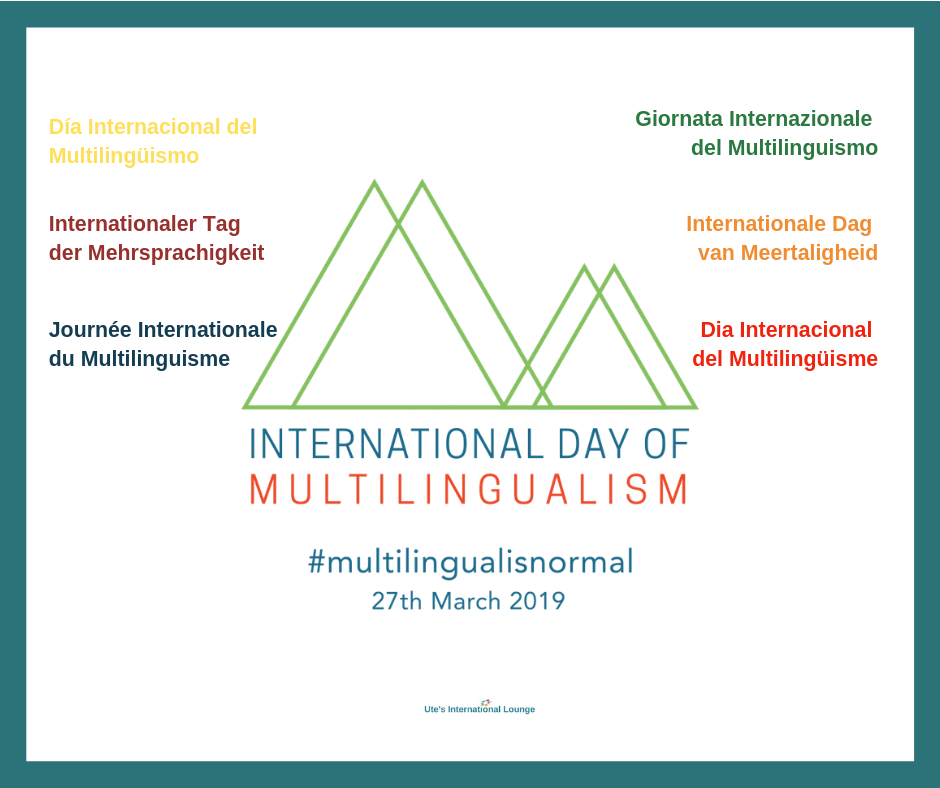
The overlapping of languages, the clues that one language provides for another, and the way that we use languages in a multi-layered, multi-lingual way in our lives was the reason for choosing the triangles symbol in the logo for the International Day of Multilingualism. They symbolize the many languages, and the many different ways of learning and speaking them.
On this first International Day of Multilingualism we celebrate that Multilingual is normal!
You can also support the first International Day of Multilingualism on 27th March 2019 by:
1 – sharing a photo/quote/fact related to languages across as many of your social media accounts as possible
2 – using the #multilingualisnormal hashtag in all posts
3 – posting at 09:00 and 21:00 GMT on Wednesday 27th March 2019
4 – scheduling multiple posts to create a simultaneous wave of support
Let’s get the topic trending, and get people talk!
You can join the International Day of Multilingualism Facebook group here, and discuss ideas on how to take part with other interested parties.
The official website can be accessed here.
Who is multilingual?
A multilingual person is someone who can communicate in more than one language, either actively (through speaking, writing, or signing) or passively (through listening, reading, or perceiving) – other similar terms are also polyglot or plurilingual.
Some important facts about multilingualism
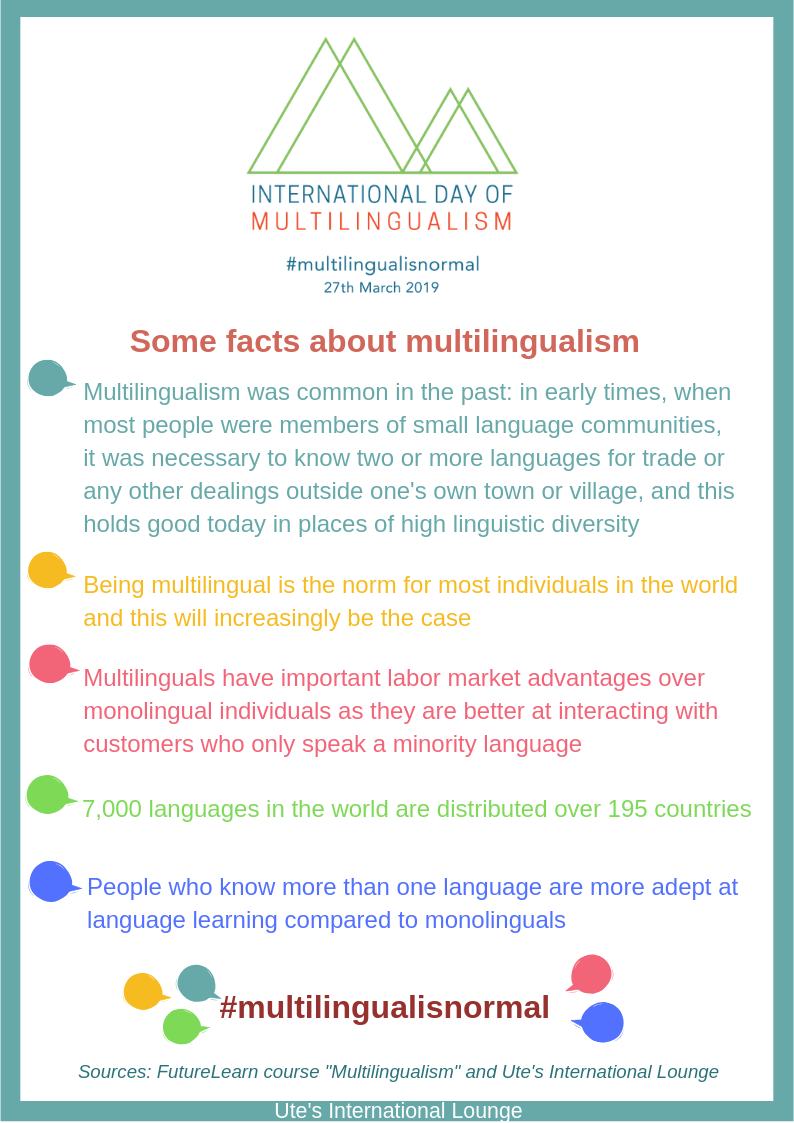
- There are 7,000 languages in the world distributed over 195 countries: thus, every country in the world is multilingual.
- The amount of languages spoken in a region differs greatly. For example, Europe as a region features less languages than many equivalent sized regions in Asia or Africa.*
- Being multilingual is the norm for most individuals in the world and this will increasingly be the case.*
- Most languages can be clustered in different families but some are completely unrelated to any other known language.*
- The number of speakers of a language differs if we also count those learning the language as a foreign language (i.e. through a school).*
- People who know more than one language have been reported to be more adept at language learning compared to monolinguals.
- Bilinguals might have important labor market advantages over monolingual individuals as bilingual people are able to carry out duties that monolinguals cannot, such as interacting with customers who only speak a minority language
- Multilingualism was common in the past: in early times, when most people were members of small language communities, it was necessary to know two or more languages for trade or any other dealings outside one’s own town or village, and this holds good today in places of high linguistic diversity such as Sub-Saharan Africa and India.
* from FutureLearn course “Multilingualism”
Related posts:
The 1st International Day of Multilingualism
International Day of Multilingualism 27th of March #multilingualisnormal

Ute Limacher-Riebold
Ute Limacher-Riebold, PhD, is the founder of Multilingual-Families.com and Owner of Ute’s International Lounge & Academy.
She empowers internationals to maintain their languages and cultures effectively while embracing new ones whilst living “abroad”.
She grew up with multiple languages, holds a PhD in Romance Studies and has worked as an Assistant Professor at the University of Zurich (Department of Italian Historical Linguistics). She taught Italian historical linguistics, researched Italian dialects and minority languages, and contributed to and led various academic projects.
Driven by her passion for successful language development and maintenance, and personal experiences with language shifts, Ute supports multilingual families worldwide in nurturing their languages and cultural identities in the most effective and healthy way.
Pingback: International Day of Multilingualism 27th of March #multilingualisnormal
Pingback: The 1st International Day of Multilingualism : Maltamum