Impara l’italiano cantando

Imparare un’altra lingua si può in modi diversi. Personalmente ho fatto l’esperienza che ascoltando musica aiuta molto a comprendere l’intonazione, ad apprendere vocabolario. Ed è un modo molto piacevole per imparare la lingua.

Canzoni sono poesia.

Le parole in rima ripetute più volte ed accompagnate dalla musica aiutano a memorizzarle meglio. Alcune canzoni hanno un contenuto politico e sociale che è molto utile a comprendere la cultura italiana.

Ecco una lista di cantanti e cantautori Italiani

Perché le canzoni siano adatte all’apprendimento dell’italiano bisogna che lo si possa capire, si possa seguire il filo rosso del discorso – della canzone – che l’italiano corrisponda al livello dello studente.


La lista di cantautori e cantanti è lunghissima e sicuramente non sarà mai esaustiva, ma se vuoi che aggiunga un cantante o cantautore che ti sembra debba farne parte, fammi sapere nei commenti.  


Alex Britti

Alberto Fortis

Anna Tatangelo

Annalisa

Antonello Venditti

Biagio Antonacci

Edoardo Bennato

Elisa

Emma Marone

Fabrizio De Andrè

Francesco De Gregori

Gianluca Grigniani

Irene Grandi

Luca Carboni

Marco Masini

Marco Mengoni

Nek

Raf

Riccardo Cocciante

Tiziano Ferro

Umberto Tozzi

Zero Assoluto

Zucchero 


What is your maths language?

When our children are schooled in another language since the beginning, their most dominant language for counting and doing maths is or will be the school language

When I tell this to parents who have still to decide which school would be best for their bi/multilingual child, we have the most interesting discussions. Many of them don’t see it as a problem, which, in fact, it is not. But when I show them the different ways to count and explain to them that the way to do simple equations can differ considerably, and that they may need to switch to another way to do maths to help their children with homework for example, they are usually very surprised.

If you speak more than one language at home: which is the language your children prefer when counting, if they learned this before attending daycare or school in another language? 


If your children count in one of your home languages, they might need some help to switch to counting in the school language later.

One way to make this easier is to teach our children to count in more than one language from the beginning. When they show interest in numbers and want to count, we can do so in “our” language and ask our partner or a friend to do the same in the “other” one, so that our children get the input in both or all the languages.

Do you think it is too confusing? It is not. It requires more brain-work but it is like learning new words and link them to those we already know.

My tip for parents whose children are schooled in another language is to bridge between the school and the home languages, i.e. to help them learn the necessary vocabulary in their home language too. Why? Just imagine your child is in your home country and wants to buy something: numbers are everywhere! We need them constantly, either when we buy something, measure something, tell the time, count our steps, prepare a meal and use measures…

The earlier we foster the maths vocabulary in all the languages in our children, the better for them (and us: because we don’t have to translate numbers, prices etc.).

74: seventy-four – or “four-seventy” or “sixty-fourteen”?


Especially when numbers like 74 are named in different ways – tenths first then units, or units first, then tenths, or in the French way, the transfer between their languages can become a major brain workout for our children (and us)!
I personally learned to switch between Italian and German from a very early age and don’t get confused between “cinquantaquattro” (54) and “quarantacinque” (45), or “vierundfünfzig” and “fünfundvierzig“, just to make an example.
I learned Geography and History in French, so I don’t get confused with French numbers either – the “quatrevinghtdixneuf” (lit. “four-twenty-nineteen” 99) is as natural as the “neunundneunzig” or “novantanove”. 

I “only” needed to switch between my languages when I do more complex maths with my children in English. Although I didn’t have any problem with my other languages, I had to learn the math-vocabulary in order to help them. Needless to say that they taught me a lot!

Do multilinguals have one maths language only?

The language we are taught to count in, do maths, is the one we will be more proficient doing so also in the future, unless this changes very early.

It is a myth that the language we count in is always our “mother tongue”, our “native language”: It is actually the language that is the dominant one for us, when counting and doing maths, i.e. it is closely related to a given situation and topic. 

For multilinguals it is perfectly normal to have different “language dominances” across our languages: for example maths is English, literacy in German, science in French. It all depends on what language we use the most when talking, reading, writing, studying about those subjects.

What if older children attend a school in a new language, how will they cope with the other “math language”? 

Research on mathematics and language diversity is published in mathematics education journals as well as linguistics journals focusing on language in education. Poor performance in maths is usually due to a lack of understanding the language of the test (see: Adetula, 1989; De Courcy & Burston, 2000; Evans, 2007; Farrell, 2011; LlabreCuevas, 1983; Ni Diodan & Donoghue, 2009; Zepp, 1982): those who learn mathematics in a language that is not their own, their strongest one, in order to improve, the language, culture and the logic or reasoning system of the learner should match with that of the teacher, the textbook and the curriculum (Berry, 1985; Evans, 2007; Zepp, 1982).

What should parents and teachers know about multilinguals and maths? 

The most important thing to know for parents and teachers is that the competence in both the home and the language of learning and teaching (LoLT) is an advantage in mathematics achievement (Clarkson, 1992; Clarkson & Galbraith, 1992).

However, language fluency is not necessarily linked to the learners’ performance, i.e. if learners are not fluent in the school language, they can still perform on a high standard especially in maths and other subjects learned in another language! Also, it is a misconception to assume that only because people perform in a subject with a native fluency they do it at a high level. 

When using translanguaging practices in other subject areas with multilinguals 

More and more teachers use translanguaging practices in various subject areas. Especially when it comes to STEM  subjects (i.e. science, technology, engineering and mathematics), teachers should always assess the learners’ competence in their home language(s) or the language they were taught the subject.

For example, a French-German child, schooled in Dutch and now attending a school in English, might be better off if the teacher can bridge between Dutch and English. Assuming that the child is better in those subjects because of their home languages is a common misconception!

Generally speaking, encouraging the development of the learners’ home language is a successful strategy to motivate them to succeed in mathematics (Barton, Fairhall & Trinick, 1998) – but only if the learners have the necessary vocabulary in their home language though!

Unfortunately, very little research focuses on how STEM teachers should deal with the complexities of teaching and learning these subjects in linguistically diverse classrooms, but I am optimistic that many schools are addressing this manco and looking for solutions that involve teacher trainings.

Learners whose first/home language is the same as the language of instruction are familiar with the linguistic structures they encounter in the mathematics classroom (Barwell, 2009). Research shows that this is not the case for learners whose home language is different from the language of learning and teaching (LoLT) (Adler, 2001;Gorgorio & Planas, 2001; Halai, 2004). Both groups of learners have to familiarize themselves with the structure of the mathematical language. (from:  Teaching and Learning Mathematics in Multilingual Classrooms: Issues for Policy, Practice and Teacher Education (pp.3-10))

– This is an “ongoing post”, which means that I will regularly update it with more scientific findings about this topic.
If you have any suggestions, examples, input on this matter, please add a comment here below.

Here are some references (taken from Anjum Halai and Philip Clarkson eds., Teaching and Learning Mathematics in Multilingual Classrooms. Issues for Policy, Practice and Teacher Education, 2016) :

Adetula, L. (1989). Solution of simple word problems by Nigeria children: Language and schooling factors. Journal for Research in Mathematics Education, 20(5), 489–497.

Adetula, L. (1990). Language factor: Does it affect children’s performance on word problems? Educational Studies in Mathematics, 21, 351–365.

Adler, J. (1997). A participatory-inquiry approach and the mediation of mathematical knowledge in a multilingual classroom. Educational Studies in Mathematics, 33, 235–258.

Adler, J. (1998). A language of teaching dilemmas: Unlocking the complex multilingual mathematics classroom. For the Learning Mathematics, 18(1), 24–33.

Adler, J. (1999). Seeing and seeing through talk: The teaching dilemma of transparency in multilingual mathematics classrooms. Journal for Research in Mathematics Education, 30(1), 47–64.

Austin, J., & Howson, A. (1979). Language and mathematics education. Educational Studies in Mathematics, 10, 161–197.

Barton, B., Fairhall, U., & Trinick, T. (1998). Tikanga Reo T?tai: Issues in the development of a M?ori mathematics register. For the Learning of Mathematics, 18(1), 3–9.

Barwell, R. (2003a). Patterns of attention in the interaction of a primary school mathematics students with English as an additional language. Educational Studies in Mathematics, 52(1), 35–59.

Barwell, R. (2003b). Linguistic discrimination: An issue for research in mathematics education. For the Learning of Mathematics, 23(2), 37–43.

Barwell, R. (2005). Empowerment, EAL and the national numeracy strategy. International Journal of Bilingual Education and Bilingualism, 8(4), 313–327.

Barwell, R., & Setati, M. (2005). Multilingualism in mathematics education: A conversation between the north and the south. For the Learning of Mathematics, 25(1), 20–23.

Been-Zeef, S. (1977). The influence of bilingualism on cognitive strategy and cognitive development. Child Development, 48, 1009–1018.

Bell, G., & Woo, J. H. (1998). Probing the links between language and mathematical conceptualisation. Mathematics Education Research Journal, 10(1), 51–74.

Berry, J. (1985). Learning mathematics in a second language: Some cross-cultural issues. For the Learning of Mathematics, 5(2), 18–23.

Chitera, N. (2009). Code switching in a college mathematics classroom. International Journal of Multilingualism, 6(4), 426–442.

Civil, N., & Planas, N. (2004). Participating in mathematics classrooms: Does every student have a voice? For the Learning of Mathematics, 24(1), 7–12.

Clarkson, P. (1992). Language and mathematics: A comparison of bilingual and monolingual students of mathematics. Educational Studies in Mathematics, 23, 417–429.

M. S. Phakeng 22 Clarkson, P. (2007). Australian Vietnamese students learning mathematics: High ability bilinguals and their use of their languages. Educational Studies in Mathematics, 64, 191–215.

Clarkson, P., & Galbraith, P. (1992). Bilingualism and mathematics learning: Another perspective. Journal for Research in Mathematics Education, 23(1), 34–44.

Cummins, J. (1981). Bilingualism and minority language children. Ontario, Canada: Ontario Institute for Studies in Education.

Dawe, L. (1983). Bilingualism and mathematical reasoning in English as a second language. Educational Studies in Mathematics, 14, 325–353.

De Courcy, M., & Burston, M. (2000). Learning mathematics through French in Australia. Language and Education, 14(2), 75–95.

Domínguez, H. (2011). Using what matters to students in bilingual mathematics problems. Educational Studies in Mathematics, 76, 305–328.

Evans, S. (2007). Differential performance of items in mathematics assessment materials for 7-year-old pupils in English-medium and Welsh-medium versions. Educational Studies in Mathematics, 64, 145–168.

Farrel, M. (2011). Bilingual competence and students’ achievement in physics and mathematics. International Journal of Bilingual Education and Bilingualism, 14(3), 335–345.

Gerber, A., Engelbrecht, J., Harding, A., & Rogan, J. (2005). The influence of second language teaching on undergraduate mathematics performance. Mathematics Education Research Journal, 17(3), 3–21.

Gorgório, N., & Planas, N. (2001). Teaching mathematics in multilingual classrooms. Educational Studies in Mathematics, 47(1), 7–23.

Grosjean, F. (1982). Life with two languages. Cambridge, MA: Harvard University Press.

Hansson, A. (2012). The meaning of mathematics instruction in multilingual classrooms: Analysing the importance of responsibility for learning. Educational Studies in Mathematics (Online February 2012), 81(1), 103–125. doi:10.1007/s10649-012-9385-y

Heng, C. S., & Tan, H. (2006). English for mathematics and science: Current Malaysian language-ineducation policies and practices. Language and Education, 20(4), 306–321.

Ianco-Worral, A. D. (1972). Bilingualism and cognitive development. Child Development, 43, 1390–1400. Jäppienen,

A. (2005). Thinking and content learning of mathematics and science as cognitional development in content and language integrated learning (CLIL): Teaching through a foreign language in Finland. Language and Education, 19(2), 147–168.

Kazima, M. (2007). Malawian students’ meanings for probability vocabulary. Educational Studies in Mathematics, 64(2), 169–189.

Khisty, L., & Chval, K. B. (2002). Pedagogical discourse and equity in mathematics: When teachers’ talk matters. Mathematics Education Research Journal, 14(3), 154–168.

Li, C., & Nuttal, R. (2001). Writing Chinese and mathematics achievement: A study with ChineseAmerican undergraduates. Mathematics Education Research Journal, 13(1), 15–27.

Lim, C., & Presmeg, N. (2011). Teaching mathematics in two languages: A teaching dilemma of Malaysian Chinese primary schools. International Journal of Science and Mathematics Education, 9, 137–161.

Llabre, M., & Cuevas, G. (1983). The effects of test language and mathematical skills assessed on the scores of bilingual Hispanic students. Journal for Research in Mathematics Education, 14(5), 318–324.

Macnamara, J. (1966). Bilingualism and primary education. Edinburgh, Scotland: Edinburgh University Press.

Moschkovich, J. (1999). Supporting the participation of English language learners in mathematical discourse. For the Learning of Mathematics, 19(1), 11–19.

Moschkovich, J. (2005). Using two languages when learning mathematics. Educational Studies in Mathematics, 64, 121–144.

Ní Ríordáin, M., & O’Donoghue, J. (2009). The relationship between performance on mathematical word problems and language proficiency for students learning through the medium of Irish. Educational Studies in Mathematics, 73, 43–64.

Ní Ríordáin, M., & O’Donoghue. J. (2011). Tackling the transition: The English mathematics register and students learning through the medium of Irish. Mathematics Education Research Journal, 23(1), 43–65.

Parvanehnezhad, Z., & Clarkson, P. (2008). Iranian bilingual students reported use of language switching when doing mathematics. Mathematics Education Research Journal, 20(1), 52–81.

Pearl, E., & Lambert, W. (1962). Relation of bilingualism to intelligence. Psychological Monographs, 76, 1–23.

Phakeng, M., & Moschkovich, J. (2013). Mathematics education and language diversity: A dialogue across settings. Journal for Research in Mathematics Education, 44(1), 119–128.

Planas, N. (2011). Language identities in students’ writings about group work in their mathematics classroom. Language and Education, 25(2), 129–146.

Planas, N., & Setati, M. (2009). Bilingual students using their languages in the learning of mathematics. Mathematics Education Research Journal, 21(3), 36–59.

Saer, D. (1923). The effect of bilingualism on intelligence. British Journal of Psychology, 14, 25–38.

Saunders, G. (1988). Bilingual children: From birth to teens. Clevedon, UK: Multilingual Matters.

Setati, M. (1998). Code-switching in a senior primary class of second-language mathematics learners. For Learning Mathematics, 18(1), 34–40.

Setati, M. (2005). Teaching mathematics in a primary multilingual classroom. Journal for Research in Mathematics Education, 36(5), 447–466.

Setati, M., & Adler, J. (2000). Between languages and discourses: Language practices in primary multilingual classrooms in South Africa. Educational Studies in Mathematics, 43, 243–269.

Setati, M., Adler, J., Reed, Y., & Bapoo, A. (2002). Incomplete journeys: Code switching and other language practices in mathematics, science and English language classrooms in South Africa. Language and Education, 16(2), 128–149.

Stacey, K., & MacGregor, M. (1991). Difficulties of students with limited English language skills in pre-service mathematics education courses. Mathematics Education Research Journal, 3(2), 14–23.

Stathopoulou, C., & Kalabasis, F. (2007). Language and culture in mathematics education: Reflections on observing a Romany class in a Greek school. Educational studies in Mathematics, 64(2), 231–238.

Swain, M., & Cummins, J. (1979). Bilingualism, cognitive functioning and education. Language Teaching, 12, 4–18. UNESCO. (1974). Interactions between linguistics and mathematics education. Nairobi, Kenya: UNESCO.

Whang, W. (1996). The influence of English-Korean bilingualism in solving mathematics word problems. Educational Studies in Mathematics, 30, 289–312.

Zepp, R. (1982). Bilinguals’ understanding of logical connectives in English and Sesotho. Educational Studies in Mathematics, 13, 205–221.

Zepp, R., Monin, J., & Lei, C. (1987). Common logical errors in English and Chinese. Educational Studies in Mathematics, 18(1), 1–17.


Dutch language resources

The best way to learn Dutch is to fully immerse into the language and join the worldwide 23 million native speakers in the Netherlands, Flanders, Suriname, or the 4 million people who speak Dutch as a second or foreign language.

You can also start with listening to a local radio (online), watch local TV, get in contact with locals and learn by speaking (making lots of mistakes, asking locals about how to say it right, ignoring when one responds in English and insist…). 

One way to feel prepared is to listen to music, watch some videos, TV shows etc and learn at least the basics of the local language.

If you are a beginner, I recommend you to start also with easy texts and songs. If you have children, you can start with songs for children – and learn alongside your children.

Here is a list with online resources that can help you and your children to exercise your Dutch. – It is an ongoing list : please let me know in the comments if you would like me to add any links.

Ik wens je alvast heel veel success!

Find some books – also audiobooks! – in the OnlineBibliotheek

At LearnDutch you can learn Dutch online with Bart de Pau. He has many videos and resources for you to start right away!


coLanguages offers a flexible learning path through its online platform, combining self-study with real Dutch content for immersive learning and personal teacher support — all aligned with official NT2 guidelines.


Dutch homeschooling (payed) programs:

Dutch for children

Taalzee

Squla

or 

Hotel Hallo

Digital Dialects

CoLanguage

More resources for Dutch at home:

Woordkasteel

Dutch literature (books for children)

Forvo (find out how to pronounce words)

Magazines for children:

Kinderbladen 

Newspaper for children:

Kidsweek

Digital story books:

for children & adults

Lees me voor

Prentenboek

Storytel  

Goedekennis gesproken schoolboeken

Luisterboeken

De Woorden in Beeld

Childhood Stories

Videos about school

School TV

Leerspellen

Scratch: Learn how to programme /code

Proefjes: Discover and explore

Kindertube.nl 

How to train for your CITO exam

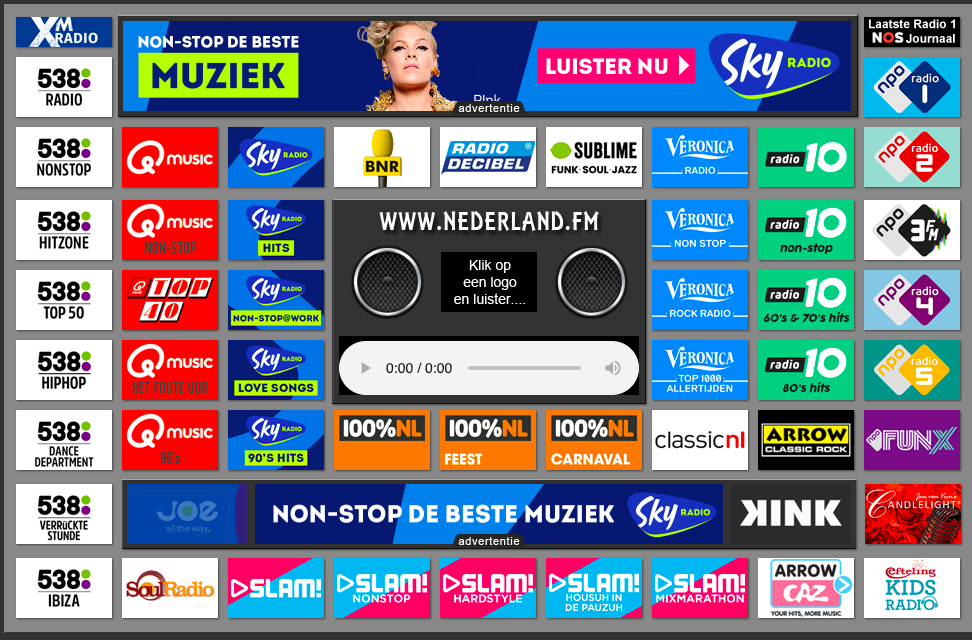
Dutch radio channels (online):

I always recommend to “shower” in the language! You can do this from all around the world and it helps you to have a head start in the Netherlands if you already know the language. A very effective way to understand the intonation of the language and some words and more, is to listen to it as much as you can. Have a look at the radio channels and choose one where you can listen to news and some other shows that allow you to build your vocabulary.

Dutch Radio Channels

Online Luisteren

Radio Online fm

Radio Via Internet (music)

All Radio NL

Dutch TV programs suitable for learners of Dutch:

Zandkasteel, Kikker, Nijntje, Koekeloere, Sesamstraat, Karel & Kaatje (for beginners)

Nieuws uit de natuur, Schooltv weekjournaal, Jeugdjournaal are for more advanced learners

uitzending gemist

Dutch Apps

Look for apps with the search words: Learn Dutch Vocabulary, Learn Dutch for children, Kinderboeken (children’s books), Duo Lingo etc.

Kindergebaren

Choose the right app for the age of your child here: Consumentenbond

Sites with Dutch songs:

  • for children

Liedjesland

Kinderliedjes

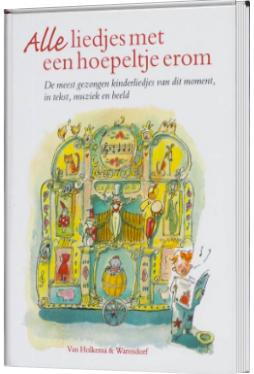
Liedjes met een hoepeltje erom are songs that children sing at daycares and they come with a CD and you can find the songs online (youtube) to practice

  • for adults (I just indicate a few that are easy to understand)

Andre Hazes Jr.

Bløf

Guus Meeuwis

Jan Smit

Jeroen van der Boom

Maaike Outboter

Maan de Steenwinkel

Marco Borsato

(etc.)

Videos (with stories and songs for children):

KinderTube

Kinderliedjes – Kids Tube

Learn about all kind of topics for free (!) from experts at the Universiteit van Nederland


Related posts:

 4 tips to learn the local language for adults

5 tips to encourage your child to learn the local language


Multilingualism is good for the economy

Multilingualism is not only good for our brain, our overall flexibility and open mindedness, it is also good for the economy. 

That countries like the UK with relatively “poor language skills” loses “the equivalent of 3,5% of its GDP every year” for exactly this reason whereas Switzerland, with its four national languages (German, French, Italian Rumantsch), “attributes 10% of its GDP to its multilingual heritage” is a fact.

Why is knowing other languages so important? Isn’t it enough to know English?
No, because knowing the other language is more than knowing its grammar… 

A study of small and medium-size companies in Sweden, Germany, Denmark and France found that those which invested more in languages were able to export more goods. German companies that invested heavily in multilingual staff added 10 export countries to their market. Companies that invested less said they missed out on contracts. (see: Speaking more than one language can boost economic growth)

Knowing the language of your business partner allows you to understand his/her culture, the way to approach issues, discuss – make business. In fact, it is knowing the “business language” which includes habits, beliefs, how meetings are done, what is expected from you, what you should avoid at all costs… can save you time and money.

You may object that “if everyone speaks English, we don’t need to know their language and all these details about the culture”– that’s exactly the point where many companies are wrong.

Your business partner may be fluent in English, even have no apparent accent, but he/she will still decide based on her or his cultural values, beliefs and assumptions.

Knowing the other language and some of the culture gives you the cognitive power, the understanding that is necessary to not jump onto wrong conclusions.

If I’m selling to you, I speak your language. If I’m buying, dann müssen Sie Deutsch sprechen (Willy Brandt)


In her essay Multilingual Skills provide Export Benefits and Better Access to New Emerging Markets, Ingela Bel Habib shares the results of her comparative study of small and medium-sized Swedish, Danish, French and German enterprises, and observed that:

“Swedish SME companies use mainly the English language and to some extent, German and French and therefore tend to export to neighboring markets, particularly Scandinavia. On the other hand small-and medium-sized companies in Denmark, England, Ireland, Germany, Poland, France and Portugal use up to between 8 and 12 market languages, which gives them better access to emerging markets. – In addition, the percentage of companies having a multilingual export strategy are at 27% in Sweden compared to 68% among Danish SMEs, 63% in Germany and 40% in France. This means that the percentage of firms missing export contracts due to language barriers are much higher in Sweden and are 20%, compared to 4% for Denmark, 8% for Germany and 13% for France.”

Furthermore, her study shows that “multilingualism is more complicated than the current belief that English is the only market language. Small- and medium-sized enterprises are using to an ever increasing extent the specific language of the export market to establish themselves in new emerging markets” – these languages for this study are English, Russian, German, French, Spanish, Italian, Polish and Chinese.

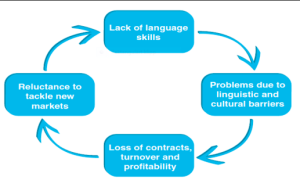
The British Chambers of Commerce and The National Centre for Languages have launched the model of  micro-economic analysis which points out the link between the lack of language skills and exports effects.


Effects of lack of language skills on export (The National Centre for Languages, 2009).


I highly recommend reading Ingela Bel Habib’s study to get all the details of variables, measurements and data that leads her to the following conclusion:

“In the short term, efforts need to be made reducing language barriers to market entry and facilitating the small-and medium-sized companies access to new emerging markets through supporting and financing professional development programs and language training.

Longer-term measures concern in particular the adaptation of education to the needs of employers through education to a greater number of languages, particularly at secondary and university levels. The languages of the migrant employees also provide a shortcut to multilingualism in order to increase small-and medium-sized companies’ exports to new emerging markets.”


In short: “multilingualism and economic competitiveness are closely linked” and measures should be taken at educational level. 

And, I may add, that in order to succeed, you don’t only need to be able to communicate in the other language, you need to know the “cultural grammar” too, the invisible rules of communication that determine the interpersonal behavior in other cultures


Quoted articles:

Ingela Bel Habib, Multilingual Skills provide Export Benefits and Better Access to New Emerging Markets, on the site Sens Public, 2011.

When the home language is not the dominant language

If you are a multilingual, is your home language your most dominant language?

Something that surprises me when I read about language policies in schools and elsewhere is, that it is always assumed that people – children and adults – are most proficient, i.e. most fluent, in their home language. This might be correct for those who learned other languages later in life and were first schooled in their home language, but reality is very different for multilinguals who are schooled in other languages!

If you are a simultaneous bilingual and you have the chance to maintain those first languages at school (because the school teaches several subjects in both or all the languages!), all your languages might be more or less at the same level – usually one or two are more dominant than the others, depending on many factors. You may be bi- or pluriliterate.

If you acquired and learned several languages, simultaneously and successively, lived in different places, were schooled in one of the languages, or maybe not..., worked using one of these languages – it might be that your most dominant language is not the first language you acquired or learned.

If our children are schooled in another language chances are high that their most dominant language is the school language...


The reason for this is very simple: we don't (or can't) foster all the vocabulary they learn and use at school also in their home language, because it would mean that they hear the same lessons twice once at school in the school language, once from us at home. 

Recently many schools – not only the international ones! – are opting for a more inclusive policy when it comes to home languages, which I fully support. It is proven that integrating home languages in the practice at school, helps new students, i.e. those who were schooled in their home language earlier, to adapt and integrate easier.

But what about those multilinguals who are schooled in languages that are not their home language(s) since day one? Who maybe had to learn two (or more!) school languages in addition to their home languages due to their moves?

I see a problem in the overall approach, because these latter children are often lacking behind their peers in their countries of origin language wise. They need a whole other support!

Many multilingual families bridge the school and the home languages by discussing about school topics, by providing the necessary input, fostering the right vocabulary. This is hard work! And it requires collaboration and transparency from the teachers and the school in general, and not only on primary school level, but throughout the whole school curriculum!

We parents – even those who are teachers – can't provide all the input that our children receive at school in their school language. We have to make compromises. For my family it means that I focus on the topics my children like the most. I must confess that I find it sad that my children don't count in German or Italian, that they prefer English when it comes to explaining complex subjects, but I know that with patience and our many conversations, they will acquire as much as they can.

I honestly hope that there will be more studies about multilingual families whose children are schooled in another language and who do everything possible for their children to become fluent also in their home languages. I am looking for testimonials from other multilingual families whose children are schooled in another language.

I want to hear from you, how you foster your home language(s) and how it is going, what support you get, what support you would need.

Please share your experience with me, by leaving a comment here below. 

I will gather all the information I can get to write an article, present it at conferences and hopefully we will get more help from governments, schools, teachers, the community we live in.


Home Language Maintenance with Teenagers

[update May 2023]

If you have teenagers whose school language is not one of the home languages it might be difficult to make them read, write and “immerse” into the home languages.

If they don’t get any formal education in those languages it is very difficult to maintain them at home. The switching to the more dominant language, the language of school or of the community, together with a general “I don’t want to” or “you can not make me talk this way” attitude is often the reason why parents give up fostering the home languages when their children become teens.

I personally think and know by my own experience, that keeping the interest in the home languages alive throughout the school years is hard work especially when we don’t visit the countries where these languages are spoken regularly, when our teenagers don’t speak the language to peers and don’t have a connection with the teen-world in that language.

But this is a very critical period in language acquisition – yes, they are still acquiring the language! – and international parents need help from their community and schools to re-confirm the value of the home languages. Many schools are becoming more and more inclusive when it comes to home language-use in the classroom and the school premisses. It is a relief for parents like me to know that “school language only” policies are being abandoned in favor of “use your home language to foster your overall knowledge” practices. But what schools are not aware of is that these teenagers might not read in their home languages regularly. They might not have the words to even look up more complex topics. 

I call this work that we parents and caregivers are doing with our teenagers Home Language Maintenance: we try with all the tools and means we have at our disposal to maintain something that we instilled from a very early stage, but which suffered due to the fact that our children are schooled in another language and this became the most dominant and most “important” one at some point.
Some of us missed the moment to send our children to language lessons for many reasons:

  • Why should we do that, our child uses the language at home every day…
  • I can’t force him/her to take those language lessons on top of all the lessons at school… the school language has priority…

It is very difficult for multilingual parents to motivate their children foster all their language! We often need to let one language (or two) become less important. This is when we question our whole project of raising our children with all these languages and experience something I would call the multilingual parenting fatigue.

We have tons of books, resources and frantically search for more input that they might find appealing. But what if our children and teens are not interested in them anymore, if they simply don’t have the time to speak, maybe read and write in the language (if they ever learned to read and write in it…)?

This is when we have to come up with alternative solutions.

Some send their children to summer camps for a full immersion into the language for at least 1-2 weeks per year, to give them a real language boost.

Others spend their holidays in those countries year after year, hoping that somehow the language will stick and become interesting for the child.

Full immersion does wonders: we know that since we experienced the first language boosts our children had after every summer spent in the country where our home language was spoken!

What can we do to help our children stay motivated in speaking the home languages?

Here are 5 tips that I found worked with my children:

1) Make sure the topic is compelling and comprehensible! Especially when our children have a richer vocabulary and feel more confident in another language, making the target language as compelling and comprehensible is key! Let them choose a topic they are passionate about – there is no “off topic” when it comes to fostering language. 

2) Let them choose resources! We can not possibly provide input for every imaginable topic our children are interested in. Therefore resources resource that fosters the target language in some way are the best way to access the target language whilst living abroad! It can be news articles, comics, cookbooks, manuals about a hobby or a skill they are interested in, a game, short stories, poems, novels. It doesn’t matter what they read, it is important that they read!
By focusing on the topic and not on the format of the resource, they are less likely to be discouraged to reading in the target language. It will take them some time to feel more confident in reading in a language they are not used to read regularly. They can also opt for audiobooks (or podcasts) to start with.

3) Video, audio and text. Encourage them to watch shows, videos, series in the target language. Memorizing new words is easier when we hear them, read them and “see them used in action” on screen.

4) Music with lyrics. Everyone likes music. To foster language it would be obviously better to opt for music with lyrics. If they like heavy metal, find an equivalent in the target language. Remember that music is a very powerful learning tool – think about how they learnt the nursery rhymes when they were younger! Listening to music in the home languages that peers in the respective countries listen to will help our children feel less excluded once they meet.  

5) Look for diverse contexts for them to experience their home languages: at home we talk in the kitchen, the living room etc. and our children will learn the vocabulary necessary in these settings. Find places outside home and various contexts where your teens can use a broader range of vocabulary! Sports, culture, science, music, politics, ecology, literature, life in general: there is no limit to explore language! And don’t worry if they learn slang: it’s part of the broad repertoire of language our teenagers and young adults need to communicate with peers.

If you have teens, you will notice that what worked with younger children doesn’t always work with teens. The need we created to speak our home languages when our children were younger might have changed and shifted towards another language. Make sure that you find other ways to make your home language use a pleasant, enjoyable need for your children throughout their teenage years! During those years our children try to find out who they are, what they like and dislike. When the home language is considered “nice to have” but not a necessity and a pleasure, something to be proud of, chances are high(er) that the motivation will diminish.

I always recommend to negotiate language use with teenagers. They understand what it means to use a language in given settings and that everyone has the right to express their needs and feelings towards language, cultures, music, anything.
No matter your parenting style, if you want to keep the communication with your teenagers flowing, and if you want to stay connected with them, you need to listen and understand what their needs and worries are, what they are interested in etc..

So, my bonus tip here is to first stay connected with your teenagers and find an effective way to communicate with them. The language use and preference depends on each individual, and the more we understand what our teenagers need, the better we’ll connect and the more ready they will be to negotiate language use (and anything else, actually). Involve them in decision making processes around languages as well as other aspects of life.


What made me discover the positive sides of my parent’s language when I was a teenager, was connecting with peers, exploring the slang and music, discovering new books that were read by peers in the country. 

– Please share your thoughts and experiences in the comments here below. I’m looking forward to continuing the conversation!

Multilingual Parenting Fatigue

If you have done everything you could possibly do to keep your home language alive, but your preteen or teenager doesn’t respond in your home language, or overtly states that “the home language is not cool” or “too difficult”, you may experience multilingual parenting fatigue.

Yes, I gave it a name!

I was the multilingual daughter who refused to respond in the home language (German) to my mother. Instead of getting impatient or upset, she would ask me to “take all the time you need to find the right words. I’ll wait. But try to form the whole sentence in German only”…

I remember the sense of anger, frustration and inadequacy I felt when my mother would sometimes walk away from me, not accepting my code-mixing… I knew that she understood all the languages I was mixing, so, why would she refuse “understanding” and listening to me? 

I was in the same situation, with my own teenage children. I know about raising children with multiple languages, about the different stages of language acquisition and learning, and about strategies to help our respond in the target languages. I know what research says, what the best practices and strategies are, but when it comes to our own children, it’s a whole other story!

When I help my clients find solutions to their struggles, I constantly switch between “best practices” and “alternative solutions” that are way more realistic. We can easily feel inadequate as parents if “research says that …% of the children respond positively to this strategy”, but ours don’t..
.

Also, I know (and can’t stress this enough!) that code-mixing is NOT a bad thing – and still love code-mixing and code-switching with my children and friends who share the same languages!

So, what’s the problem?

The problem is that although we raise multilinguals and in an ideal world they (and we!) would be allowed to use all their languages interchangeably and still be understood, our society still requires us to “stick to one language” at a time. – And it makes sense, don’t you think? I call it the Paradox of raising multilinguals.

So, we need to raise multi-competent multilinguals, which means, multilinguals who can adjust to a variety of situations, adjust their communication by using the right (expected!) language in the (expected) way to make sure the communication flows, misunderstandings are reduced to a minimum and “everyone is happy”.

But our children / teenagers / young adults are still learning these languages and they still need our help with figuring it all out.

My frustration level increases when my children constantly speak the school or community language, even in settings where we agreed that they should speak the home language. That’s where I wonder if they are still able to say those sentences in the target language. Is it laziness or something else? And – that’s when my blood pressure levels reach a high…: “Why are they not making the effort to talk in one language at the time, like at school?!”

And then I hear myself repeating my mothers words: “take all the time you need to find the right words. I’ll wait. But try to form the whole sentence in German only”. I sometimes add “let me know if I can help you”. This is the echo from the past. What I NEVER do is to walk away, or to make them feel inadequate. I don’t insist on this when they are tired, when the communication is flowing and at a high pace. – I ask them to focus on the target language mainly in the weekends and when they’re in a good mood.

I’ve been fostering German, a bit Swiss-German, and supporting English and Dutch on a daily basis. There are days I feel exhausted, days where I wonder why I insist on asking them to hone their language skills in these (and other) languages? It’s not only because I love languages, I’m multilingual myself and I work on all my languages constantly, challenge myself by reading more complex articles and books, learn new languages etc. I do not expect my children to do the same. I really don’t. Since they were toddlers I decided not to push them, but to guide and support them (it’s just my way of parenting). Children’s agency is, in my opinion, the key to success in anything our children do and learn. However, we need to combine our agency, the parents’ and caregivers’ agency, and the children’s agency in an effective way!
For my children to be(come) fluent and confident in all their language, they must take their own journey of ups and downs, and at this point I only play the role of the supporter.

I think every parent experiences a kind of fatigue at some point. In the first years I experienced physical fatigue due to severe sleep deprivation, then there were years of battles against a too restrictive system at school, misunderstandings concerning multilinguals and raising multilingual children, not to mention bullying and other “stumble stones”.

Raising children with multiple languages is a long journey and we should allow ourselves some time-outs every now and then. Those are the moments where we sit back and look at the results, at what our children have accomplished – language and non-language wise. And enjoy what we see!

My children can converse in all their languages, read and write in most of them (Swiss-German is not a written language!) to various extent, and that is enough. They also all learn additional languages they chose just for the fun of it.

When I feel the multilingual parenting fatigue, and, believe me, I felt it many many times, I look at the long-term goal. The one where my children will use the languages they need without fear of failure, or fear of making mistakes. They won’t be the one not sharing his or her opinion in a meeting because their language skills are “not perfect”, because they know that everyone has a say (a great side-effect of raising them in the Netherlands!).

When we started this journey, I wished that one day my children would love languages as much as I do, that they would understand that it is an incredible privilege to grow up with multiple languages, that they will be thankful one day for the effort and energy they’ve put into fostering all their language. Now (2025) I can say that they are. They are proud to be able to make their new friend feel comfortable by speaking his language, to ask people for advice on the street in Germany, Switzerland, Spain, The Netherlands, Belgium, France, Luxembourg, Italy and all English speaking countries.

We didn’t have supportive communities of German, Italian and Swiss-German speakers, where my children could have fully immersed, naturally, on a regular basis in conversations and confidently and proudly speak their languages. Unfortunately, neither my parents nor my parents in law managed to find a way to connect and communicate regularly with them, build up a relationship through their languages that goes beyond small talk and basic communication skills.

Maybe, if my children were born a bit later and our extended family would have taken the chance to take interest in my children’s lives and interests, this would have been possible. I don’t like to dwell on the past. We all do what we can with the people in our life that are ready to support us.

The multilingual parenting fatigue is real. I observe it in many families that, like mine, try to maintain their home languages over decades whilst living abroad and rarely visiting the countries of the target languages.


I just want to invite you to take a break. Let’s remind ourselves that:

  • our children don’t need to be perfectly fluent in all their languages
  • the most important thing is that they enjoy speaking the languages and to communicate and connect – to whatever extent they want!
  • That whatever we do is enough and more than many others manage to do!

Therefore it is ok to take time-out, reassess what we’ve done so far, what we have achieved, to acknowledge that our children are on an incredible journey and that the “down” phases are part of it. They are only a phase. Instead of thinking about what they don’t do (yet) and don’t like (yet), we should rather focus on what they are capable of, what they like, what they’re passionate about, and connect through our languages… one step, one-or-two languages at a time

Do you feel the multilingual parenting fatigue?

Could you need a break, some comforting words or a reassessment about the language situation in your multilingual family? 

Let me know in the comments here below. 


You’re also very welcome to join our facebook group multilingual families.

Please take the time to celebrate what you all have achieved. I invite you to read Chryssa’s post about “The End of the School Year” and to use the free download.


The Third Language Model

Audio The Third Language Model

How do multilinguals preceive, experience their languages? How do their languages influence the way they perceive themselves, their identity and sense of belonging? We know that multilinguals are not a combination of multiple monolinguals in one, but a unique combination and sum of their languages that they have acquired and learned to different levels of competence, for different purposes and in various domains of life.

When it comes to identity and language, or identity and culture, I find that we can not separate them, and the same way multilinguals are a unique symphony of all their languages, multiculturals are a unique symphony of all their cultures (and all that comes with them). As cultures are transmitted through languages, and languages translate cultures, they are both inseparable.

With their Third Culture Model, David Pollock and Ruth van Reken explain how cultures are involved when children grow up in different cultures or adults live in different cultures. I propose a Third Language Model that aims to explain how  multilinguals experience their languages.

More than half of the world’s population is multilingual, i.e. uses more than one language on a regular basis. No matter when they acquired or learned the languages, and no matter to what extent and level of competence, and what skill (understanding, speaking, reading, writing). This rather broad definition of multilinguals reflects the reality of the very diverse, complex and always changing panorama of “living with multiple languages”. 

No matter for what reason we live in another country than the one of our origin or passport, there are always three cultures – or three social contexts – we switch between: the home culture – the one of the core family –, the host culture or cultures, and the one of the community we tend to thrive, which would be the one that shares our same experience of living abroad, far away from extended family, speaking other languages etc. 

The Third Culture Model, therefore, applies to every international – refugee, immigrant, expat etc. however we want to label ourselves (or are labeled by others!…)

(see description in David Pollock, Ruth Van Reken and Michael Pollock’s “Third Culture Kids: Growing up among worlds” (2017, 3rd edition))

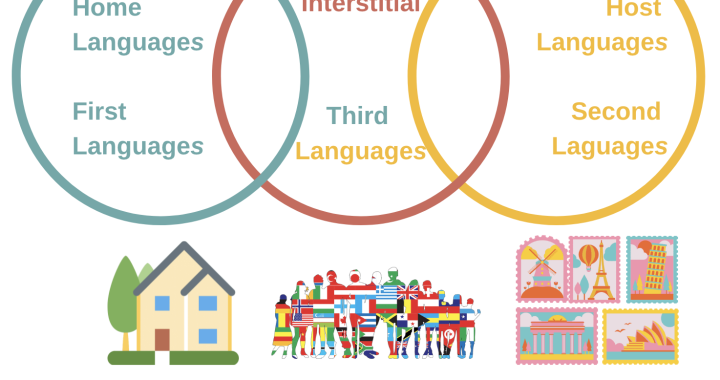
As one very important aspect of each culture is its language, or its languages, I like to translate this model into the Third Language Model for multilinguals, where the Home Language(s) are those spoken at home – or in the micro-society – which are the first languages a person acquires (chronologically speaking) – and in multilingual families it can be more than 2 (hence languages).

The Host Languages are those spoken by the community and/or at school (or at work), and represent the “second” layer of languages, those spoken in the meso- and macro-society. 

The Interstitial languages, or “Third Languages”, are those we share with our community of people who we share the same interests, that we meet at school, work etc.. 

The Third Language doesn’t mean that one speaks only three languages, the same way as Third Culture doesn’t mean the third culture in a chronological sense (as in opposition of second, fourth etc.).

It means that there is a third dimension which is the one multilinguals thrive: the interstitial dimension where the home languages and all those we are or have been in contact and acquired or learned to different extent coalesce. Multilinguals thrive in contexts where they can use all their languages unconditionally, without any bias or judgment, where they don’t have to explain or justify the use of one language or the other, or all of them for that matter.

The same way a TCK builds relationships to all the cultures, while not having full – and I prefer to add “exclusive” – ownership in any, a multilingual child (or person), can communicate to some extent in all his/her languages, while not necessarily needing to be fully fluent (up to CALP = Cognitive Academic Language Proficiency level; see studies by Prof. Jim Cummins) in all of them.

I always had a problem with defining “full ownership” in the description of a TCK and I prefer avoiding its definition as it differs considerably from person to person. I rather prefer the other formulation in my Third Language Model because, in fact, we can be fully fluent in one, two or three of our languages, which means that we can fully function for the situations and purposes we need, and be multili-terate! There is not one kind of being multilingual but a continuum of increasing complex ways of being multilingual. 

Multilinguals will always thrive in international settings, with people who share their multilingual experience. It is not necessary that they share the same languages, the same way TCKs will always thrive in international settings no matter where the other TCKs have lived before. In fact, knowing several languages allows us also to understand languages that we didn’t learn yet, simply because we can access them with a broader variety of forms or tools, i.e. the variety of the languages we already understand and use.

I once said that “I am all the languages I speak” and that “my home are my languages“, and this is very true for many multilinguals!

With all the languages we speak we have a great repertoire of words and expressions that we would love to be able to use as often as we can. The ideal would be if we could use all our languages in one conversation and fully exploit all facets of our languages. It is the multlingual advantage and privilege

If you are speaking (reading and writing) multiple languages, I hope you can relate to this Third Language Model.

Please let me know your thoughts in the comments’ section!

Pollock, David C. and Van Reken, Ruth E., Third culture kids: growing up among worlds, London, Nicholas Brealey, 2009.

Pollock, David C.,  Ruth E.Van Reken, Michael Pollock, Third culture kids: growing up among worlds, 2017, 3rd edition.

Definition of a Third Culture Kid in Pollock, David C.,  Ruth E.Van Reken, Micheal Pollock, Third culture kids: growing up among worlds, 2017 3rd edition. p. 27: “A traditional TCK is a person who spends a significant part of his or her first eighteen years of life accompanying parent(s) into a country that is different from at least one parent’s passport country(ies) due to a parent’s choice of work or advanced training”

For a multilingual approach to the use of multiple languages, read: A Multilingual Perspective on Translanguaging by Jeff Mac Swan 

Code-switching, what to do, when should I worry?

This is one of the questions I get asked frequently:

When should I worry when my children do code-switching?

Code-switching

First of all, the term code-switching is widely used as an umbrella term for using different languages in the same sentence, alternating them to some extent. It is not to be confused with borrowing, where a language is integrated into the other.

Code-switching can involve a word, a phrase or a sentence and there is always a base language or matrix language. 

“Code switching is not a haphazard behavior due to some form of semilingualism but it is a well-goverend process used as a communicative stratagem to convey linguistic and social information”.  (Grosjean 2013)

The reasons for code-switching are many: using the right word or expression, filling a linguistic need, marking group identity, excluding or including someone, raising our status etc. – Please find a more detailed explanation of code-switching and code-mixing here.

Code-mixing


Code-mixing, on the other hand, is a stage of bilingual language acquisition. Bilingual children naturally mix their languages, i.e. they can use both languages in a single sentence.

It is not a sign that the child is not learning the languages properly, on the contrary, it is a sign that the child is acquiring those languages in a quite systematic way!

With mixing the languages, the child proves to naturally find interchangeable elements of the sentence.

I like to compare this code-mixing to playing with lego. When our children are exposed to multiple languages, it is like each person gives them with lego pieces of different shapes: you can imagine that each shape has a different function, like one for verbs, one for nouns, for adjectives, adverbs, prepositions, articles etc. Each language then represents a different language. Our children then end up with a box full of lego in different colors.

If the child wants or needs to to build a house – i.e. to form a sentence – they can choose to build a very colorful house, or build a house with one color only.

The house in one color stands for a monolingual sentence or conversation and the colorful house indicates a sentence or conversation where the child uses multiple languages. 

Many parents fear that by mixing the languages our children will never really learn to speak one of the languages correctly, but this usually is not true.

At what point should we worry when our child mixes the languages?

There are a few situations when we should observe our child’s code-mixing a bit closer.

  • When our child is learning the language in a formal setting for several months already, and receives formal instruction in it, i.e. support by educators and trained teachers, but keeps on code-mixing on a syntactical and morphological level in a way that the produced sentences sound “off” and can not be explained or justified by the syntax or morphological structure of the other language.
  • If our child using the syntax structure of language B while speaking in language Aconsistently, even when not tired, and when given the time to articulate at his/her own pace.

I know by experience that this kind of code-mixing can be frustrating, and it could be only a phase, so, try to find out possible reasons for the code-mixing. 

Our children can produce this kind of sentences when they are tired, or when they just switched from talking in the other language (B) and are now transitioning to talk in language A.

Whenever the communication becomes frustrating and almost impossible because its meaning is inintelligible for the participants, it is better to ask a professional to look into it. Preferably one who has knowledge of all the languages involved.

My first advice is always to find answers to the following questions:

  • What makes the child struggle to form a grammatically correct sentence?
  • Is it the situation, the topic, the person that interacts with my child?
  • How is the person communicating with my child using the language, or languages?
  • Is my child given enough time to think about what to say or respond?
  • Does my child even understand what the other person is saying?

It obviously also depends on the child’s age and stage of multilingual language acquisition, the situation (formal, non formal, at school, with people the child knows, with peers etc.), the topic (if it is a familiar topic or not), and if the child is tired or stressed for any reason etc.

First step:
Slow down the pace of the conversation.

Second step:
Give the child time to (re)formulate the sentence in a way that you or other participants of the conversation can understand it.

Third step:
Ask open questions to clarify the meaning.

Fourth step:
If the child doesn’t have the required fluency in the target language yet, bridge between the languages the child knows. There are several techniques that have proven to be effective.

Try to avoid any kind of pressure and make the child feel comfortable in expressig him/herself in any possible way. If necessary, with drawings or gestures. This has proven to be motivating for children who are emergent users of the new language – i.e. who are learning the new language as additional language.

If you have any question about this topic or if you would like to discuss a personal issue, please don’t hesitate to book a consultation with me.

I invite you to also watch my videos about Code-mixing and Code-switching, Mixing languages with your toddler and The Paradox of raising multilinguals:

Videos about code-mixing and code-switching

3 Videos

Please read also my post about Parental discourse strategies.


References:

De Houwer, Annick,Language Choice in Bilingual Interaction”, in De Houwer, A. & Ortega, L. (Eds.) The Cambridge Handbook of Bilingualism, 2019, 324-348.

De Houwer, Annick, “Why Do So Many Children Who Hear Two Language Speak Just a Single Language?” in Zeitschrift für Interkulturellen Fremdsprachenunterricht 25 (1): 7-26.

De Houwer, Annick & Nakamura, Janice, Developmental Perspectives on Parents’ Use of Discourse Strategies with Bilingual Children. in: Multilingualism Across the Lifespan, Røyneland U. & Blackwood R. (Eds.), Routledge, 2022, 31-55.

Grosjean, François, Life with Two Languages: An Introduction to Bilingualism, Cambridge, MA: Harvard University Press, 1982.

Grosjean, François and Li, Ping, The Psycholinguistics of Bilingualism, Wiley Blackwell, 2013.

Lanza, Elizabeth, Language Mixing in Infant Bilingualism. A Sociolinguistic Perspective. Oxford, OUP, 1997.

Lanza, Elizabeth, Language Mixing in Infant Bilingualism: A Sociolinguistic Perspective, Oxford, OUP, 2004.

Meisel, Jürgen, Bilingual Children. A Guide for Parents, CUP, 2019.

Multilingual Assessment in the Netherlands

Some international families send their children to international schools, especially if they move frequently  this seems to be the best option as the curriculum of international schools is expected to be similar all over the world. Unfortunately this is not the case. There are sometimes major differences even within the same kind of "international" school and, to make the school choice even more complicated for parents, the term itself of "international" appears to be misused by many schools. Some schools call themselves "international" but have a very monocultural curriculum. – But this will be the topic of another post.
What international families struggle the most with when it comes to new schools, are the assessments. Will their children be assessed in the "right way"? What kind of assessments will be done and when? Will their children be assigned to the right group in literacy, maths, foreign languages etc.? And what if their children's academic skills are underestimated?

Especially multilingual children are still assessed with tests that are designed for monolinguals. This often leads to a very distorted image of the real skills of the child or teenager and can have great impact on his or her self confidence in school and academic success.
One of my services as Language Consultant is to offer the support to international families and schools during those assessments of multilingual children, in order to make sure that academic skills are assessed with using also the other languages (home languages or other languages they were schooled before). Willemijn Miedema, Master student at University Groningen in Multilingualism was so kind to write this post about the topic.


“What do I need to know about assessment for my multilingual child?” Norm, Demand & Assistance in The Netherlands and the International Community

by Willemijn Miedema


In general, assessments are tools to indicate a persons' skills and competences, however, assessments are also used to grade primary and secondary school children.

Multilingual children are in need of "multiple language" forms of assessment to monitor all their language and academic skills for both testing and securing knowledge in all their languages.

Monolingual education has been considered as a pillar of the nation states founded shortly after World War II, by governments consolidating their newly designed countries. However globalization in current times demands other approaches in education as a way to include all children with various linguistic and cultural backgrounds.

Multilingual assessment is being supported by the ECML, the European Centre for Modern Languages of the Council of Europe, providing both guidelines and developing projects for multilingual teaching.

For more information on multilingual teaching in The Netherlands, please go to: https://www.nuffic.nl/, the website of NUFFIC, the Dutch organization for internationalization in education.


In: “The Assessment of Emergent Bilinguals: Supporting English Language Learners” by Kate Mahony (published 2017) four methods of multiple language assessment are being introduced:

  • one-to-one-communication using discussion and interviews as means of assessment,
  • performance assessment which makes use of active tasks performed by the student such as a giving a presentation,
  • selected response assessment by e.g. multiple choice tests,
  • written response assessment by means of essay writing with rubrics or the writing of short responses to a question (Mahony, K., 2017: 38-42).


A method to test multilingualism itself is TBLA, translation-based-language-assessment, in which students are tested on their practical language skills, with emphasis on real life usage, rather than grammatical and vocabulary skills (Schissel et al., 2018, p.171).


Methods of assessment can differ regionally and depend on the school subject and regulations of school assessment set by the education department of the local or national authority.

Many schools have integrated parental participation in their school councils and support parental joint decision making.

Together with the school board parents can look into the possibilities for multilingual assessment and/or contact experts in the field such as linguists and language consultants to implement and develop methods in multilingual assessment.


Further readings:

Durk Gorter & Jasone Cenoz (2017) Language education policy and multilingual assessment, Language and Education, 31:3, 231-248, DOI: 10.1080/09500782.2016.1261892.

Jamie L. Schissel, Constant Leung, Mario López-Gopar & James R. Davis (2018) Multilingual learners in language assessment: assessment design for linguistically diverse communities, Language and Education, 32:2, 167-182, DOI: 10.1080/09500782.2018.1429463.