In every multilingual family, members speak different languages and bring a rich tapestry of cultures and traditions into the home.
However positive, enriching and exciting this sounds, we also face unique challenges related to what can be termed the “language divide.”
The language divide in multilingual families refers to the linguistic differences among family members, which can manifest in various ways:
1. Parent-Parent Language Gap:
When parents speak different languages and don’t understand each other’s language, they usually choose a third one to communicate with each other. What can work perfectly for years, can become an issue once their children start communicating orally/verbally.
If parents don’t learn at least the basics of each other’s language (and culture), they create a language (and culture) gap between their respective languages (and cultures) that can lead to prejudice, judgment and resentment towards the partner because they don’t understand what they are saying to their children for example.
Those parents who speak the community language might also struggle with understanding and lack of support towards the language of their partner. This can cause language attrition within the family and even lead to language loss. This is one aspect I find the most delicate one, as it is very difficult to convince someone who uses the dominant language about the importance of the minoritised language…
2. Parent-Child Language Gap:
In multilingual households, parents may speak language red and language yellow, while the children predominantly use language blue, the language of the country they reside in. This gap can result in communication challenges and a potential loss of heritage language for the younger generation and even the parent’s generation. This tends to happen more in refugee or immigrant families, where the heritage language is abandoned to fully integrate into the host culture for social, political or personal reasons.
3. Child-Child Language Gap:
Language gaps between siblings can occur when they grew up with different languages. For example, child “one” grew up with being exposed to language yellow and blue, and when child “two” was born, language green and yellow were used in the family, later they moved to a third country and language purple became more important… Multilingual siblings might choose the school or community language to communicate among them, and not one of the home languages. Depending on what languages they are exposed to, this can change over time. In very mobile families, older siblings have experienced life in other languages and cultures than their younger siblings, which can lead to a language gap when functioning in the family.
Child-Child language gap can also occur in patchwork-families where children from different linguistic backgrounds need to communicate in an additional language. If this means to learn a new language, it obviously requires a lot of time to achieve a level of fluency that allows them to communicate effectively. Sometimes, biases (related to their respective parents, families, cultures etc.) and resentments can lead to communication barriers and language divides.
4. Language Preference:
Family members may have varying preferences for what language they feel more comfortable using. This can lead to situations where one language dominates, and others are sidelined, or where they need to find a compromise in using their languages or even find an additional language to communicate in.
5. Language Barriers:
When extended family members or new members of the family visit or join the household, they may speak different languages, creating communication barriers within the family unit.
Addressing this kind of language divide requires thoughtful consideration and open communication within the family.
Here are some strategies that can help bridge the language divide:
1. Create a Multilingual Environment:Encourage the use of all languages in the household. Designate specific times or activities where each language can be used, promoting a somehow balanced linguistic environment.
2. Value Each Language:Make sure all family members understand the importance of each language spoken within the family. This helps cultivate a sense of pride and appreciation for one’s linguistic and cultural heritage.
3. Language Learning: Promote language learning for everyone in the family. This can include language classes, reading in different languages, or even language-themed games to make learning enjoyable.
4. Open Communication:Encourage family members to express their language preferences and any discomfort they may feel. Open dialogue can help address any language-related issues and find mutually agreeable solutions.
5. Celebrate Cultural Events:Embrace cultural holidays, festivals, and traditions associated with each language. This not only fosters a sense of belonging but also provides opportunities to learn about different cultures.
6. Use Technology and Media: Leverage technology and media resources to expose family members to diverse languages and cultures. Educational apps, movies, and books in multiple languages can be a fun way to learn.
7. Extended Family and Community Involvement: If extended family or community members speak different languages, involve them in language-related activities and encourage them to share their linguistic and cultural knowledge.
8. Find your Multilingual Village:If all of the above is not possible and you find yourself alone in transmitting your language, maybe even without your partner’s knowing: find your multilingual village elsewhere. Either in the community or online.
In my private facebook group you are very welcome to get all the support you need to keep on transmitting your language, dialect or sign language to your children!
You are not alone and every little step you take is important!
Transform the language divide into an asset!

©Ute’s International Lounge, 2024
Multilingual families are the micro-society that embraces cultural diversity, and a place where we can foster a deeper understanding of the world.
Embracing and nurturing each language within the family can create a harmonious and inclusive environment where everyone’s unique linguistic identity is valued and celebrated.
By actively working to bridge the language divide, multilingual families can build stronger connections and preserve their diverse linguistic heritage for generations to come.
Multilingualism can contribute to the proper development of a child only if:
both languages are considered equal, if there are no defensive reactions against one of them, which is perceived by the child as ‘inferior’ (…) when parents are able to evoke respect to their own cultural heritage and language in their child.
(Laskowski, Roman, Język w zagrożeniu. Przyswajanie języka polskiego w warunkach pol- sko-szwedzkiego bilingwizmu, Kraków 2009, p. 42)
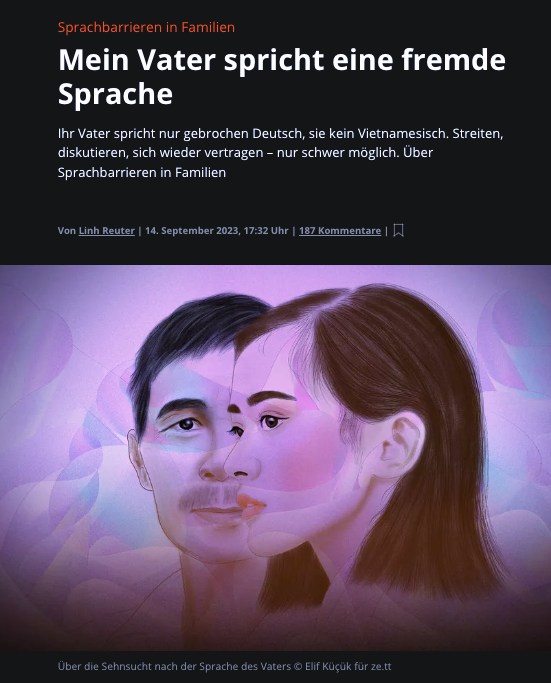
In this German article, a daughter emphasizes the importance of knowing her heritage language that, alas, her parents missed to teach her.


I love what I read here because I have also been undertaking research on multilingual families. Thank you so much for opening this up for discussion.
Thank you, Beverly, for your feedback. Now I’m curious: what are you currently researching?