When learning languages, is the earlier the better?

Multilingual Parents are often keen to speak several languages with their children and can't wait to introduce more languages. In the end: the sooner the better, right?

Well, not really. If we shower our children with a lot of languages from early on, without them needing them it can become a challenge to maintain them. Also, there is no window that closes "à tout jamais" / "forever" when it comes to language learning!

Research about the "Critical Period Hypothesis" first focused on monolinguals, and has since been adopted also for additional (second/third) language learning. It was originally describing a "closing window" for first language acquisition, and refers to the concept of a critical period in the biological sciences, which is a set period in which an organism must acquire a skill or ability, for the organism not being able to otherwise acquire it later in life.

Research has since fine tuned on some aspects of language acquisition like our youngest one's understanding language and re-producing (articulating) sounds, compared to older children.

What most people seem to retain from this is that "young children acquire and learn languages "much easier" than older ones or adults".

But the "much easier" needs to be clarified: young children acquire language in a more spontaneous, natural way, by repeating, making mistakes, finding out the patterns (aka underlying grammar) of the language, the "easier" way refers to the fact that the process is more "unconscious". They can articulate sounds easier than adults, due to their palate being still soft – it hardens during puberty, making articulation more difficult.

Furthermore, the older the child, the more conscious every learning process becomes, and the "less easier" it is described or considered, which, if we think about the lifelong learning journey, is just not very accurate.

The "much easier" learning in early years is rather more "intuitive/natural/spontaneous", whereas the "less easier" later is a more conscious way of learning which, on the other hand, profits from the already acquired patterns, logics and cognitive skills the person has acquired by then. In fact, older learners are better at learning the language on a morphological and syntactical level.


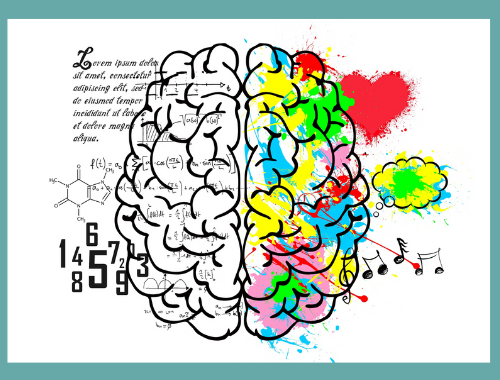
Brain lateralization was once seen as a possible neurological cause, but this theoretical cause has been largely discredited since lateralization does not necessarily increase with age, and there is no definite link between language learning ability and brain lateralization... The advantage of the children's brain is "the still in development phase" of the prefrontal cortex (which takes up to 20ish years to "complete"!) which makes things "easier to learn" but also easier to forget or drop if not needed. So: it is easier for young children to "absorb a considerable quantity of data", and this is the "advantage".


But one needs to know that the young brain doesn't distinguish between "good or bad", "useful or not useful". This unconscious or absorbent mind (Maria Montessori) has its advantages, but also disadvantages. The advantages are that it absorbs everything, "like a sponge". This is most probably where the assumption that children "absorb everything" comes from.


The disadvantages of this "absorbing everything" is that when it is not needed, it will be pruned. In fact "use it or lose it" is a very easy way to explain how the brain works. I invite you to watch this short video about the adolescent brain and learn more about the myelination that is so important to make learning faster and more efficient!


Although children's brains have a massive growth spurt when they are very young, by the time they are six, their brains are already about 90-95% of adult size. The early years are a critical time for brain development, however, the brain needs a lot of remodeling before it can function as an adult brain.


About the Critical Period Hypothesis, please watch our interview with Prof. Shiro Ojima and the one with Prof. Arturo Hernandez about "How children and adults learn languages" at Raising Multilinguals Live:


What is needed and used regularly (!) will be consolidated and will help with further learning. We all never stop learning – unless we stop being curious. In this interview with Dr. Thomas H Bak we talk about bilingualism and the brain,


The learning experience and the skills we hone change over time, and that is what makes people assume that "the earlier the better" because young children, who, like briefly mentioned above, have a malleable palate, i.e. that allows an easier articulation of sounds, sound like "perfect native speakers" very quickly, whereas older learners, whose palate has hardened and who therefore need more practice to "sound" native, are thought to be unable to reach high levels of fluency.

But older learners make up for this by bringing experience, acquired and learned patterns and consolidated pathways that allow them to quicker understand how the other language works and can be used. The way we learn and understand changes over time and depends on many factors, but we can learn languages – and all kinds of skills for that matter! – at any age.


Here is a short video I made about this topic:


When our children grow up with 2-4 languages already, the seeds for easier access to additional languages later in life are planted, and it will be much easier for them to learn any additional language at any stage. There are more windows of opportunities, like shown in this video about the adolescent brain by UNICEF:


Adolescence is a very intense period of significant growth and development inside the teenage brain. The main change is that connections that are not used in the thinking and processing part of the brain (i.e. the grey matter) are pruned, and those that are used are strengthened. This is the way our brain becomes more efficient and follows the "use it or lose it" principle mentioned before.

In this interview with Frances Díaz-Evans, a Latina educator, author, wife and mom to a teenager, we talked about this aspect in the context of How parents can help their teenagers in their language learning journey


So to answer the question of the title: no. The earlier is not "the better", it's the "easier" in terms of understanding language patterns in the most unconscious and natural way, but later language learning has its other advantages as the older learner can build on acquired and learned patterns easier. What is better or best though, is to keep stimulating our children's brains from the beginning, through childhood and beyond, and make sure they are up to a lifelong learning journey that keep their brains healthy and their minds curious as long as possible.


This topic is highly discussed among experts and this post is an "ongoing" one, that I am happy to update with further insights and research findings. If you are a researcher, please let me know what you know and think in the comments. I'll be more than happy to include it in the post if it helps to clarify the topic.


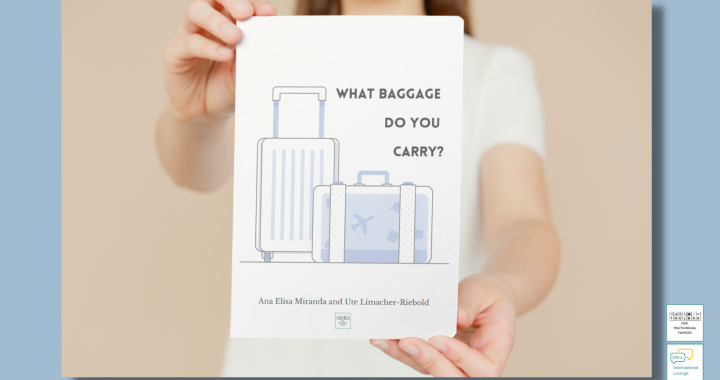
3 tips to travel light as a multilingual family 

by Ute Limacher-Riebold and Ana Elisa Miranda


What has being a multilingual family to do with how to travel light? Have you ever packed a backpack in the wrong way? Made it too heavy, causing you back pain; brought the wrong or unnecessary things, making it difficult to reach what you actually needed, quickly enough? 

Or have you ever been on a hike where the pace was much faster than yours, so that you ended up exhausted, frustrated and didn’t enjoy the journey?

If we carry too much, the wrong items or walk too fast, we can get out of breath, frustrated and are more prone to giving up, as we don’t enjoy the journey.

Raising children with multiple languages is a journey that starts before the children are born and never ends. 

Here are 3 tips on how to “travel light” on your multilingual journey: 


Define the journey

As parents of multilingual children, we are on some kind of international journey. We either live abroad in our partner’s country, or our partner is a foreigner in our country, or we live in a country where both of us are foreigners. 

Each parent brings his or her very own baggage. This is our cultural background, our attitudes, preferences, habits, patterns, ideas and expectations, our personal experiences, values, beliefs, assumptions, convictions, our way of doing things, as well as our way of communicating, our languages, our memories and more. Our baggage is determined by what we consider important, essential and “good to carry with us” on our life-journey.

When on a journey together, following the same goal and carrying what is necessary to reach it, makes the journey easier. You are less likely to become overwhelmed and to experience attrition. You should have enough energy to focus on what is really important.

  • Have you agreed and defined the multilingual journey of your family? 
  • What are the short and long term goals for you, your partner, your children?


Pack your baggage wisely

The art of packing a backpack is to think carefully about what we really need, to make sure to travel as light as possible. Translated to our multilingual journey, this means:

Decide if judgments or expectations (of others as well as our own) are important for us or not. Do they support our short and long term goals?

We all have our very own assumptions, experiences and expectations. Some are relics from our childhood or earlier phases of our life, and we carry them like a safety blanket to give us comfort. 

  • Are your expectations aligned with your common goal or are they rather hindering you, your partner or your child? 
  • Are the expectations you have realistic and achievable? 

If our assumptions and expectations are realistic, we keep them, if some are not helpful right now, we can put them aside (in a mental drawer). What can help us to “travel light”?

Have a survival kit. Items we must always bring on a hike are a water bottle, food, a first aid kit and our IDs (and with young children, everything we need to take care of them).


On our multilingual journey, these would be resources that “feed” our languages: books, music, games, podcasts, audiobooks, lessons, playgroups; websites and discussion groups that can give us the necessary support; a guide for parents of multilingual children, or our Toolbox for Multilingual Families, where you can find activities and games to foster your languages and enjoy communicating with your children. 

  • Do you know how to keep transmitting your language, in an engaging and motivating way for the whole family?


Adjust the pace

For a hike to be successful and enjoyable for every family member, it is important to distribute the weights wisely. We adults carry the heavier items, and our children carry the lighter ones. Our older children can also take over some tasks and roles, depending on their abilities and strengths.

During our journey, the pace of our walk should allow us to proceed and progress steadily. This means keeping the pace of the weakest or youngest person in the group, stopping when the youngest or weakest member is tired, because a group – or team – is only as strong and effective as its weakest member. This also means that the group will do their best to support each other to achieve the common goal.

One of our goals on our multilingual journey is to reach the milestones safely and with enough energy left to enjoy the landscape and celebrate the small steps.

  • Have you paused to consider the pace you are going? 
  • Is every member of the family feeling supported and enjoying the journey? 

We have created a journal prompt to help you reflect on your cultural baggage and on how to make sure you travel light as a multilingual family.

You can access it by filling in this form that also will give you direct access to my Membership Site of TheToolbox for Multilingual Families, and to other prompts, infographics etc.


You can start with answering the questions in this post – and, please, let me know your answers and continue the conversation in the comments!


How many languages are too many?


Have you ever wondered how many languages a child can learn at once or if there is a ‘window’ of opportunity?

Can it ever be “too late” to learn another language?

Can we learn multiple languages at any time?

And what are the cognitive benefits of learning more than one language?


You can find some answers in an interview with research psychologists and a language teacher about how kids acquire second, third or fourth languages and how it helps to feel even more strived to bring up multilingual children.

We don’t need to hear more reasons in favour of bringing up children with multiple languages.

There is no reason to doubt or to fear that it could confuse or overwhelm children. 


1) When should a child begin to “learn” or acquire a second/third etc. language?

This question hasn’t been asked in the interview which in 2024 is, alas, no longer available, but Laura-Ann Pettitto (Professor at the University of Toronto) points out that in early years, when children are still in the acquiring phase of the first language, they will use the same brain tissue for all the other languages they are exposed to. – This has been confirmed by many studies since.

If children are exposed to languages later in life, it seems that different parts of the brain are involved (3:00 sq) because “the part of the brain that is responsible for processing language is on a maturational timetable and we know very clearly what that timetable is, when the periods are most sensitive” (4:00).

Interestingly, this is not the case for all the parts of language. Some parts “remain open for life, like vocabulary and there are other parts of language, which are on a maturational timetable. Our brain reaches a stable processing capacity and then stops because it’s achieved it’s stable state” (4:20). – Now, it’s quite hard to determine when this happens because the different parts of language are affected differently by maturation.

What is important to know is that early exposure is ideal for good phonological competence and good syntactic competence (4:44). – I am always sceptic when someone says “good” or “native” language competence. It is not clear what is meant with that.

Young children have the advantage to articulate sounds easier because of their palate not being hardened yet, but they do need several years to be able to articulate more complex sounds because of the motor skills of their apparato fonatorio, the coordiation of their mouth, lips, tongue, air etc.  

Peter Gazzellone, teacher at the Ryerson Community School, presents the Integrated language program at his school. This program offers Arabic, Mandarin, Spanish and African heritage language lessons.

“The students get to choose from one of these languages and it’s usually the language that they speak at home” (5:29). The children also learn French (from grade 4) and then from kindergarten up to grade 8 all the children at school learn another language. – In Europe we have several immersion programs and know that this program benefits the children.

We all know that the task of acquiring a language later in life, when we’ve already acquired our first language (and learned it at school) is a different, much harder task.


2) Can adults learn new languages as “good” as children?

There is a very clear answer: yes, they can.

If adults want to make it possible and have the time for it, they will succeed.

Ellen Bialystock, Professor at the University of York, points out that “children are given the opportunity to learn languages in a way that supports every part of this very difficult task (…) everyone they interact with interacts with them for the purpose of helping them learn language”.

If adults had this opportunity and would “quit [their] job for five years, use a mentor who will speak to [them] at exactly the level [they] need (…) [they] will be very successful” (2:00 ssq).

Life, usually doesn’t give us that chance and “the main difference about learning languages as a child and as an adult is life“.

If adults want to learn a language, total immersion and the passion to learn it are the most important premisses to succeed.

Ellen Bialystock suggestion is meant for people who want to learn a new language “at home”, who don’t have the opportunity to learn it in loco.

But if we have to learn the language because we move to the country, it’s more probable that we will attain a very good fluency in a very short time due to our full immersion.

If total immersion is not possible, there are many other possibilities to create a monolingual exposure in the target language in real life or online etc. 


3) How much exposure?

There have been published many articles about the quantity of time someone should talk a language – or more than one – per day. For many years, parents were told that 20% of waking time is what we should aim for if we want our children to acquire and learn our language.

But the amount of exposure per day or week depends on our  language goals, our capacities to support our languages. Do we want our children to be able to understand and speak the language, or also to read and write? How much time can we invest? Who else can help us with this?

Laura-Ann Petitto points out that “systematical exposure is more important than the amount of time of the exposure. The human brain doesn’t work on quantity but on quality. Therefore, regular systematic exposure “with stable users across different contexts which are rich and varied” is what will help children reach fluency.

This means that immersion exposure at school only is not enough to become utterly fluent. It has to be enriched by “cultural material, linguistic material, movies etc” also outside the context at school.


4) Do all children have the same ability?

This is like with everything in life: some are more prone to learn languages, others are better in other sectors. Ellen Bialystock points out that “what our minds are prepared to do is make everybody a competent speaker of a language that is in the environment without additional effort” (11.00 ssq.). And to answer the question: “some [children or adults!] will find this fun and exciting and some will find it more effortful”.


5) Will children always have one dominant language?

We all know that there are differences even among multilingual siblings about their language preferences. And Laura-Ann Petitto confirms that “children have preferences for languages and the preferences are set by various things outside of our biology” (12:45 sq).

It depends on the language their friends, their family are speaking. Children are also very economic in their language choice.

About the concept of economy:  “a tenet or tendency shared by all living organisms – may be referred to as “the principle of least effort”, which consists in tending towards the minimum amount of effort that is necessary to achieve the maximum result, so that nothing is wasted.” cfr. Alessandra Vicentini, Università di Milano, The Economy Principle in Language. Notes and Observations from Early Modern English Grammars).

If children know that their parents understand all the languages they’re supposed to speak, they will probably prefer one of the dominant languages in their social context (the host country, school etc.), using the “minimum amount of effort to achieve the maximum result”.

The human biology enables us to extract patterns from one and the other language and to compare and fit them, but language acquisition is more about the need to speak this language.


6) Do multilinguals know less vocabulary than monolinguals?

Don’t worry about the vocabulary children have in one of the languages they are acquiring. Multilingual children seem to be “behind” their monolingual peers, but when we add all the words they understand and use in all their languages, they usually are at the same level if not above the norm. “We know from many studies that a multilingual child knows at least as many words and probably more and at least as many concepts and probably more as monolinguals”. (15:20 ssq). – And we should never forget that these are all averages!

If you look at the distribution of the data, “most children are in the normal part of the curve where it could go either way. The bilingual could have a higher English (or other language) vocabulary than the monolingual” (15:50).

If you take the vocabulary tests that are used to assess vocabulary – and the interesting part is, that they’re usually given out only in one language! – “and you divide the words up into words they are likely to encounter at home and words they are likely to encounter at school there is no difference!” (16:20 ssq).

There is definitely no academic risk or compromise to the main purpose for learning many languages (from an early stage on!).

Two final, very encouraging quotes for every multilingual from Laura-Ann Petitto:

The human vocabulary stays open to work for life.

The brain is not biologically set to learn only one language.


Please watch the interview I had with Prof. Ellen Bialystok in our series Raising Multilinguals LIVE on youtube:


Good Reads for Multilingual Families

I often get asked by parents, teachers, speech therapists and students, what kind of books I would recommend to read about multilingualism, raising children with multiple languages, language development in multilinguals, multiliteracy (or pluriliteracy), speech language therapy and multilingual children etc. 

Here are some of the books I read and use for my workshops, trainings and consultations. I have a database with more than 1000 entries of articles that I can't share here, but you can find a lot of them on researchgate.net or academia.edu to name two of the sites I regularly check.

This here below is an ongoing list, i.e. I will be adding new titles regularly.
If you have some suggestions also in other languages than English, please let me know in the comments!

Agirdag, Orhan, Ellen-Rose Kambel ed., Meertaligheid en onderwijs, Boom, 2017.

Auer, Peter, Li Wei, Handbook of Multilingualism and Multilingual Communication, Mouton de Gruyter, 2009.

Baker, Colin, A Parents’ and Teachers’ Guide to Bilingualism, Multilingualism Matters, 3rd Edition, 2014.

Baker, Colin, Foundations of Bilingual Education and Bilingualism, 5th ed., Multilingualism Matters, 2011.

Barron-Hauwaert, Suzanne, Language Strategies for Bilingual Families: The OPOL Approach, Multilingual Matters, 2004.

Barron-Hauwaert, Suzanne, Bilingual Siblings. Language Use in Families, Multilingual Matters, 2011.

Beck, Adam, Maximize Your Child’s Bilingual Ability, Bilingual Adventures, 2016.

Böttger, Heiner, Neurodidaktik des frühen Sprachenlernens. Wo die Sprache zuhause ist, UTB, 2016.

Bourgogne, Annika, Be Bilingual: Practical Ideas for Multilingual Families, 2013.

Braun, Andreas and Tony Cline,Language Strategies for Trilingual Families: Parents’ Perspectives, Multilingual Matters, 2014.

Brown, Douglas H., Priyanvaa Abeywickrama, Language Assessment. Principles and Classroom Practices, Pearson Longman, 2010.

Busch, Brigitta, Mehrsprachigkeit, 2. Auflage, UTB, 2017.

Byalistok, Ellen, ed., Language processing in bilingual children, CUP, 2003.

Caldas, Stephen J., Raising Bilingual-Biliterate Children in Monolingual Cultures, Multilingual Matters, 2006.

Chilla, Solveig, Sandra Niebuhr-Siebert, Mehrsprachigkeit in der KiTa. Grundlagen – Konzepte – Bildung, Kohlhamme, 2017.

Chumak-Horbatsch, Roma, Linguistically appropriate practice. A Guide for Working with Young Immigrant Children, UTP, 2012.

Chumak-Horbatsch, Roma, Using Linguistically Appropriate Practice. A Guide for Teaching in Multilingual Classrooms, Multilingual Matters, 2019.

Coady, Maria R., Connecting School and the Multilingual Home. Theory and Practice for Rural Educators, Multilingual Matters, 2019.

Coehlo, Elizabeth, Language Learning in Multilingual Classrooms. A Practical Approach, Multilingual Matters, 2012.

Costa, Albert, The Bilingual Brain: And what it tells us about the science of language, Allen Lane, 2020.

Cunningham-Andersson, Una & Staffan Andersson, Growing Up with Two Languages: A Practical Guide, 2nd edition, 2004.

De Bruyckere, Pedro, Paul A. Kirschner, Casper D. Hulshof, Urban Myths about Learning and Education, AP, 2015.

De Houwer, Annick, An Introduction to Bilingual Development, Multilingual Matters, 2009.

De Houwer, Annick, Bilingual First Language Acquisition, Multilingual Matters, 2009.

De Houwer, Annick, Lourdes Ortega, The Cambridge Handbook of Bilingualism, CUP, 2019.

Doyé, Peter, Bettina King, Kindergarten goes Bilingual. Englisch im bilingualen Kindergarten, OLMS, 2013.

Faingold, Eduardo D., Multilingualism from Infancy to Adolescence. Noam's Experience, IAP, 2004.

Festman, Julia, Gregory J. Poarch, Jean-Marc Dewaele, Raising Multilingual Children, Multilingual Matters, 2017.

Grosjean, François, Studying Bilinguals, OUP, 2008.

Grosjean, François, Bilingual: Life and Reality,Harvard University Press, 2012.

Grosjean, François, Ping Li, The Psycholinguistics of Bilingualism, Wiley-Blackwell, 2013.

Grosjean, François, Krista Byers-Heinlein, The Listening Bilingual: Speech Perception, Comprehension, and Bilingualism, Wiley-Blackwell, 2018.

Halai, Anjum, Philip Clarkson, eds., Teaching and Learning Mathematics in Multilingual Classrooms. Issues for Policy, Practice and Teacher Education, Sense Publishers, 2016.

Harding-Esch, Edith, Philip Riley, The Bilingual Family: A Handbook for Parents, 2003, Cambridge University Press.

Hernandez, Arturo E., The Bilingual Brain, Oxford University Press, 2013.

Hyltenstam, Kenneth, Loraine K. Obler, eds., Bilingualism Across the Lifespan. Aspects of acquisition, maturity, and loss, CUP,1994.

Jaumont,  Fabrice, The Bilingual Revolution. The Future of Education is in Two Languages, TBR Books, 2017.

Julien, Manuela, Taalstoornissen bij meertalige kinderen. Diagnose en behandeling, 3nd ed., Pearson 2019.

Kenner, Charmian, Becoming Biliterate: Young Children Learning Different Writing Systems, Institute of Education Press, 2004.

King Kendall and Alison Mackey,The Bilingual Edge: Why, When and How to teach your child a second language, Collins, 2007.

Lanza, Elizabeth, Robert Blackwood, Hiruth Woldemariam, eds., Negotiating and Contesting Identities in Linguistic Landscapes, Bloomsbury Academic, 2016.

Lanza, Elizabeth,  Language Mixing in Infant Bilingualism. A Sociolinguistic Perspective, Oxford: Oxford University Press, 1997.

Lanza, Elizabeth ,Bernt Brendemoen,  Else Ryen, eds., Language Encounters Across Time and Space. Studies in Language Contact, Oslo, Novus forlag, 1999

Lippi-Green, Rosina, English with an Accent. Language, Ideology, and Discrimination in the United States, Routledge, 2012.

Mathivet, Stephanie, Bilingualism in the Early Years: A resourceful guide to theory and best practice, Pre-school Learning Alliance, 2013.

Mazak, Catherine M., Kevin S. Carroll, eds., Translanguaging in Higher Education. Beyon Monolingual Ideologies, Multilingual Matters, 2017.

Mohanty, Ajit K., The Multilingual Reality. Living with Languages, Multilingual Matters, 2019.

Montanari, Elke, Mit zwei Sprachen groß werden. Mehrsprachige Erziehung in Familie, Kindergarten und Schule, Kösel, 2002.

Mueller Gathercole, Virginia C. ed., Solutions for the Assessment of Bilinguals, Multilingual Matters, 2013.

Müller, Natascha, Tanja Kupisch, Katrin Schmitz, Katja Cantone, Einführung in die Mehrsprachigkeitsforschung, 2. Auflage, Narr, 2007.

Nodari, Claurio, Raffaele De Rosa, Mehrsprachige Kinder. Ein Ratgeber für Eltern und andere Bezugspersonen, Haupt Verlag, 2006.

Paulsrud, BethAnne, Jenny Rosén, Boglárka Straszer, Asa Wedin, New Perspectives on Translanguaging and Education, Multilingual Matters, 2017.

Romaine, Suzanne, Bilingualism, Blackwell, 2nd ed., 2009.

Rosenback, Rita, “Bringing up a Bilingual Child”, Filament Publishing, 2014.

Salzmann, Zdenek, James Stanlaw, Nobuko Adachi, Language, Culture, and Society. An Introduction to Linguistic Anthropology, 6th ed.,Westview Press, 2016.

Saville-Troike Muriel, Karen Barto, Introducing Second Language Acquisition, 3rd ed., CUP, 2017.

Singleton, David, Larissa Aronin, eds., Twelve Lectures on Multilingualism, Multilingual Matters, 2019.

Steiner, Naomi, Susan L.Hayes,“7 steps to raising a bilingual child”, Amacom, 2009.

Tokuhama-Espinosa, Tracey, Living Languages: Multilingualism across the Lifespan, Praeger Publishers, 2007.

Tokuhama-Espinosa, Tracey, Raising Multilingual Children: Foreign Language Acquisition and Children, 2001.

Tollefson, James W., Miguel Pérez-Milans, The Oxford Handbook of Language Policy and Planning, OUP, 2018.

Wang, Xiao-lei, Growing up with Three Languages: Birth to Eleven, Multilingualism Matters, 2008.

Wang, Xiao-lei, Maintaining Three Languages. The Teenage Years, Multilingual Matters, 2015.

Wang, Xiao-lei, Learning to Read and Write in the Multilingual Family, Multilingual Matters, 2011.

Wolf, Marianne, Proust and the Squid. The Story and Science of the Reading Brain, Harper Perennial, 2007. (not specifically on multilingualism)

Yamamoto, Masayo, Language Use in Interlingual Families: A Japanese-English Sociolinguistic Study, Multilingual Matters, 2001.

Zurer Pearson, Barbara, Raising a Bilingual Child, Random House, 2008.

The importance of gestures in the language development of babies and infants

Babies start communicating with us from day one. The sounds they utter will become increasable intelligible: from cooing, to babbling, to monosyllable, bi-syllables up to sentences. The journey of language development in babies and infants is quick and has many facets. What many parents forget to consider is that gestures play an important role in the language development of infants.

When parents ask me how to help their children become verbal, I usually ask many questions about the non verbal communication between them and their babies. We are so focussed on verbal communication when it comes to our children’s language development, that we forget the non verbal one, which is very important and will evolve and develop alongside the verbal one across our whole lifespan.
Our infants can understand gestures very early on. They need to gain the motor skills to be able to coordinate their hands, their fingers, to imitate the movements we make.

Parents who use baby sign language, which is a more conventionalized signing where signs are closely linked with words, observe that communication with their infants seems to be more intense and effective than with their other children with whom they didn’t use baby sign language (this is the observation from parents I work with).


The importance of gestures for language acquisition

Around 10 months of age, children start using gestures in a deictic way, which means that they point fingers or use another body part to single out an object of interest.
Gestures are used by children across cultures to express their desires, share their experiences, draw attention and refer to things.
Pointing is a gesture used to communicate. The same way, other gestures and body language is used, like waving to say bye-bye, lifting arms to be carried, stamping feet when upset, clapping hands when excited etc.

Using gestures is something we intuitively teach our children and we can use gestures, explore the possibilities of using gestures to facilitate early communication.

Here you can find a list of the 11 distinct pointing development milestones from birth to two years old.

From gesture to verbal use of language

When parents ask me why their children are not speaking (yet), why they seem not to find any interest in uttering words, I usually ask them to describe a typical conversation with their children for example at the dinner table.
How are their children communicating what they want? Do they point at objects, nod or shake their heads, use facial expressions?

Parents are very good at understanding what their children want, without them needing to use words. Especially when children use a sequence of gestures and body language to communicate with us. “At eleven months of age, some children can produce a sequence of 2 gestures to convey a message (…) by twelve months of age (…) they begin to produce 3-gestures in sequence” (Ishino 2011).

Gestures play an important role in the natural development of spoken language. In hearing children, language and gesture develop in interaction with each other if they are used together. Therefore it is important that we link gestures with words. 


How to help a child become verbal

If our children seem to exclusively (or mainly) communicate through gestures, we can help them increase their use of sounds and words by modeling what words we expect them to use in certain circumstances.


For example, if they point at an object, we may want to accompany their gesture with comments.
If our children point at a cup of milk on the table because they would like to drink, we would say
“Do you want to drink milk?” – they might nod, or shake the head, maybe stomp their feet.

While helping them reach the cup or giving it to them, we should make eye contact and repeat “milk” “drink” in several sentences. If we notice that the children are not responding with a smile a nod or other kind of reaction, we can get their attention by varying the intonation of our words. Sometimes a higher pitch – or a lower pitch – can do the trick. Or repeating a word in a fun way “milk, milk, milk”.

Especially when we see that our children are reluctant speakers, we can try to increase our own use of words, and gently model what we expect our children to start saying.
During this whole transition process between gestures and verbal expressions, we should stay calm and patient. Every child develops at their very own pace. We might need to repeat some words many more frequently, over a longer period of time until our children start trying to articulate them: they’ll all get there in the end!

I know that this period in language development is not an easy one for many parents. It seems like speaking with a wall, and we are very impatient to hear our children speak, to have our first conversations. If we consider gestures, body language already as a form of communication, it is easier to translate the gestures into words and to embrace this phase.

As I work with multilingual families, I find it very interesting to see how gestures change when switching from one language to the other, and how very young children can do this switch even before becoming verbal!

The most important thing in this whole process is to acknowledge the steps we make.

Enjoy all your languages when communicating with each other!

– Is your child using gestures? Are you using baby sign language with your baby or infant? How is this working for you and your multilingual family? Please let me know in the comments!

I invite you to watch the interview with Roya Caviglia:

Suggested readings:

Infant Communication Baby Sign Language with Multilingual Children

Cochet, Helene; Vauclair, Jacques (2012), “Pointing gesture in young children: Hand preference and language development”, in Colletta, Jean-Marc; Guidetti, Michele (eds.). Gesture and Multimodal Development. Amsterdam: John Benjamins Publishing Co. pp. 7–26.

Fasolo, Mirco; D’Odorico, Laura (2012), “Gesture-plus-word combinations, transitional forms, and language development”. Gesture, (12), pp. 1–15.

Gullberg, Marianne;  Kees de Bot (2008), Gestures in language development, Gesture, 8(2).

Ishino, Mika; Stam, Gale (2011), Integrating Gestures : The Interdisciplinary Nature of Gesture. Amsterdam: John Benjamins Publishing Co, pp. 111–112.

Iverson, Jana M.; Goldin-Meadow, Susan (2005-05-01), “Gesture Paves the Way for Language Development”, Psychological Science, 16 (5): 367–371.

Kendon, Adam; Gullberg, Marianne; Seyfeddinipur, Mandana (2014), From Gesture In Conversation To Visible Action As Utterance: Essays In Honor Of Adam Kendon. Amsterdam: John Benjamins Publishing Company, p. 332.

Vallotton, Claire (2012), “Support or competition? Dynamic development of the relationship between manual pointing and symbolic gestures from 6 to 18 months of age”, in Colletta, Jean-Marc; Guidetti, Michele (eds.). Gesture and Multimodal Development. Amsterdam: John Benjamins Publishing Co. pp. 27–48.

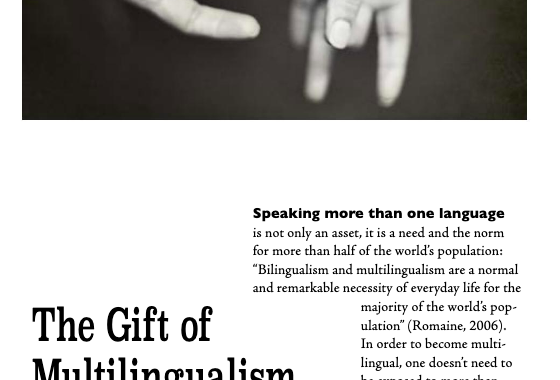
The gift of multilingualism (article in Among Worlds)

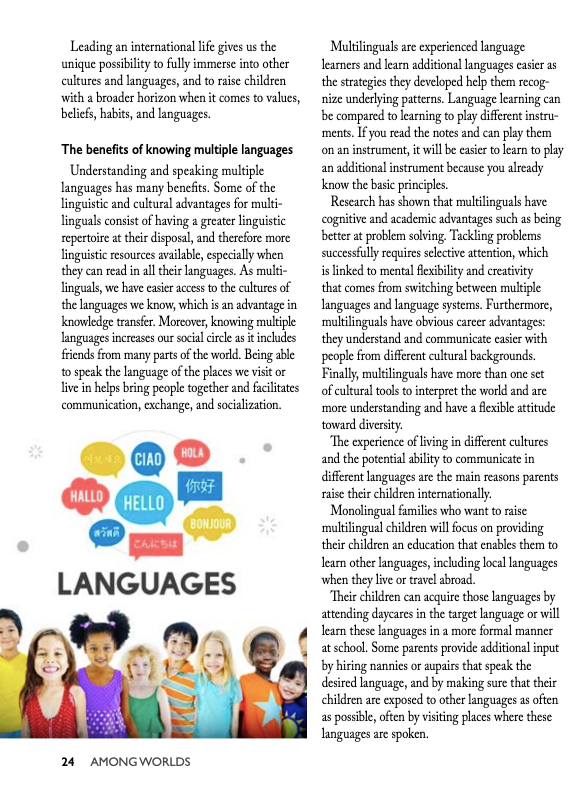
When Marilyn Gardner asked me to write an article for the September 2019 issue of Among Worlds, Communication: our languages and lexicons I couldn’t resist writing about the gift of multilingualism.

I am very honored to see my article published in this magazine dedicated to so many important topics for internationals!

– Thank you, Marilyn 😉


Marilyn Gardner, editor of this magazine and author of Between worlds, Worlds Apart, and the blog Communicating across boundaries, gave me the permission to publish my article here (if you click on the images, you access the issue of the magazine):

I kindly invite you to read the whole magazine.

Here is the index of the September 2019 issue:

Research Projects about Bi- and Multilingualism

Research projects (past and present)

Here you can find a list of projects around plurilingual (or multilingual) living.
I will update it regularly. If you want me to add your project or a project you consider important, please mail me at info@UtesInternationalLounge.com or leave a comment with the name and link to the project site in the comments.

EU Projects

Erasmus+ PEaCH project

Up2Europe

MultilingualMind

Belgium

Groupe de recherche sur le plurilinguisme de Namur

Germany

DAIMLER BENZ STIFTUNG

Sprachstandsermittlung bei Kindern mit Migrationshintergrund

DUISBURG/ESSEN

DuEPublico

UNI ERFURT

Language Acquisition and Multilingualism

KONSTANZ

Zentrum für Mehrsprachigkeit

Italy

BOLZANO

EURAC (Istituto di Linguistica Applicata)

CATANIA

Il Centro di Ricerca Interuniversitario POLYPHONIE – Ricerche su plurilinguismo, creatività e scrittura

UNIVERSITA DEGLI STUDI DI TRENTO

Bilinguismo Conta

UDINE

Centro Internazionale sul Plurilinguismo

Luxembourg

UNIVERSITÉ DE LUXEMBOURG

Mehrsprachigkeitsforschung

Netherlands

UNIVERSITY OF GRONINGEN

The Effects of Multilingualism

UNIVERSITY OF LEIDEN

AThEMEAdvancing the European Multilingual Experience 

UNIVERSITY OF NIJMEGEN

Cognitive and Developmental Aspects of Multilingualism

UNIVERSITY OF UTRECHT

Faculty of Social and Behavioural Sciences

Meertalig.nl

Norway

UNIVERSITETET I TROMSØ OG NTNU I TRONDHEIM

FLERE SPRÅK TIL FLERE

THE CENTER FOR MULTILINGUALISM IN SOCIETY ACROSS THE LIFESPAN (MULTILING) IS A RESEARCH CENTER FINANCED BY THE RESEARCH COUNCIL OF NORWAY AS A CENTER OF EXCELLENCE

MULTIFAM: FAMILY LANGUAGE POLICY IN MULTILINGUAL TRANSCULTURAL FAMILIES

LANGUAGE, CULTURE AND IDENTITY IN MIGRANT NARRATIVES (SKI) (COMPLETED)

Switzerland

PLURILINGUISMO IN SVIZZERA

UNIVERSITÄT BASEL

Sprachlernmechanismen bei ein- und mehrsprachigen Kindern

Spracherwerb: Erwerbssequenzen und Mechanismen des Erstsprachenerwerbs und der frühen Mehrsprachigkeit

Urbane Mehrsprachigkeit in der Schweiz: Kommunikative Praktiken und Spracheinstellungen

BERN

Schweizerische Eidgenossenschaft

UNIVERSITÉ FRIBOURG / UNIVERSITÄT FREIBURG 

Departement für Mehrsprachigkeitsforschung und Fremdsprachendidaktik

Institut für Mehrsprachigkeit

Mandats de Recherche

Portail Plurilingue (de l’Université de Fribourg)

Publications CSP

Recherche du centre scientifique de compétence sur le plurilinguisme

PÄDAGOGISCHE HOCHSCHULE ZÜRICH

Datenbank Mehrsprachigkeit

United Kingdom

UNIVERSITY OF BANGOR

Centre of Research on Bilingualism

UNIVERSITY OF ESSEX

Center for Research in Language Development throughout the Lifespan

UNIVERSITY OF EDINBURGH

Bilingualism Matters

UNIVERSITY OF READING

Centre of Literacy and Multilingualism

ESRC PROJECT

Family Language Policies

USA

PENN STATE UNIVERSITY

The Center for Language Science

Let’s talk about: Multilingual children and Speech Therapy – an interview with Millie Slavidou

Speech therapy and multilingual children is a topic that needs more attention and research, and speech therapists, teachers and health practitioners need to be more informed about it.

When I shared articles and best practices about this in facebook groups, I had very interesting feedback and discussions on- and offline, and in personal chats.

It is specifically one with Millie Slavidou, a British mother of three, currently living in Cyprus, that caught my attention as she experienced most of the situations parents are confronted with when getting the diagnosis or the information that their child needs special support. – She was kind enough to share her story with me and to answer some questions.

About the topic

Many families get the advice that their children need speech therapy or other kind of special support. Some get this advice at a very early stage, some a bit later. Fact is, that this advice or diagnosis can have a great impact on families who live in their own country, but it can mean an even bigger challenge to those who live abroad. Navigating an unfamiliar system when facing any kind of hardship can be daunting. We’re far away from our families and considering that finding suitable support is already difficult for locals, it is even more arduous.

Millie and I are linguists and know about language acquisition and learning, and about bilingualism. We know what is possible, what the best practices and strategies are, what is realistic and what not, and we know what to search for in order to find even more answers. But what about those who are not experts, don’t know how to react if someone tells you to do something you feel is not right?

I asked Millie to share her experience in a short interview because what happened to her is what happens to many families who speak multiple languages around the world and we hope that her story can help others who are in a similar situation.

Interview with Millie Slavidou

Millie, can you please share about your background and tell us your story?

Yes, thank you, it’s a great pleasure. About myself and my background: I have lived in Cyprus now for about three years, prior to this I was in Greece for 16 years. I speak Greek fluently: I translate Greek and Italian, as I lived in Italy prior to coming to Greece. I studied languages and linguistics at University in Britain.

Languages, bilingualism, multilingualism: these are a major part of my life.

With my children I speak exclusively in English, although I do sometimes throw in a phrase in Italian, but they only speak back in English. I don’t speak to them in Greek, although they know that I am fluent and they hear me speak it in social settings. We try to be strict.

As for my story: I have three children. The youngest of my children has special needs that are severe enough that he has been going to speech therapy for many years now, and he has cognitive delays.

When we went initially to a clinic to get a referral for a speech therapist, as this is how the system works in Greece where we lived at that time, the first time we tried, we were told that we can’t get the referral, they were actually very rude to me personally, and also to my husband who is a Greek national.

We were told “you can’t have speech therapy because you are bilingual and this is what is causing the problem”. They actually accused me of sabotaging my child by insisting on being bilingual. – I was very shocked to say the least.

I pointed out that my other two children are doing very well and had a very good age-appropriate vocabulary at that time in both their languages. But they said “that is different. This child has special needs and children with special needs cannot be bilingual. You’re causing the problem“.

I had to take the matter to the director of the clinic. I was very angry, as you can imagine. I was determined to report this to the police and to report the clinic for racism. I was told that “there must have been a misunderstanding”, and that everything would be all right… They signed all of the papers eventually so that I could get the speech therapy for my son, and as aIl I wanted to get was speech therapy, I dropped the matter.

I knew that it would continue, that there would be others saying the same thing to other parents. In fact, I have heard from other parents that they got the same advice to drop a language and, trusting the healthcare professionals, some of them actually did.

Now their children only speak or understand one of their family languages, and one parent is left communicating with their children in a foreign language. (Millie)

So, we went to a speech therapist. There is a certain number of approved speech therapists, an official list to choose from.

The first we went to, was very negative. We were, again, advised to “stop bilingualism” and she didn’t want me to be in the room with my child when he was having his speech therapy sessions. She said that I’m a distracting influence because I spoke another language to him.

You can imagine that I decided to change speech therapist. The second one wasn’t exactly positive towards bilingualism but wasn’t negative either: she tried to ignore it as much as she could.

I made some more inquiries because I thought that maybe there is somebody else that could be more suitable for us, but as I didn’t find anybody I stopped and stayed with this one. ­ At least, neutral is better than negative.

When my son started the education system, first at kindergarten, the first thing the teacher said was “you’ve got to stop speaking English with your child”.

My other two children had already been to the same kindergarten. It was a large kindergarten and had more than one teacher for each year group. But they had a different teacher. She was very positive and happy that I was speaking English to them and teachers were helping them at school; overall it was a very positive experience with my other two children.

But this other teacher told us to stop speaking English with our son. She said that it is a disadvantage, that we’re holding him back. She said that he won’t progress because at the time his vocabulary was very poor and Greek should be his main and community language.

When he pointed out that my son is a child with special needs, and as by the time his active vocabulary was extremely limited – he had maybe 5 words in either language – I made my point clear that this had nothing to do with bilingualism, it had to do with his cognitive delay. They were adamant: in their opinion I was causing the problem.

I couldn’t bear it… My son had to attend kindergarten, I couldn’t just pull him out and there wasn’t anywhere else I could send him. The options were very limited, especially when you have a child with special needs. – I actually have no experience at nursery school with my son, simply because they didn’t accept him at nursery school…


How did you solve the problem?

To be frank, I am not sure if I did solve the kindergarten problem! I persevered in sending my son to the school, as I didn’t have a lot of choice. The teacher made my life difficult, but after a while she must have got tired of it. She continued to be rude, with lots of passive-aggressive sighs whenever she heard me speaking in English, but she stopped mentioning it to me. I don’t think she ever helped him much in the class, but I think he may have got something from the social interaction with the other children.

Millie, this is a lot you had to go through. It seems to me you were like a Jeanne D’Arc, fighting for the rights of her son. It sounds like a constant battle…


I do agree. You do feel that it’s just you standing up against the world, and you have to be quite strong to deal with this. Some people can’t. And I resent being patronized by doctors because they assume that you don’t know anything. They speak to you as if you were completely ignorant and I know what can be done, I know what I’m talking about. You really feel you’re fighting an uphill battle…

This kind of problems can take a huge toll on us especially when we live in another country, with no close family or friends supporting us. When you take care of a child with special needs, you totally focus on that child and your family. Millie, did you get support from your family or from someone else?


My British relations, i.e. my parents and siblings all live in the UK so they were very far away. My husbands relations were about 100 km away from the town where we lived in Greece. They couldn’t of course on a daily basis because they didn’t live close enough, but we would meet at weekends and sometimes they would take the children to give us a bit of a break. As for support about bilingualism: they didn’t know about bilingualism and they couldn’t really support us. This was a new concept for them. When my first son was born, I remember my father-in-law said to me “are you sure you should speak to him in English?”, and I said “yes, don’t worry” and he just left it like that, but I could see that it was troubling him a little bit. I accepted that he wasn’t aware about what it means but he wasn’t going to make it an issue.


Your son is 9 and a half years old today, and you told me in our chat that the situation in Cyprus now is much better?


I don’t know how it would have been if he had been born here and grown up here, maybe we would still have had the same problems.

When we arrived here, he was already in primary school and they have a very good system here for special needs children at primary school. He went into a special unit within the mainstream school, where there’s a lot of support.

One of the teachers is, I think, either bilingual or she has a bilingual family member, she knows a bit more about bilingualism and is very supportive.

The speech therapist here was very helpful to find the right person. We’ve been very lucky here, it has been much better.

Some families decide to move to another country in order to get the support for one of their children. When the situation becomes very difficult for one child, it can cause an international move…

Yes, it can be. But it is not always possible. Not everybody has the resources and the means to move internationally. We thought about this a lot before we came here, and one of the reasons why we came to Cyprus was that they speak Greek here too, and my husband was very concerned about putting our son into a new linguistic environment.

He has the Greek and he has the English already from home. If we had to move to Germany, just to make an example, he would have to suddenly learn German and I’m not sure it is a good idea. Not for the additional language, but  how would it impact his overall development? Here in Cyprus, the underlying culture is Greek, and more familiar to him. But it wasn’t an easy decision.

I agree that moving to another country and adding another language would have meant for you all a great change, which is already a considerable step for many of us, but it can have an immense impact a child with special needs. (Ute)


Millie, what tips would you give to parents who are in a similar situation?

First of all, I would say, you have to trust your own instincts. Because your instinct says that no, you’re not harming your child. How can a language harm? You have to trust that initial thought.

Second: be prepared. You have to research the bilingualism aspect, you have to research your child’s condition, whatever the condition is, because you will come up against a big wall, constantly, with people being negative about it and you need to know and to be able to say that this is the research.

Speech therapists, teachers and doctors are simply humans. They can’t know everything. We’re only discovering now in the past few years how the human brain works. There is a lot of new research on bilingualism, multilingualism and the function of the brain. But not everyone is aware of all this research.

Therefore you have to be prepared to do your research and look into it. Educators especially, have no training on bilingualism, in my experience. They know how to teach, they know about teaching methods, and all the pedagogical aspects of it, but they don’t know about bilingualism as it is not part of the programme.

And if they don’t have anything to draw on, they give you this kind of advice and ask you to stop with the language.

Third: you have to stand up. It can be difficult but ignore the inner voice that keeps you back and go for it. Keep going.

You could even be part of some future research. Future generations of children could benefit from your experience.

There are more children born with the same condition or similar to your child, and their parents will also need some support and they’ll need help, maybe you can be part of that help in some way.

Fourth: There are online communities you can join for parents of children with all kinds of conditions (see the links here below). Children with special needs are very very common, and one doesn’t need to feel like hiding it. There is nothing to be ashamed of.

Some of these online groups are very knowledgeable, they refer you to a paper, a piece of research, you can really find a lot of help from them!

Which website or online group did you find specifically helpful?

I knew where to look for scientific research and I looked up recent research at the Centre of Bilingualism from Bangor University.

For very specific aspects and speech therapy, the website TalkNua, a site run by a speech therapist from Ireland, was very helpful for me.

Specialneedsjungle is also a great resource for all kinds of special needs, the fb group autisminclusivity for families with an autistic member and Mumsnet, where you can find all kind of information and they have a special needs discussion board (see links here below).

It is important to join these groups not only to gather some information but also because you need to feel that you’re not the only one who is dealing with this.

Thank you very much, Millie, for taking the time and for sharing your story and experience on this topic!

What we wish for is for teachers, educators, health practitioners to be more aware of the benefits of multilingualism and that this should be part of the program at the Universities, and wherever they study to become teachers, not only in primary schools, but also from nursery school, before you start formal education.
– Do you have a child with special needs or that needs speech therapy? Then please share your story in the comments here below!

– We would also be very thankful if you could let us know, which site, what resources helped you the most – in any language!

Some resources:

Centre of Bilingualism (Bangor University)

Talk Nua a website by an Irish Speech Therapist

A resource for all kinds of special needs: https://specialneedsjungle.com

– and their fb group

fb group for families with an autistic member:

https://www.facebook.com/groups/autisminclusivity/

Mumsnet has a special needs discussion board and information for parents


About Millie Slavidou

Millie Slavidou is a British writer who has worked in translation and teaching in Greece and Cyprus. She regularly writes for Jump Mag, an online publication aimed at pre-teens, as well as writing articles primarily on etymology on her own blog, Glossologics. She is the author of the Lucy Evans Instaexplorer series for pre-teens, and Sparky, a first chapter book for younger readers. She also administrates a Facebook group for bilingual families using Greek, where she is frequently known to give advice and support. Millie currently lives in Cyprus with her family, including one bilingual child with significant special needs.

Related posts:

The advantage of being bilingual for children with ASD

Can SEN children become bilingual?

Can children with language impairments learn two languages?

If you are looking for Speech Therapists:

NaLogo (Milan, Italy: German, English, Italian)

International Day of Multilingualism: 27 March

Together with a group of other linguists and language enthusiasts,  we propose the 27th March as the International Day of Multilingualism. This is the day we want to embrace the variety of languages that we all hear, speak, read and write to different extents on a daily, weekly, monthly basis.

Because more than half of the worlds’ population speaks more than one language it is time to establish that #multilingalisnormal.


Why the 27th of March?

The 27th March was chosen for the International Day of Multilingualism because this is the date engraved on the Rosetta Stone: 27 March 196 BC,  the world’s most famous multilingual text, engraved with Ancient Egyptian, in hieroglyphic, Demotic and Ancient Greek. The Rosetta Stone was the key to unlocking new understanding of Egyptian hieroglyphics because linguists in the 1800s were able to decode the hieroglyphs by translating the Ancient Greek text and comparing it to the Demotic text, looking for overlapping phonic or ideographic clues.


The overlapping of languages, the clues that one language provides for another, and the way that we use languages in a multi-layered, multi-lingual way in our lives was the reason for choosing the triangles symbol in the logo for the International Day of Multilingualism. They symbolize the many languages, and the many different ways of learning and speaking them.

On this first International Day of Multilingualism we celebrate that Multilingual is normal!

You can also support the first International Day of Multilingualism on 27th March 2019 by:
1 – sharing a photo/quote/fact related to languages across as many of your social media accounts as possible
2 – using the #multilingualisnormal hashtag in all posts
3 – posting at 09:00 and 21:00 GMT on Wednesday 27th March 2019
4 – scheduling multiple posts to create a simultaneous wave of support

Let’s get the topic trending, and get people talk!

You can join the International Day of Multilingualism Facebook group here, and discuss ideas on how to take part with other interested parties.

The official website can be accessed here.


Who is multilingual?

A multilingual person is someone who can communicate in more than one language, either actively (through speaking, writing, or signing) or passively (through listening, reading, or perceiving) – other similar terms are also polyglot or plurilingual.


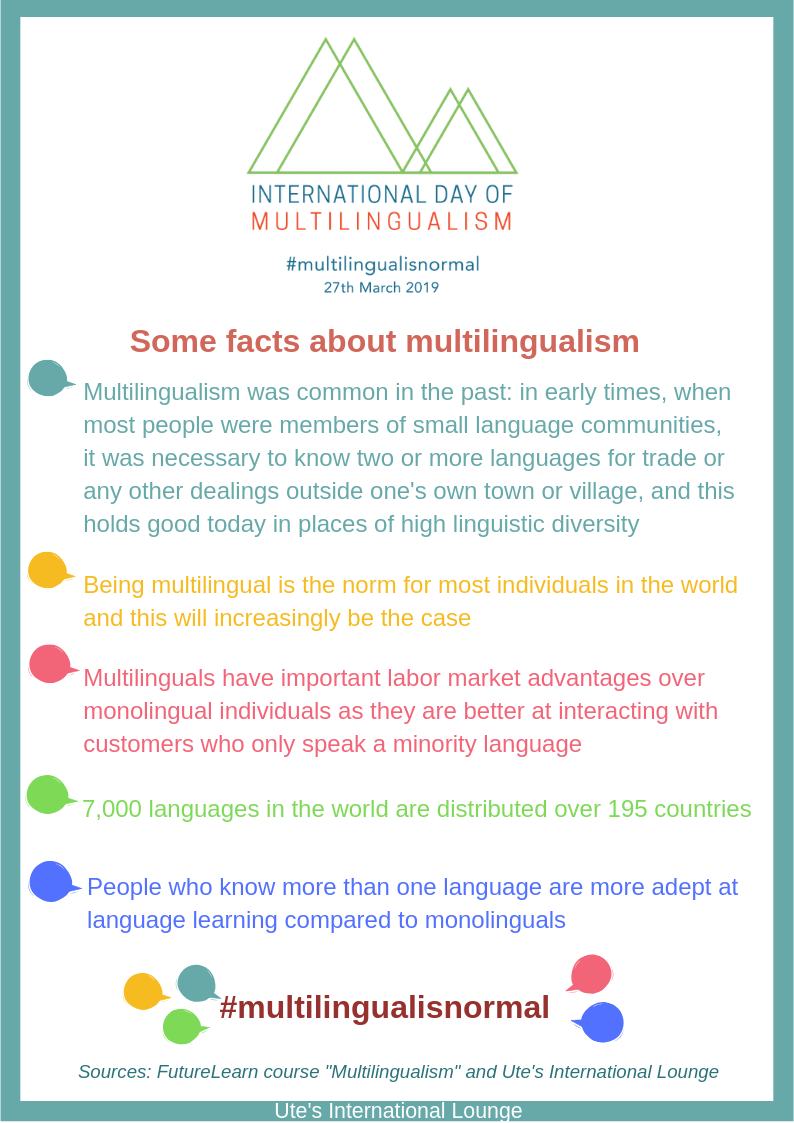
Some important facts about multilingualism 

  1. There are 7,000 languages in the world distributed over 195 countries: thus, every country in the world is multilingual. 
  2. The amount of languages spoken in a region differs greatly. For example, Europe as a region features less languages than many equivalent sized regions in Asia or Africa.*
  3. Being multilingual is the norm for most individuals in the world and this will increasingly be the case.*
  4. Most languages can be clustered in different families but some are completely unrelated to any other known language.*
  5. The number of speakers of a language differs if we also count those learning the language as a foreign language (i.e. through a school).*
  6. People who know more than one language have been reported to be more adept at language learning compared to monolinguals.
  7. Bilinguals might have important labor market advantages over monolingual individuals as bilingual people are able to carry out duties that monolinguals cannot, such as interacting with customers who only speak a minority language
  8. Multilingualism was common in the past: in early times, when most people were members of small language communities, it was necessary to know two or more languages for trade or any other dealings outside one’s own town or village, and this holds good today in places of high linguistic diversity such as Sub-Saharan Africa and India


* from FutureLearn course “Multilingualism”


Related posts:

Multilingual is Normal 

The 1st International Day of Multilingualism

International Day of Multilingualism 27th of March #multilingualisnormal


Multilingualism is good for the economy

Multilingualism is not only good for our brain, our overall flexibility and open mindedness, it is also good for the economy. 

That countries like the UK with relatively “poor language skills” loses “the equivalent of 3,5% of its GDP every year” for exactly this reason whereas Switzerland, with its four national languages (German, French, Italian Rumantsch), “attributes 10% of its GDP to its multilingual heritage” is a fact.

Why is knowing other languages so important? Isn’t it enough to know English?
No, because knowing the other language is more than knowing its grammar… 

A study of small and medium-size companies in Sweden, Germany, Denmark and France found that those which invested more in languages were able to export more goods. German companies that invested heavily in multilingual staff added 10 export countries to their market. Companies that invested less said they missed out on contracts. (see: Speaking more than one language can boost economic growth)

Knowing the language of your business partner allows you to understand his/her culture, the way to approach issues, discuss – make business. In fact, it is knowing the “business language” which includes habits, beliefs, how meetings are done, what is expected from you, what you should avoid at all costs… can save you time and money.

You may object that “if everyone speaks English, we don’t need to know their language and all these details about the culture”– that’s exactly the point where many companies are wrong.

Your business partner may be fluent in English, even have no apparent accent, but he/she will still decide based on her or his cultural values, beliefs and assumptions.

Knowing the other language and some of the culture gives you the cognitive power, the understanding that is necessary to not jump onto wrong conclusions.

If I’m selling to you, I speak your language. If I’m buying, dann müssen Sie Deutsch sprechen (Willy Brandt)


In her essay Multilingual Skills provide Export Benefits and Better Access to New Emerging Markets, Ingela Bel Habib shares the results of her comparative study of small and medium-sized Swedish, Danish, French and German enterprises, and observed that:

“Swedish SME companies use mainly the English language and to some extent, German and French and therefore tend to export to neighboring markets, particularly Scandinavia. On the other hand small-and medium-sized companies in Denmark, England, Ireland, Germany, Poland, France and Portugal use up to between 8 and 12 market languages, which gives them better access to emerging markets. – In addition, the percentage of companies having a multilingual export strategy are at 27% in Sweden compared to 68% among Danish SMEs, 63% in Germany and 40% in France. This means that the percentage of firms missing export contracts due to language barriers are much higher in Sweden and are 20%, compared to 4% for Denmark, 8% for Germany and 13% for France.”

Furthermore, her study shows that “multilingualism is more complicated than the current belief that English is the only market language. Small- and medium-sized enterprises are using to an ever increasing extent the specific language of the export market to establish themselves in new emerging markets” – these languages for this study are English, Russian, German, French, Spanish, Italian, Polish and Chinese.

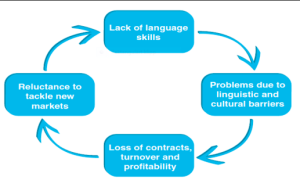
The British Chambers of Commerce and The National Centre for Languages have launched the model of  micro-economic analysis which points out the link between the lack of language skills and exports effects.


Effects of lack of language skills on export (The National Centre for Languages, 2009).


I highly recommend reading Ingela Bel Habib’s study to get all the details of variables, measurements and data that leads her to the following conclusion:

“In the short term, efforts need to be made reducing language barriers to market entry and facilitating the small-and medium-sized companies access to new emerging markets through supporting and financing professional development programs and language training.

Longer-term measures concern in particular the adaptation of education to the needs of employers through education to a greater number of languages, particularly at secondary and university levels. The languages of the migrant employees also provide a shortcut to multilingualism in order to increase small-and medium-sized companies’ exports to new emerging markets.”


In short: “multilingualism and economic competitiveness are closely linked” and measures should be taken at educational level. 

And, I may add, that in order to succeed, you don’t only need to be able to communicate in the other language, you need to know the “cultural grammar” too, the invisible rules of communication that determine the interpersonal behavior in other cultures


Quoted articles:

Ingela Bel Habib, Multilingual Skills provide Export Benefits and Better Access to New Emerging Markets, on the site Sens Public, 2011.